What to Expect on the Manaslu Circuit and Annapurna Circuit Treks?
Let’s take a closer look at the Manaslu and Annapurna circuit route: where do they start, and where do they go and end? The Manaslu Circuit route takes you through dramatic river gorges, several suspension bridges, and traditional Himalayan hamlets, following a long drive from Kathmandu, which officially starts from Machhakhola.
Major villages on the Manaslu trail are Jagat, Deng, Namrung, Lho, Sama Gaon, Samdo, Dharamshala, Bhimthang, and Tiliche. From Tiliche, you will finally drive back to the capital city by road. On the other hand, the Annapurna Circuit trek begins in Dharapani after a drive of 8 to 10 hours from Kathmandu. The trek takes you through charming villages like Upper Pisang, Manang, Yak Kharka, Muktinath, and Jomsom.
From Jomsom, you will travel to Pokhara in a jeep and then get back to Kathmandu. Both remarkable treks in Nepal allow your body to gradually adapt to increasing altitudes. You can check the Manaslu Circuit Route Map and the Annapurna Circuit Trek Map for better understanding of geographical structure.
Highlights of the Manaslu Circuit Trek
- Test of physical endurance through a trek around Mt Manaslu (8163 m) along with an unforgettable adventure.
- Deep cultural insight into the authentic Tibetan Buddhism and rural lifestyles.
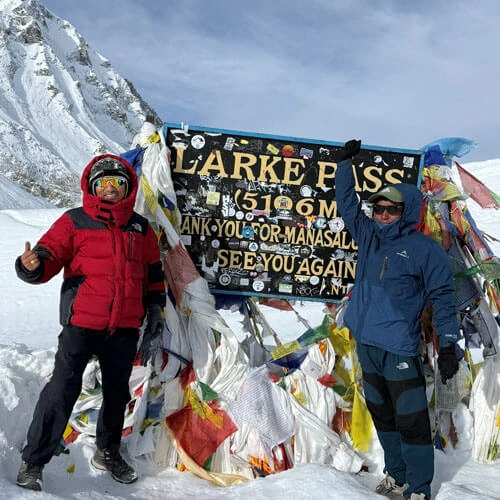
- Traverse Larkya La Pass (5106 m), the longest alpine pass in Nepal.
- Enjoy a side hike to Birendra Lake (3600 m), Manaslu Base Camp (4800 m), and Tibet Border (via Ruila Pass).
- Peaceful trails discovered by less trekkers that offer the surreal beauty of nature.
- See vistas of mountains such as Mt Manaslu, Shringi Hima, Kang Guru, Ngadi Chui, Cheo Himal, and Ganesh Himal.
Highlights of the Annapurna Circuit Trek
- Experience homestays run by locals of the Gurung and Magar communities, along with the opportunity to try cultural dresses for photographs.
- Explore more diverse landscapes, from low-altitude subtropical forests to deep river valleys, pasturelands, and arid terrain.
- Visit Muktinath Temple, revered by both Buddhists and Hindus, where you can take a bath under 108 of the sacred taps (named Mukti Dhara).
- Have a golden opportunity to take pictures of dramatic Himalayan landmarks and alpine orchards while tasting organic apples too.
- Reach Thorong La Pass at 5416 m for awe-inspiring peaks such as the Annapurna ranges, Tilicho Peak, Chulu West, Nilgiri, and Dhaulagiri.
- Heal pain with quality time at the Phewa Lake side before driving back to Kathmandu.
Which trek is more difficult: Manaslu Circuit or Annapurna Circuit?
Often trekkers wander and search for, “Is the Manaslu Circuit trek harder than the Annapurna Circuit trek?" Even though both treks are challenging and have different experiences of difficulty, in short, the answer is "yes" due to more off-the-beaten paths and limited facilities. The trails around Mt. Annapurna (8091 m), the 10th highest mountain in our planet, are more well-marked along with developed accommodations.
Nevertheless, remember that crossing the Thorong La Pass (5416 m) is equally demanding as crossing the Larkya Pass and also higher than the Larkya Pass. In lower elevations of both routes, trekkers can trek with no more difficulties. Major consideration is that as you reach above 2500 m, thin air can show symptoms of acute mountain sickness, such as headache, dizziness, nausea, sleeping difficulty, and loss of appetite.
Other factors of treks’ difficulty level are unpredicted weather, long hiking distances, and poor internet connectivity. Difficulty depends on the individual's fitness level and situations during the trip. As a result, you should be careful and properly prepared whichever route you choose to embark on.
What permits do you need for Manaslu and Annapurna Circuit? Which is easier to proceed?
Obtaining permits is key to entering a trekking destination in Nepal, whether it lies under restricted areas or conservation areas. You need two official papers, such as a TIMS card (Trekkers Information Management System Card), and the Annapurna Conservation Area Project Permit. While TIMS is obtained from the Nepal Tourism Board (NTB) in Kathmandu, an ACAP permit can be obtained either at Pokhara or Kathmandu as well as online.
Considering border security, the Manaslu trek requires a Restricted Area Permit (RAP) along with a Manaslu Conservation Area Project (MCAP) permit. The MCAP is usually obtained from the permit counter of the National Trust for Nature Conservation (NTNC) in Kathmandu. However, it is attainable at the office of NTNC/MCAP in Gorkha Bazaar or online. For the restricted permit, you should go to the Department of Immigration, Kalikasthan, Kathmandu.
While comparing processes to obtain permits for the Annapurna and Manaslu Circuit, Annapurna is obviously cheaper as well as easier to proceed with, as it is not a restricted area. Remember that trekking season and nationality may slightly impact the cost of permits. The permit fees are lower for SAARC citizens compared to other foreign trekkers. Even after completing all document requirements, you need licensed guides and apply through a registered trekking agency for permits for the routes: Annapurna and Manaslu.
Which trek offers better mountain scenery and landmarks: Manaslu Circuit or Annapurna Circuit?
Both trekking trails are well recognized for mountain vistas from different vantage points. From the beginning of both treks, you catch distant sights of peaks, and the scenery becomes more spectacular as you gain altitude, especially above 3500 m.
What mountains can you expect on the Manaslu Circuit Trek?
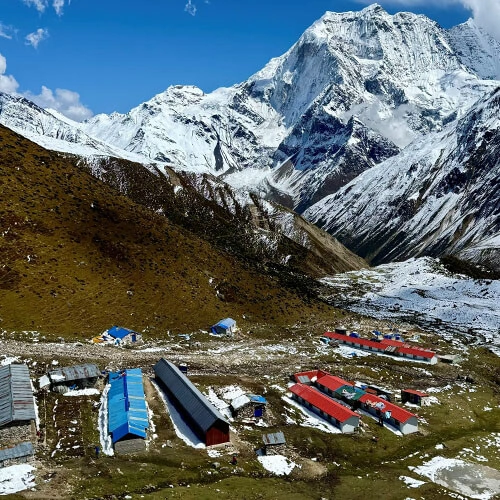
You can admire the magnificent mountainous terrain, including rugged landmarks, snow-capped mountains, and glacial valleys, after reaching Samdo and Dharmashala, although scenery becomes mind-blowing around Lho, Shyala, and Samagaon. Major mountains on Manaslu trails are Mt. Manaslu, Ngadi Chuli, Himal Chuli, Shringi Himal, Himlung Himal, Samdo Ri, and other neigbouring peaks.
Going on side hikes to Pungyen Gompa, Birendra Lake, or Manaslu Base Camp, trekkers usually enjoy extensive views of mountains. Similarly, Larkya La Pass and Bhimthang are often on top for the finest mountain panoramas. For both peaceful atmosphere and peak scenery, Manaslu is worthwhile.
Which Himalayan peaks and landmarks can you explore on the Annapurna Circuit?
The Annapurna Circuit offers you the experience of trekking through more diverse landscapes compared to the Manaslu Circuit. You gradually climb from the green woodlands of subtropical plants such as bamboo, rhododendrons, and sal. Similarly, as you cross green hills, cascading waterfalls, and terraced farmlands of the Marshyagdi River Valley, you can see the transformation of those lands into open mountain environments and pasturelands.
Upon reaching Manang, you will encounter more rugged terrain, treeless slopes, and alpine meadows. After that, you will see the landscape transition into the more arid mountain terrain of Mustang beyond Thorong La Pass. However, when you start from Dharapani, trails open to savour the beauty of natural grandeur, and mountain vistas come into sight from Chame.
Main mountains that you see on the Annapurna Circuit are Annapurna ranges, Chulu, Nilgiri, Macchapuchhre, Tilicho Peak, Gangapurna, Dhaulagiri, and Pisang Peak. While Upper Pisang, Ghyaru, Ngawal, Thorong La Pass, and Muktinath are major viewpoints for great scenery, Tilicho Lake, Gangapurna Lake, and Ice Lake are side trips, which are rewarding for both acclimatization and scenery. On the other hand, Jomsom and the Manang Valley are equally important.
Manaslu Circuit Trek vs Annapurna Circuit Trek: Which trek offers a better cultural experience?
Both the Annapurna and Manaslu Circuits are rich in cultural heritage. Nonetheless, the Manaslu route may offer more deep insight into centuries-old traditions and firsthand experience of remote lifestyles since it lies inside restricted areas, untouched by the impact of modern technologies and the chaos of urban areas. However, communities living in Manaslu differ from Annapurna’s local inhabitants. As a result, you experience different cultural experiences on these routes from dishes to lifestyles.
What cultural experiences can you have on the Manaslu Circuit route?
You will pass by several temples, gompas, stupas, mani walls, and prayer wheels decorated with prayer flags during the Manaslu trek. Generally, the route is popular for its ancient Buddhist culture, influenced by Tibetan tradition. Traditional settlements of the Upper Nubri Valley, such as Lho, Shyala, Samagaon, and Samdo, with stone houses, architecture, and monasteries, allow you to explore local cultures from near.
On the other hand, good hospitality and good behavior towards tourists also help you in communicating with locals to ask about them. A side visit to Pungyen Gompa, which is situated at an elevation of 4000 m, just above Samagaon, is historically significant. It is believed to have been built by Nubris and Tsumbas before 400 years ago and is considered the old Manaslu Base Camp. According to locals, the Gompa has been protecting the Manaslu region for centuries, as it is believed to be the protective deity of Mt. Manaslu.
What makes the Annapurna Circuit culturally unique?
On the Annapurna Circuit, you will not encounter single communities. Along with natural biodiversity, you have a chance to explore cultures of different ethnic groups, including Magar, Manangi, Gurung, Loba, and Thakali. You find cultural differences between lower-elevation villages of the Marshyandi Valley and high-altitude Manang and Mustang. Mostly, you will experience Buddhist cultures as well as Hindus in some villages.
The Muktinath temple and other old monasteries on the route play a vital role in giving you cultural insight. Local cuisines, especially the Thakali set, are one of the most loved cuisines during this trek. This way, the Annapurna circuit provides a wider range of Himalayan heritages.
Does the Annapurna Circuit have more facilitated accommodation with food varieties than Manaslu?
Yes, the Annapurna region trails have more well-established lodges, hotels, and restaurants that make your journey more comfortable. Generally, teahouses on both routes are run by locals. Therefore, you can experience a family-friendly environment whether it is the Annapurna or Manaslu trek. Considering the health and well-being of trekkers, almost every teahouse provides fresh and hot meals, including local dishes and some international meals.
Both treks do not require camping, but you will get appropriate places to do campfires with no harm to nature if you want. Compared to Annapurna, the Manaslu Circuit has fewer accommodation options. However, you can also find cafes and bakeries with a wider range of food varieties. Remember that high settlements of both routes have common teahouses, which generally provide small but cozy rooms with twin shared beds, blankets, pillows, mattresses, and some furniture.
Bathrooms and internet services on both trails depend on settlements. In remote areas, networks are usually weaker than lower elevations. Nepal trekking routes’ common meal is “Dal Bhat," which is available on both routes. While it is about meal comparison between Manaslu Circuit Trek and Annapurna Circuit Trek, both treks often offer similar Nepali dishes.
Quite different food items are potato items, butter tea, and Tsampa of the Manaslu, while Annapurna’s are apple pie, bakery items, Thakali Khana, and Buckwheat Dhido. Other similar items are thukpa, Tibetan bread, noodles, pizza, fried rice, tea, coffee, omelets, and vegetable soups.