Are you curious about whether the Gokyo Valley trekkingroute consists of comfortable teahouses for a safer trip? Along with packing essentials and confirmation about a season guide for this destination, the beautiful valley within the Everest region, the selection of accommodation is similarly important.
Unmatched to overnights of star hotels in cities, family-friendly Gokyo Trek teahouses, usually run by locals, let you have the most enjoyable moment. Warm meals, simple but cozy rooms, strolling around lodges, and quality conversation with locals and international fellow trekkers become memorable for life.
Consequently, read our latest blog to know about overnight pausing points during the Gokyo trekking 2026/2027, including differences from lodges of lower elevation to higher landmarks’.
Table of Contents
What kind of teahouses are available on the Gokyo Trek?
Safe accommodation ensures each trekker’s security on high-altitude trekking, including the Gokyo route. Be sure that you do not need camping, although you find limited lodges as you gain altitude. Generally, teahouses alongside the route are basic but comfortable, run by locals. Expect twin-share rooms, mattresses, blankets, a warm dining hall, and a clean kitchen to prepare meals.
In several places, charging devices, Wi-Fi/internet services, hot showers, and more food menus are available for an additional price. You will have relatively luxurious facilities in Namche Bazaar, while some remote settlements like Dole, Machhermo, and Gokyo have limited services. You can carry an extra sleeping bag with a cover to provide your body with enhanced warmth in case you get a thin blanket, because the severe cold at night may cause health problems. The most satisfying option of mountain lodges is their welcoming hospitality and magnificent scenery around them.
Is Gokyo accommodation suitable for families with kids and seniors?
Yes, Gokyo Trek lodges are generally considered idealfor families, as they are run by local families with family-friendly environments. Teahouses also prepare food that is suitable for kids and elderly members of the family.
However, you should understand the consequence of higher settlements, as sometimes teahouse owners may not provide facilities as you want. All members should be prepared for staying also in remote areas with limited services.
Is Gokyo Trek Accommodation Better Than Everest Base Camp Accommodation?
Trekkers often consider teahouses on the Everest Base Camp quite more facilitated, as it is a major Everest trail. Whereas the Gokyo Valley trek is not better or worse in every case but is truly different.
A major advantage of Gokyo trek teahouses is the peaceful environment and magnificent scenery of Gokyo Lake, as the Gokyo Valley is located alongside the Dudpokhari (the third Gokyo Lake), which is regarded as the residence of the snake deity (nagdevata).
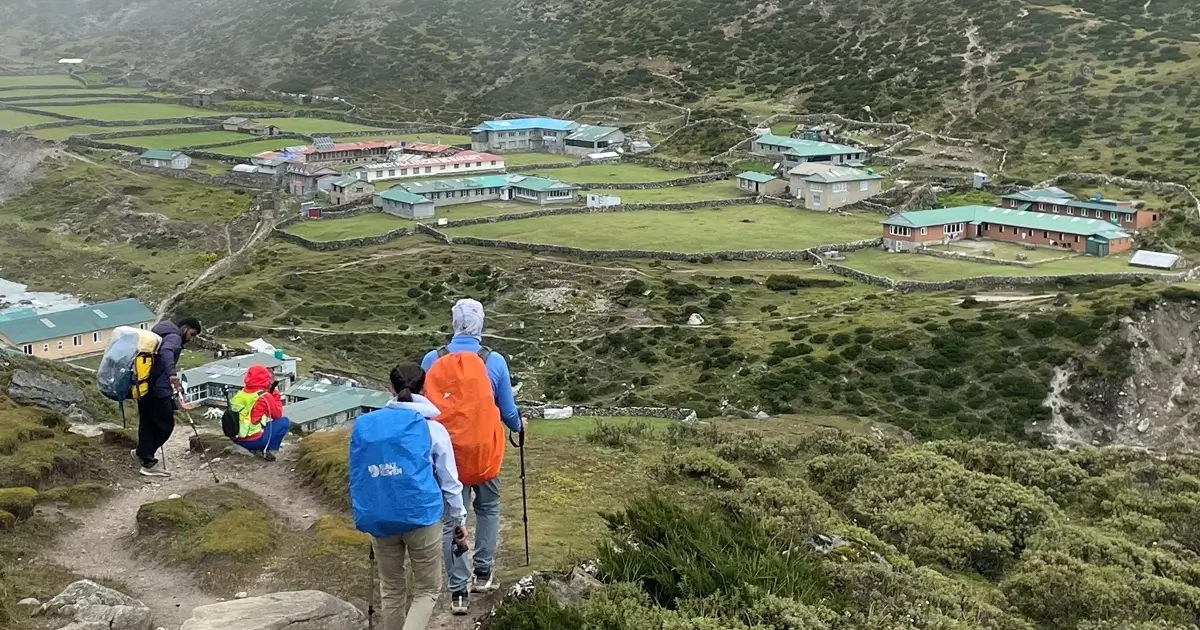
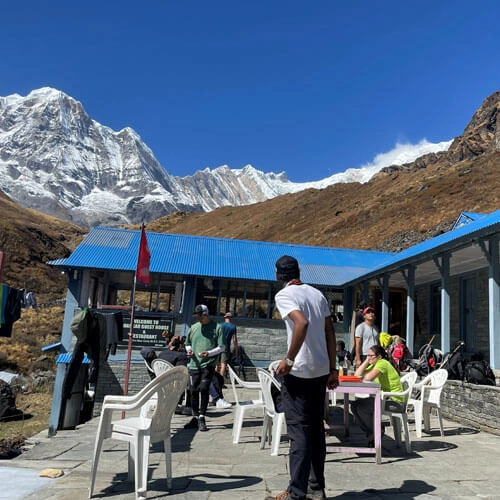
Trekkers, observing teahouses of Machhermo from the trail
Where do you stay overnight on the Gokyo Trek?
Based on Green Society Adventure’s standard Gokyo Valley Trek itinerary of 11 days, 9 days of overnights will be in basic teahouses in the Khumbu region. While two nights in Kathmandu are truly filled with luxurious amenities, experiences in mountain lodges are hard to beat due to the locals’ traditional hospitality, scenery around the accommodation, and serenity.
Major stops of this Gokyo Trek 2026/2027 are Phakding, Namche Bazaar, Dole, Machhermo, Gokyo Valley, and Lukla, where you not only relieve the tiredness of a long journey but also get a chance to connect closely with the local culture. Even though these are mentioned in the itinerary, sometimes it can vary based on trail conditions, weather, teahouse availability, and adaptation days you need.
Teahouses on the Gokyo route are fewer compared to Everest Base Camp, but we will not let you face any difficulties due to a lack of accommodation, as we keep contacting the owners of different teahouses.
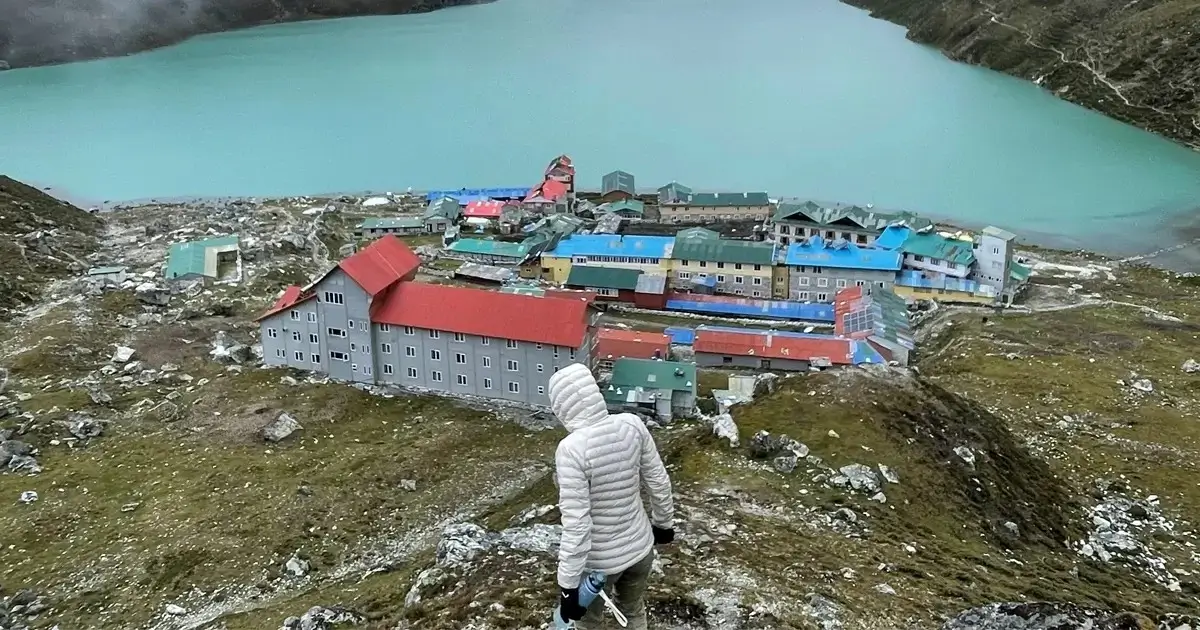
Teahouses in Gokyo Valley
Is booking Gokyo Trek Lodges in advance necessary?
Booking teahouses in every season for the Gokyo trek is not obligatory for all seasons of year. However, reserving rooms ahead of time during peak seasons (spring and autumn) can be a smarter decision because teahouses in high elevations and small settlements get filled up quickly.
Due to several empty rooms during the off-seasons (monsoon and winter), you can easily get rooms although you reach in the evening time. However, during peak seasons (spring and autumn), reaching the overnight stop point in the afternoon (later than 4:00 PM) means a higher risk of losing available rooms with better amenities. In comparison with the primary Everest Base Camp trail, the Gokyo Valley trek is less crowded. Hence, Gokyo Trek teahouses generally have adequate rooms for trekkers.
You just decide to trek to the Valley; our experienced guide manages suitable rooms for you. Our guide keeps you at a lodge that offers magnificent scenery of lakes. Enjoy each moment without worry about accommodation, as our guide secures rooms for your safety at first, contacting the teahouse owners.
Do Gokyo teahouses have private rooms?
In most teahouses, private rooms are available on the Gokyo Valley trek route, especially at lower elevations, but also in high settlements during off-seasons. We can arrange private rooms upon your request, but please note that such arrangements will incur an additional cost. Nonetheless, you should not expect premium rooms like in cities. In Namche Bazaar, you will find a broader selection of places to stay with a greater opportunity to find private rooms with attached bathrooms.
After leaving Namche, the possibility of getting facilities like hot showers, internet, and private rooms becomes limited. Rooms are usually private. Even though private rooms are available, several trekkers’ standard choice is twin-sharing rooms, as this ensures more comfort in unfamiliar places to stay with fellow trekkers who are from the same country or not.
This Gokyo Teahouse Guide suggests you inform the trekking agency before departure if you need a private room for arranging one that is best for you. We do our utmost for your comfort. Nevertheless, you need to be ready to share a room in case of challenging weather conditions or large crowds in teahouses.
Are teahouses on the Gokyo Valley trekking route heated?
Remember that teahouse owners do not heat each individual room, but some provide electric blankets and mattresses. However, the dining hall stays warmer than the bedrooms because of the stove or other heating system, where trekkers gather for dinner as well as to have conversations.
To keep yourself warm and safe from cold-related issues at freezing temperatures during nighttime, carry a premium-quality sleeping bag that has a comfort rating of −10°C to −15°C. You should keep drinking hot water, ginger tea, coffee, soup, or hot drinks in the upper and colder environment of teahouses to feel warmer, help with digestion, and restore energy for long trekking. Considering each trekker's well-being in the Everest region, our latest Gokyo trek accommodation information guide has included these tips.
Is there Wi-Fi and charging service in each teahouse on the Gokyo Trek 2026/2027?
Yes, Wi-Fi connectivity is provided for guests at almost all teahouses at some extra cost, but the connection often becomes slower and unreliable in higher settlements. Depending on Wi-Fi for the entire Gokyo Trek can be inconvenient. We strongly recommend you download every crucial document before leaving the capital city and inform your nearest ones about the unstable internet connection. Noting essential contact numbers in a diary, carrying a power bank, and having a mobile phone with strong signal reception and satellite communication capability are smarter ideas for remote areas of the Everest region.
Instead of getting panicked due to limited connectivity after Namche, enjoy nature, culture, and adventure, disconnecting from the daily hectic routine. Dole, Machhermo, and Gokyo give you the most chance to be close to the Himalayan environment due to the unstable internet connection, but each moment is worthwhile.
Teahouses in Dole
Can you get a facility of hot showers at Gokyo teahouses?
Yes, you can enjoy a hot shower at most teahouses during Gokyo Valley trekking. It may cost quite a bit, but you should understand that the reasons behind it are limited fuel, cold temperature, limited electricity, difficult transportation, and inadequate water supply. As a result, appreciation for such services, even in such isolated areas, is better than bargaining on cost, which is wiser during this trek.
According to our experience, trekkers often love hot showers in cold environments, even at an additional fee. We generally do not include this service in the package but choose one of the best teahouses in Gokyo, which offers this hot shower at a reasonable cost.
What kind of meal is mostly served at Gokyo Trek lodges?
Since most teahouses on the Gokyo route are well-established, you will find varieties of food, including some international ones. Except at premium hotels/lodges of Namche Bazaar, you find similar Nepali and Himalayan food items for breakfast, lunch, and dinner. The most loved meal for lunch and dinner is “Dal Bhat," which consists of steamed rice, seasonal vegetables, lentil soups, salad, pickle, and desserts—which may cost an extra fee. Typical Dal Bhat is not only delicious but also refillable as much as you want and also energizing food (a good combination of carbohydrates, vitamins, and protein).
For breakfast, you will get Tibetan bread, chapati, black tea, milk tea, porridge, noodles, pasta, fried rice, boiled potatoes/eggs, pancakes, soup, etc. Instead of having rice each day, you can have other food such as mo:mo (dumplings), chowmein, thukpa, roti tarkari, pizza (at some places), and other available items. Our guide ensures that whether food is prepared in a clean kitchen in a hygienic way or not, as our priority is your health and well-being throughout the trip.
What is the Gokyo teahouse's price in 2026/2027?
Teahouses that are available on the Gokyo Valley Trek route are usually affordable, but some factors, such as trekking season (offseasons/peak seasons), type of lodges, rooms, available services, and food items, influence their cost. Lodges in higher settlements are more expensive compared to lower-elevation teahouses because of difficult transportation and limited material supplies. Our responsibility is to reserve a comfortable room according to your preferences, as there may be private/shared rooms and premium/basic ones available, which differ in cost and services.
Staying at teahouses along with varieties of food, hot showers, Wi-Fi, device charging facilities, and private rooms during peak seasons (spring and autumn) is quite expensive due to the additional expense for those amenities, but it is really affordable and satisfactory.
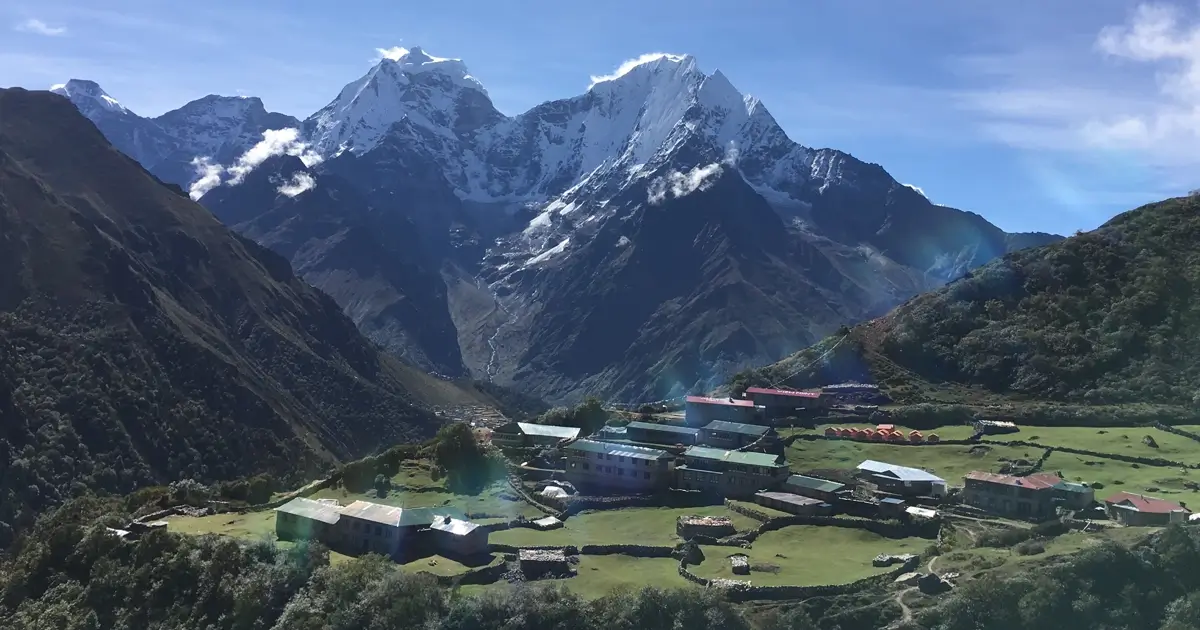
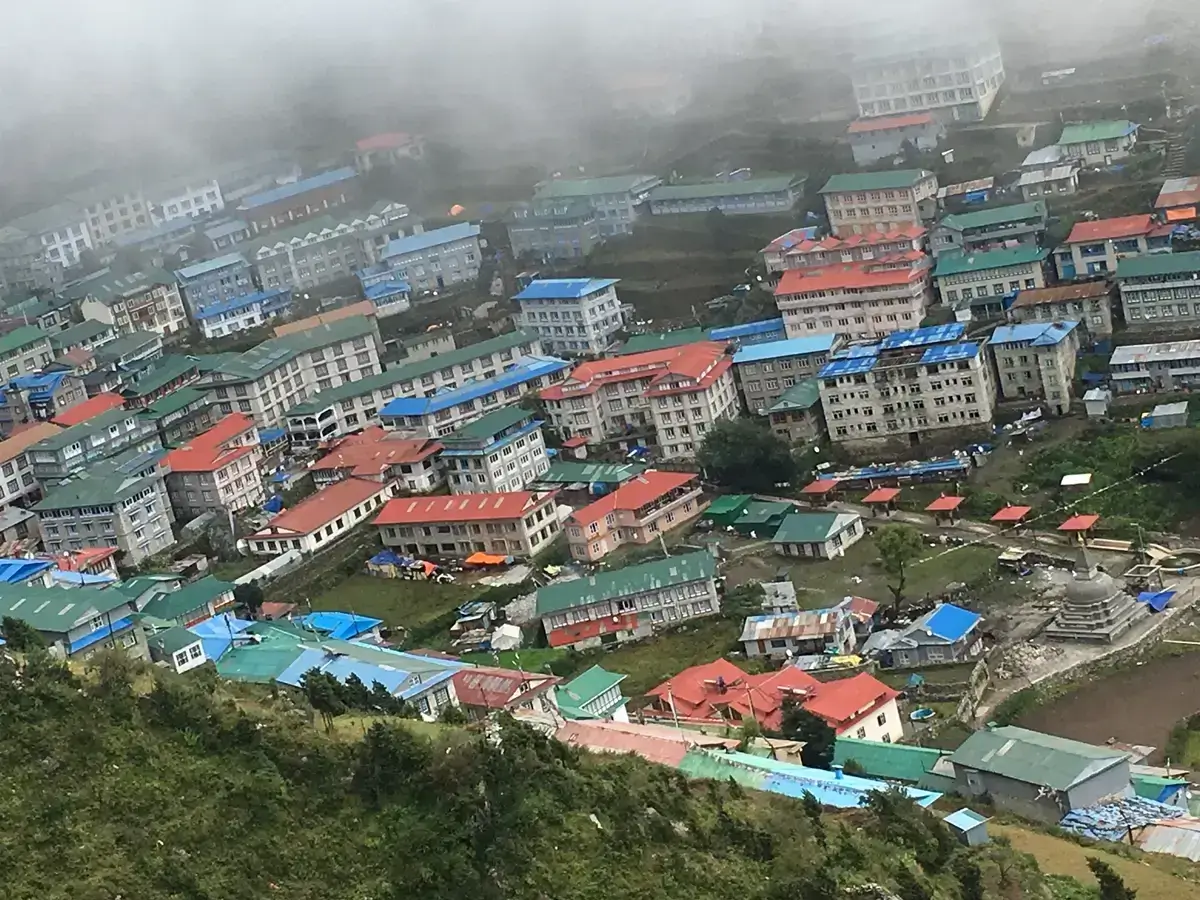
Teahouse Accommodation in Namche Bazaar
What features should the best teahouses in Gokyo Valley for trekkers/climbers have?
While it is somewhat challenging to determine the best teahouse among the several Gokyo trek accommodations, this difficulty arises because everyone may not know the specific criteria for what constitutes the finest Himalayan lodges for trekkers. It becomes controversial when we compare teahouses and figure out one lodge from our own perspective. As a result, we will outline some key aspects to help you make the right choices and have better experiences during your Gokyo trekking.
Mountain/Lake Views
Fresh meals
Private Bathrooms
Warm Dining Area
Peaceful Environment
Comfortable rooms with essential furniture
Hot showers
Wi-Fi and Charging Services
Understanding the teahouse owner
Choosing teahouses totally depends on the trekker's choices, but the above aspects can make your trip really comfortable and enjoyable. Although individual preferences vary, our team promises to manage one of the best teahouses available on the route, following the itinerary, availability, and your requirements.
Final Thoughts on Gokyo Trek Accommodation: Teahouses and Lodges Guide 2026/2027
In this Gokyo Teahouse Guide, we have already included all necessary information. While choosing teahouses, remember each key takeaway to make the trip relaxed and pleasant. Gokyo Valley Trek can be one of the best teahouse treks, which does not require camping, unlike the off-the-beaten-path treks Kanchenjunga Circuit Trek and Upper Dolpo Trek.
For more details about Gokyo Trek lodges, itineraries, best times, package costs, packing lists, and trekking tips, you can contact us on WhatsApp or by mail. We are 24/7 available on your service.
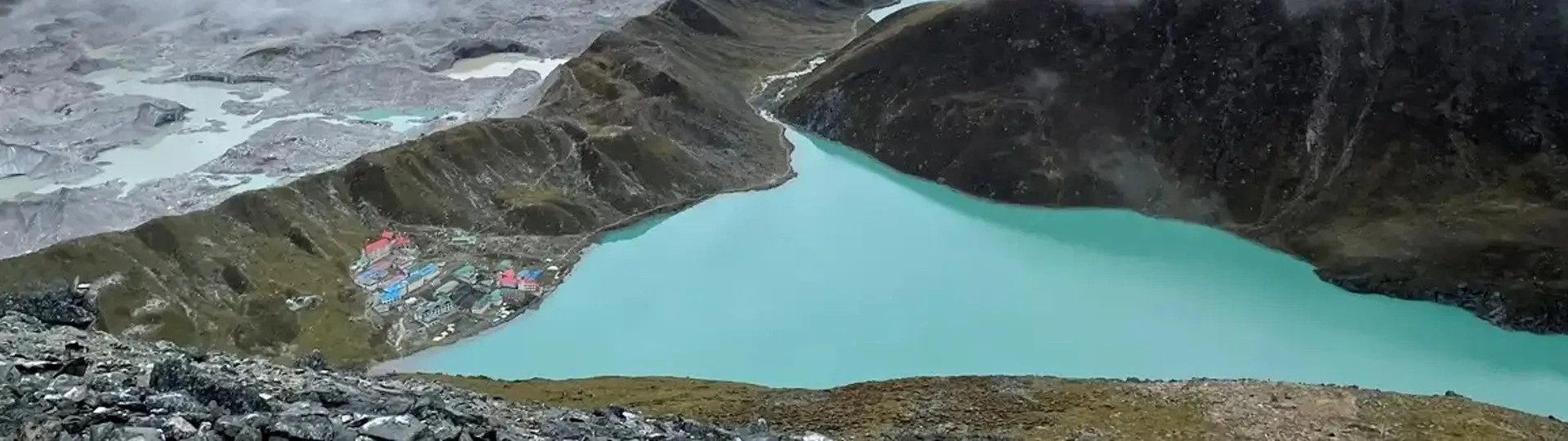
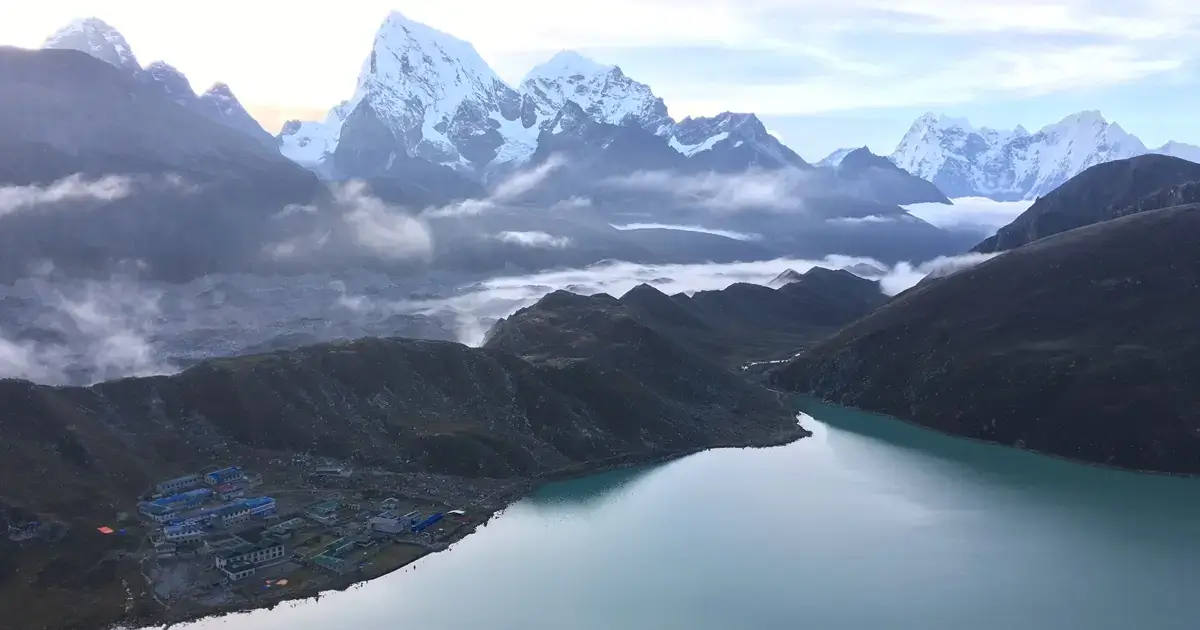
View of teahouses and Lakes in Gokyo Valley
FAQs
How long does it take to complete the Gokyo Valley Trek?
Generally, trekkers can complete the Gokyo Valley trek within 10 to 14 days.
How long a distance will you cover during the Gokyo Trek?
Generally, you have to cover approximately 90 to 110/120 kilometers, depending on the chosen travel schedule.
Can you trek to the Gokyo Valley in December?
Yes, the Gokyo Valley route is also accessible during the months of off-seasons: winter (December to February) and monsoon (June to July). However, the best period is either spring (March to May) or autumn (September to November).
Is altitude sickness a concern on the Gokyo trails?
Yes, acute mountain sickness is a significant matter of concern while navigating Gokyo trekking trails that reach up to 5357 m—Gokyo Ri.
Do you need to obtain trekking permits for the Gokyo Valley trekking?
Yes, you must obtain trekking permits for the Gokyo trek like for other treks. Two essential permits are the Khumbu Pasang Lhamu Rural Municipality Permit and the Sagarmatha National Park Entry Permit.
Why is a guide compulsory to reach the Gokyo Valley?
A licensed guide is required for the Gokyo Valley trails according to the Nepalese government. Authorities track you throughout the trip and provide rescue in case of emergence, as they keep all your records along with a detailed itinerary.
Raj Kumar was born and raised in the mountain town of Gorkha. He is an enthusiastic traveler who enjoys discovering new places. His passion for exploration knows no bounds, driving him to seek out new trails and experiences. He has successfully traveled and explored most of the trekking routes in Nepal, mastering their intricacies.
Raj Kumar started his career as a guide at the end of the year 2006. His dedication to this field has been unwavering, surpassing 17 years and counting. He established his own company, Green Society Adventure, in 2013, fueled by his expertise and entrepreneurial spirit. He has a vision to share the beauty of Nepal’s landscapes and cultures to the world. As both a guide and a leader, he inspires people to explore the world with curiosity and respect.