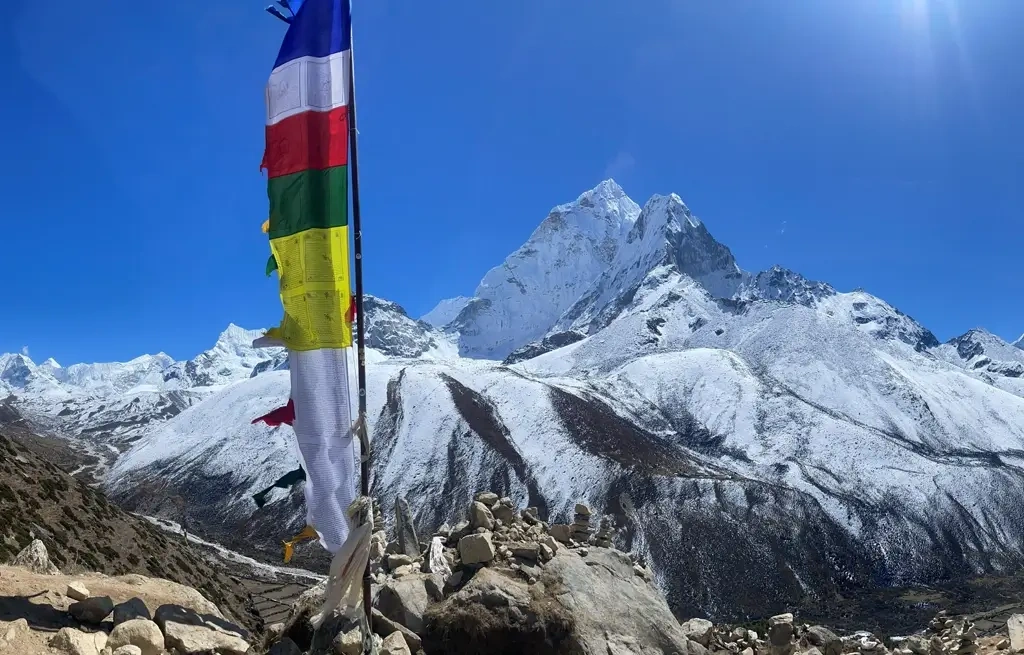
Everest Base Camp Trek for Family - 16 Days

Trip Facts
  • Duration:16 Days
  • Difficulty Level: Moderate
  • Destination: Nepal
  • Max. Altitude: 5644 m
  • Start at: Kathmandu
  • End at: Kathmandu
  • Group Size: 1-14
  • Best Season: Spring (March to May), and autumn (September to October)

Highlights

  • Enjoy a flight over the beautiful valleys, hills, and lush forests with your loved ones to Tenzing Hillary Airport, Lukla, a gateway to Mt. Everest. 
  • Make your children engage in unfamiliar places of the Khumbu region to increase communication skills, along with experiencing authentic Sherpa cultures.
  • Observe rituals and traditions of locals, influenced by Tibetan Buddhism, while exploring old monasteries, including Tengboche Monastery, the largest monastery in the Everest region.
  • Following the footprints of mountain pioneers, reach the base of Mt. Everest/Sagarmatha (8848 m), the highest mountain on the planet.
  • Navigating challenging trails together with kids, parents, and grandparents and learning tolerance for rewards.
  • Spot rare wildlife such as Himalayan Tahr, blue sheep, langur monkeys, and monals while walking via forests filled with rhododendrons, pines, and birches of the Sagarmatha National Park, a World Natural Heritage Site
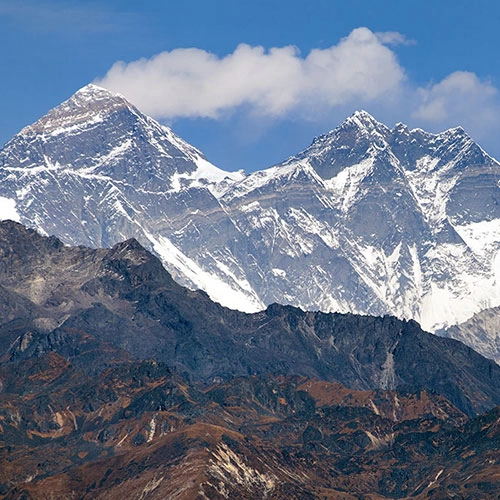
  • Enjoy breathtaking panoramas of mountain giants such as Mt. Everest, Ama Dablam, Lhotse, Nuptse, Thamserku, Makalu, and Pumori from vantage points. points like Hotel Everest View, Thukla Pass, Kalapatthar, and Everest Base Camp.
  • Lift your spirits and spend some quality time with family, and enjoy the alpine scenery, Khumbu Glacier, Khumbu Icefall, and sunrise shots, all on your camera roll. 

The Everest Base Camp trek for family is one of the best Himalayan trips. Families can enjoy on the trekking route, located in the Khumbu region of northeastern Nepal. Take it as a component that helps in building positive relationships between family members rather than just reaching the foothills of Mt. Everest (8848 m), the highest peak in the world. As it is crafted by a professional team, considering seniors and juniors, each member can complete it safely, providing an option to add extra acclimatization days.

Disconnecting from the daily hectic routines of a noisy urban environment, you will reconnect to nature, where your loved ones and you will experience struggles and rewards together on the most popular trekking route in the world. A slower pace with a smooth itinerary that consists of a suitable daily trekking distance and hours allows a comfortable walk for all ages and fitness levels via Sagarmatha National Park’s sections and quite challenging trails near Everest Base Camp.

In comparison with the standard Everest Base Camp trek of 14 days, you feel more relaxed and confident on this Everest family trek due to an adequate period to adapt to the atmosphere rather than rushing to another destination from one. With a peaceful mind, enjoy each moment through lush forest zones, suspension bridges, ancient monasteries with prayer flags and wheels, and Sherpa villages along with awe-inspiring vistas of mountain giants from the beginning. Prioritizing each trekker’s well-being, the trek proceeds gradually, allowing the creation of indelible memories. 

With guidance of our seasoned guides and local porters, learn more first-hand cultures of Sherpas. If you are seeking an ideal package that suits multi-generation groups, then pick one among different Everest trekking routes. The trek with a perfect balance of enjoyment, security, and exploration can provide you the best experience, making strong bonds between family members.

Why Choose This 16 Days Everest Base Camp Trek for Family?

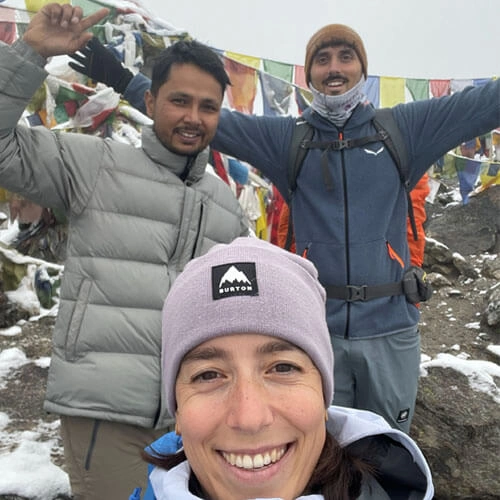
Who does not want to explore new places, especially in Nepal, a country rich in culture, diversity, and natural wonders? Trekking companies no longer plan treks only for seasoned or solo travelers. With this in mind, Green Society Adventure has designed the best Family Everest Base Camp itinerary to create a remarkable milestone for you together with your life partner, kids, parents, grandparents, siblings, and cousins.

We have outlined below why hiking side by side with your loved ones through Everest’s wonderful landmarks is a smart choice for your next Himalayan adventure in 2026/2027.

Affordable and Cost-Saving - How can it make families’ dream treks budget-friendly? 

No need to wait for off-seasons to discount a trek package, as booking a trip for family in a group activates an exceptional economic advantage. Costs for guides, porters, and all kinds of logistics are shared among family members, minimizing the overall expense of the trek. Based on a group size, the price for Everest Base Camp becomes lower, which is simply not possible for solo trekkers.

Luxury Options — More advanced facilities and comfort for all members on EBC route Meets 

Since each of our itineraries is customizable, you have an option to make this trek better equipped and more comfortable without compromising the authentic experience in the Khumbu region. Instead of simple teahouses with shared bathrooms and basic facilities, we can manage the best accommodations with more advanced services, considering especially older members, children, and teenagers. You will really find this offering satisfying due to the best-in-class hospitality, such as hot showers, internet, battery charging services, private rooms with more comfortable beds, warm dining halls, and attached bathrooms.

At an extra cost, even in high-elevated, more isolated settlements of Dingboche and Lobuche, you will have luxury lodging. More varieties of meals, such as Nepalese, Tibetan, and Western, will be on the menu. While you get personal porters, a licensed private guide, and meals, you also have an option to return by helicopter from Gorakshep, reducing 3–4 days of trekking and fatigue. If you have limited time for vacation, this becomes an ideal option.

Awe-inspiring panoramas of peaks—What mountains can you see? 

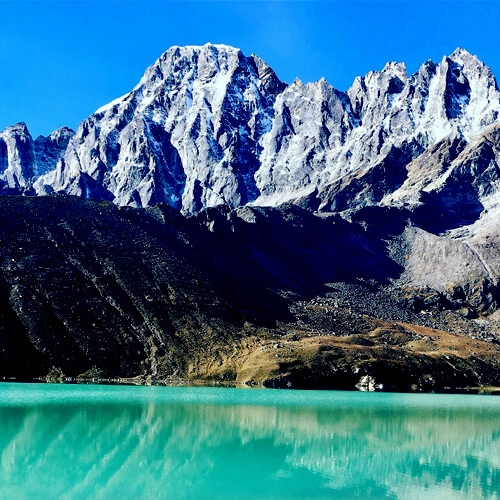
You will get to see distant views of mountains from initial phases of the trek, but as you ascend to higher elevations, their extensive Himalayan scenery becomes eye-catching. Hotel Everest View, the top of Thukla Pass, Everest Base Camp, and Kalapatthar are the most renowned sites for sunrise, sunset, and alpine landscapes, especially for the view of Mt. Everest (8848 m), often known as Sagarmatha and also considered the roof of the world.

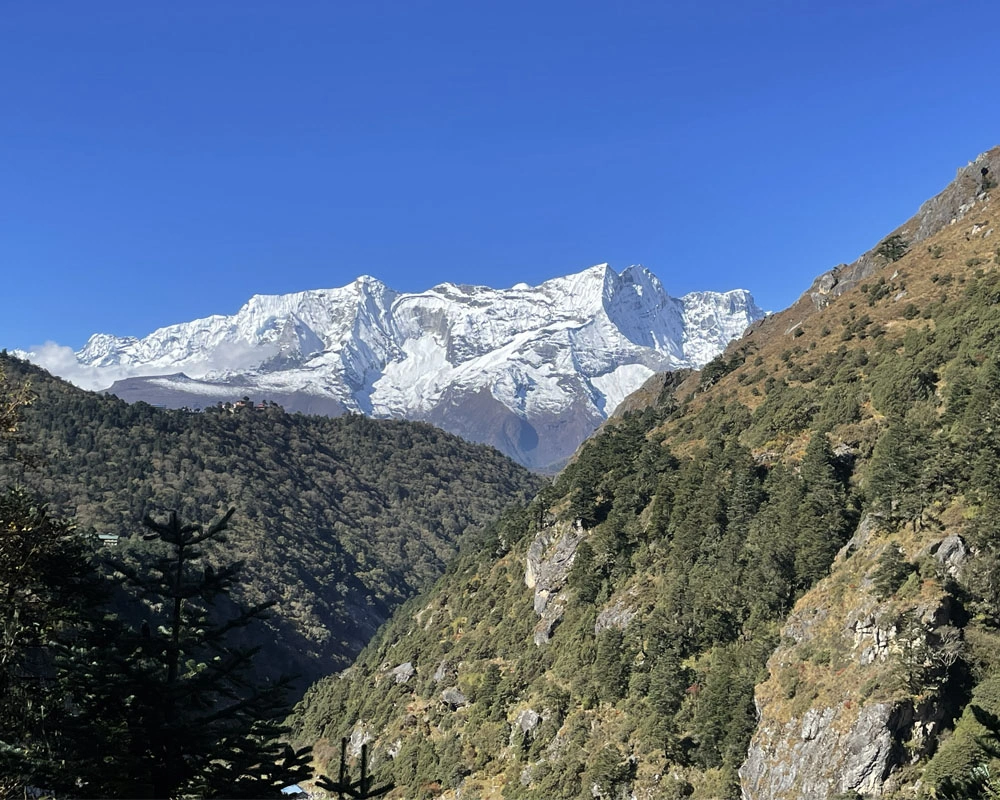
While hiking via the core of the Khumbu Valley, you will be mainly treated to vistas of Mt. Everest, Ama Dablam, Lhotse, Nuptse, Pumori, Cho Oyu, Thamserku, Makalu, and Kangtega. In the background of such magnificent snow-capped peaks and rugged landmarks, you can capture wonderful photos for a lifetime memory. 

Authentic Sherpa Culture Experience—Will this EBC trek be an educational trip? 

Offering learners practical knowledge through their presence can be effective and makes life much easier further ahead than only academic learning. The Everest Base Camp Family tour allows your children to have an in-depth understanding of rural life, Tibetan Buddhism, mountains, cultures, Himalayan cuisines, wildlife, and the value of patience for rewards. While hiking with international fellow trekkers and staying at teahouses, you also learn to communicate with unknown people as well as adjust to unfamiliar environments.

Upon visiting during festival seasons, locals give you permission to get involved in religious rituals, occasions' functions, and other cultural activities. Seeing them in their traditional dress and hearing their dialect will make you appreciate your heritage. The Sherpa people’s struggle, their respect for Mother Mountain, and their warm hospitality for tourists inspire you to do positive deeds. Each ancient monastery, gompa, Mani wall, memorial stone, chorten, prayer wheel, and prayer flag provides you with a sense of peace and peace of mind.

Learn about distinct flora and fauna—what rare animals do you spot on the EBC route?

During pleasant weather, unique mountain species play actively in their habitat, offering you glimpses sometimes in lush woodlands alongside the Everest trails. While you will notice trees of birch, fir, Himalayan hemlock, rhododendron, and blue pine in lower elevations up to 3500 m, subtropical forests transform into alpine landscapes with less dense forests of rhododendrons, shrubs, junipers, hardy grasses, mosses, cushion plants, and lichens.

If your luck favors you while traversing sections of Sagarmatha National Park, a World natural heritage site, you may spot wildlife such as langur monkeys, musk deer, himalayan black bears, blue sheep, Himalayan marmots, Himalayan tahrs, yaks, Himalayan vultures, monals, blood pheasants, snow leopards, etc. Do not harm any living things; just enjoy watching them through binoculars and also capture them on your camera. Popular wildlife spot areas on the Everest Base Camp route are Phungi Thanga and the route to Pangboche and Phortse, especially during the spring season.

Family-Focused Design Trip—Safety, Comfort & Bonding among members

Taking this Everest family trip as a life-changing Himalyan odyssey rather than only an ordinary trek that tests physical endurance, the itinerary is designed by focusing on all family members. Since the EBC routes have an unreliable climate and some demanding trails with steep ascents, our team at Green Society Adventure always puts the family's comfort first, even if it means covering a shorter daily hiking distance. This trek supports the creation of strong bonds among family members in an era of social media, advanced technology, and scientific tools that keep people busy.

No internet, no hectic days, and no worries about office and school; only infinite joys will bring positive energy to you. Assistance for each other, along with knowledge of geology, geography, and culture, will make this trek more family-friendly, as seniors can explain these aspects to juniors, allowing both to benefit. Without any rush, 16 days of trekking will provide morals for a lifetime.

Who is this 16 Day  Everest Base Camp trek best for? 

The trek does not include any technical climbs and descents, as it is also designed for children and adults. Even though there is a record of six-year-old babies reaching Everest Base Camp, we recommend the trek for juniors of 10 to 12 years. Elderly people aged between 50 and 60 can perform better than those over 60. However, each trekker must have good physical and mental health to tackle the problems that occur on the trek. If your family loves to be close to nature, explore new places, and face challenges together with fun, this trek is an ideal choice for you.

Similarly, first-timers, photographers, and solo trekkers who love adventure and birdwatchers can also enjoy the trip. Trekkers need to do only simple aerobic exercise for multi-day hikes and some yoga practice for 8 to 12 weeks to prepare for the route. This family trek is ideal for those seeking a perfect destination to experience a sense of accomplishment with their loved ones. 

Which places are highlights on the Everest Base Camp trek for family? 

Lukla - Primary gateway to the Everest region

Lukla is a popular place from where most Everest journeys, including the Everest Base Camp trek, the Gokyo Valley trek, the Island/Mera Peak climbing, and the Everest Three High Passes trek, begin. Before the hike via forest and alpine landmark, your family enjoys a 25- to 30-minute heart-pounding flight to the Tenzing-Hillary Airport in Lukla from the Kathmandu Valley. Your children learn that the airport is the highest airport in the world and enjoy aerial scenery from the plane's window.

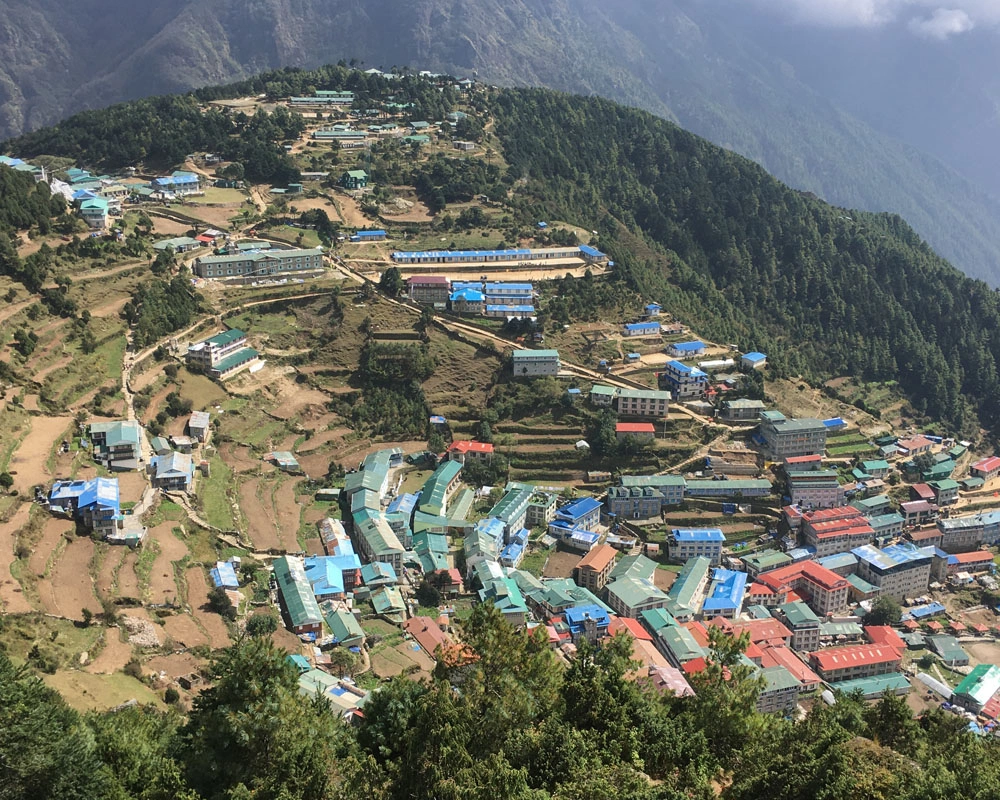
Namche Bazaar - The Sherpa town 

Generally, travelers stop here for extra days to adapt to the environment, as it is located at an elevation of 3440 m/11,286 ft from sea level. On the fourth day of the Best Family Everest Base Camp trek itinerary, you will depart from Phakding and gain about 785 m (2575 ft) in elevation. Since the next destination is Tengboche (3867 m), you will stay one day at this village of Sherpas, where you can also purchase missing things for the trek. 

Explore gompas and settlements and learn about local culture from up close. Bustling markets, ATM services, well-established teahouses, and hospitals make this place more facilitated compared to other high-altitude villages. Staying in the heart of the Everest region, you not only know the history behind the Sherpas' struggle but also enjoy mountain views of Thamserku and Kongde Ri.

Everest View Hotel (3,880m / 12,729ft) – The Best First Glimpse of Everest

Everest View Hotel is one of the most well-known vantage points in the region, located just above Namche Bazaar. During the acclimatization period, you and all your family members will hike up there within 1.5 hours to have a breathtaking view of Mt. Everest. While enjoying a delicious breakfast, see the wonderful morning scenery from the hotel's terrace.

Since the hotel is built at a height of 3,880 m, holding a record as one of the highest-altitude hotels on our planet, the views of Lhotse and Ama Dablam are also mesmerizing. Instead of sitting at the hotel in Namche, it is better to stretch your legs and adapt to the atmosphere by going higher. After taking some family photos, descend by following the "Climb higher, sleep lower" strategy of the trek.

Tengboche: A sacred site, and spiritual heart of the trip

Tengboche is renowned for the Buddhist monastery Tengboche, which was built in 1923. As it was devastated frequently due to earthquakes and caught fire, it was also reconstructed with foreign support. You can witness monks’ morning prayer and activities, enjoying their serenity. Take a deep breath with scenes of mountains like Everest, Ama Dablam, Tawache, Lhotse, Nuptse, and Thamserku after a few challenging parts with some steep ascents and descents. You have peace of mind after visiting the largest monastery in the Khumbu region. 

Everest Base Camp (5,364m / 17,598ft) – The main Goal of the trek

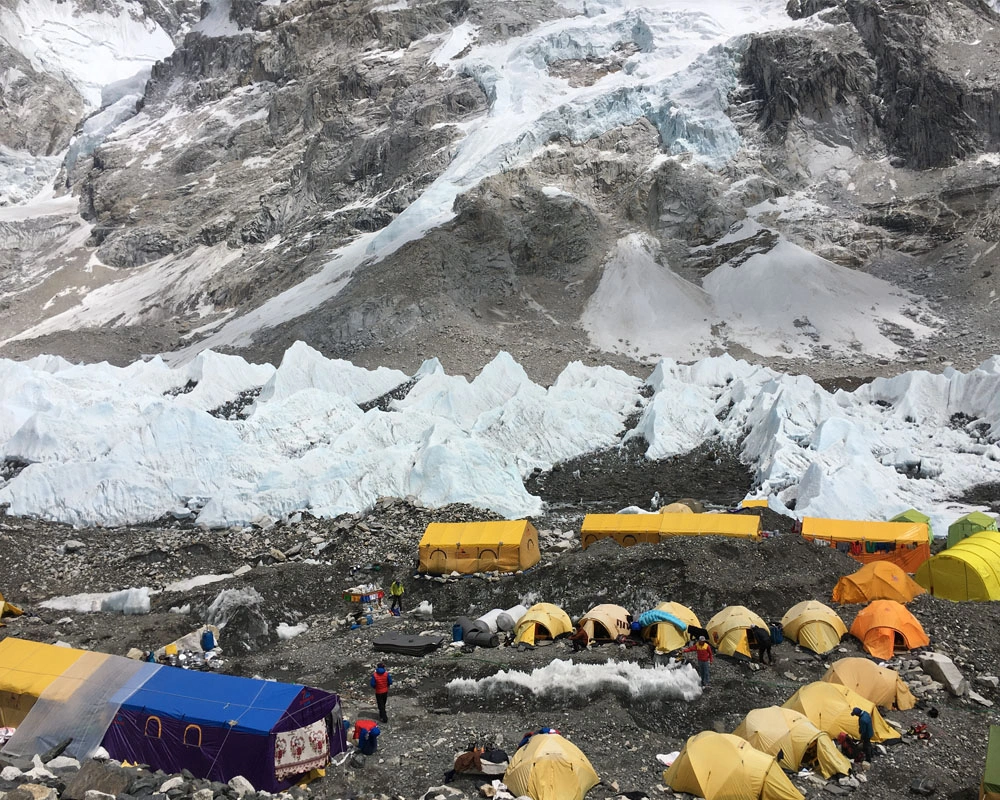
Standing at Everest Base Camp with your family is a moment of pride and achievement after walking for more than a week through dense forest, narrow trails, rocky terrain, and glacial valleys. Thanks to the guide, porter, fellow trekkers, and nature, descend to Gorakshep after quality time in a cool atmosphere, surrounded by snow-capped peaks and decorated with prayer flags. At the height of 5364 m, take a wonderful family picture that reminds you of everything on the Everest trail.

Kala Patthar (5,545m / 18,192ft) – The Ultimate Panoramic Viewpoint

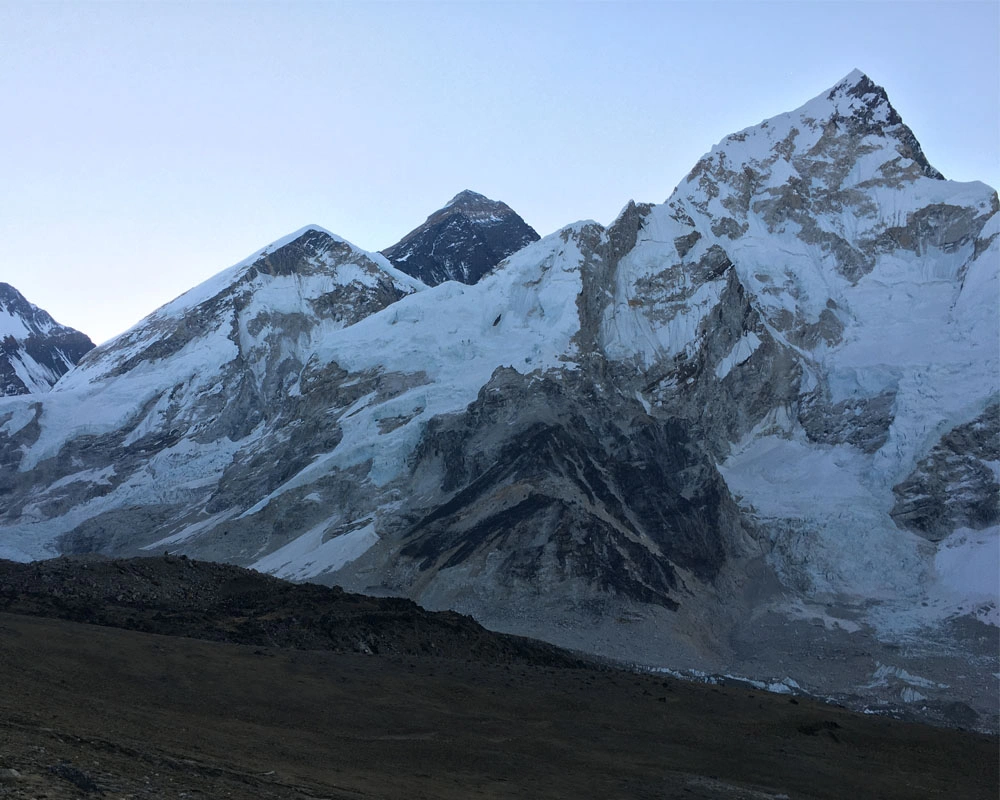
Kalapatthar is the highest point of the Everest Base Camp family tour. This spot is popular for 36-degree mountain views and glorious sunrises over the Himalayas. Walking for 2 to 3 hours early in the morning from Gorakshep takes you to this spot. While it is absolutely best for family, photographers can take most benefits. 

Khumbu Glacier and Icefall: Living, Moving Marvel 

View of a crystal-clear glacier—the Khumbu Glacier is situated between ridges of three 8000-m-high mountains; Mt. Everest, Nuptse, and Lhotse are mesmerizing. Trekkers also love watching its icefall, as the glacier is the highest glacier in the world. Especially children will be surprised by observing the constantly changing glacier of giant blue seracs along with weird creaking sounds. We manage your family to see the view of the icefall from a safe place near Everest Base Camp.

Why is the 16 days Everest Base Camp trek for family the best itinerary? 

Our 16-day Everest Base Camp trek itinerary with a slower pace is one of the excellent packages for families. After an international flight for many hours, all of you get exhausted. The itinerary lets you rest for a day in Kathmandu or explore some historically significant places as a refreshment. With full preparation, the next day you will reach Lukla Airport comfortably, the initial point of this Everest trek. Until Namche Bazaar, you will follow the Dudhkoshi River via suspension bridges and then take the trail alongside the Imja Khola River toward base camp. 

Traversing quaint villages like Phakding, Namche Bazaar, Tengboche, and Dingboche is a refreshment. Lobuche, reach Gorakshep, the last settlement before the base camp, on the 10th day of the trek. On the same day, your family will reach the base of Mt. Everest and get back to Gorakshep after spending a while. Once celebrating this accomplishment again, hike up to Kalapatthar and continue the walk according to the itinerary to reach Lukla for a flight back to Kathmandu. 

A slow pace, flexible schedule, and appropriate daily walking distance make this itinerary the best day for families. You can observe the detailed Everest and low, and you also have an option to customize it based on your preferences. 

What are alternatives to the Everest Base Camp trek for family 2026? 

Even if we have this family-friendly package for you, it depends on you to select it or not. We have some other trips such as the Everest Panorama trek, the Luxury Everest View Trek with Helicopter Return, the Everest Base Camp luxury trek with Helicopter Fly In and Out, the Annapurna Base Camp trek, the Short Ghorepani Poon Hill Trek, the Mardi Himal trek, and the Langtang Valley trek that may suit your families. 

For more details, you can contact us so our experts can provide enough information regarding these packages. Whichever trip you choose, you will have indelible memories and a safer experience with us.

What is the cost of the Everest Base Camp family tour?

The cost of the Everest Base Camp trek for a family totally depends on how you and your family members want the services during the trek. Our package includes all trekking permits, accommodation, porters, guides, three meals a day, some equipment, and all government taxes for USD 1,785 per person, but you can make it more luxurious by adding extra costs. In the cost details section, you can see the inclusions and exclusions along with optional add-ons.

Although you pay for a Nepal visa, an extra night in Kathmandu with lunch and dinner, travel insurance, personal expenses, and tips for guides and porters, we can help in selecting a reliable company, restaurants, and gear. Do not compromise on quality in the name of a budget-friendly trek that leads you to problems. Compared to restricted-area trekkings, the Everest Base Camp family tour's cost is affordable.

Why this 16 days Everest Base Camp trek with kids in Nepal with us? 

Most trekking agencies in Nepal, including ours—Green Society Adventure—provide reliable services for local and international travelers. Booking this Everest family trek is not only for a well-crafted itinerary, local porters, a seasoned Nepal trekking guide, and trustworthy logistics but also for guaranteeing safety with no compromise to experience. Since the company was founded by a professional traveler with 20 years of experience in Nepal tourism, our well-crafted approach reflects our concern about our clients' seasoned actions. 

We also listen to you, offering you the opportunity to customize the itinerary based on your preferences. As trekkers of different levels are involved in a family trek, a licensed guide gives extra care and attention throughout the journey. We believe in sustainable development and tourism, which we do practice. Our team transparently mentions inclusions and exclusions of the package to make it easier for you to budget. You do not need to worry about challenges in high altitudes while walking on our team’s guidance, but we are always ready to contact the rescue crew in case of emergency evacuation.

Be mentally prepared for a 16-day trip that gives you the experience of being concerned-from-home while joining us. We are 24/7 available to assist you for your next mentions of inclusion. Contact us for more details about this trip. Our friend is on budget. Members will teach you to book the trip and guide you through each step before embarking on it. 
Itinerary
Expand AllCollapse All

If the following itinerary does not match your preferences, then we can customize as per you. 

Upon your arrival at Tribhuvan International Airport in the capital city, our official from Green Society Adventure will come there to welcome you with a bookie or garland. A private vehicle will transfer you to the hotel for a brief period of relaxation. to the hotel by private vehicle to unwind for a while. In the evening, you can stroll around nearby markets and also purchase needed things.

You will join the briefing session as well as the welcome dinner, organized by us, where you can discuss the trip with your fellow trekkers and a licensed guide. You can ask about any confusing aspects for full preparation for the Everest trail. You will enjoy a delicious dinner and an overnight stay in comfortable accommodation.

  • Max. Altitude:1320 meters/4329 ft.
  • Accommodation:Deluxe hotel
  • Meals:Welcome Dinner


Your family has a free day to prepare and refresh after long hours of flying. During this period, you can visit historically, culturally, and naturally notable places in the Kathmandu Valley. Exploring Boudhanath, Swayambhunath, Pashupatinath, and Durbar Squares is truly worthwhile, as they are also World Heritage Sites in Nepal. Different varieties of Nepalese cuisines are available in distinct restaurants, which you can taste.

Get back to the hotel on time for rest, and prepare for the next day’s travel as you are heading to the Khumbu region for the Everest Base Camp trek. After ensuring you have packed all essentials, sleep on time.

  • Max. Altitude:1320 meters/4329 ft.
  • Accommodation:Deluxe Hotel
  • Meals:Breakfast


Trek Duration: 3 hours

Trek Distance: 7.8 kilometers

With the excitement of reaching Lukla, wake up early in the morning and head to the airport for a 35- to 40-minute flight after breakfast. Today’s hike becomes easier, with mostly descending trails through dense forests that take you to a suspension bridge to cross the Dudkoshi River in the first phase. 

Continuing the journey, you will finally reach Phakding, a Sherpa village alongside the Dudkoshi River, after passing through villages like Chheplung and Thadokoshi, along with wonderful views of Kusum Kangaru Peak and the greenery of the alpine landscape.

  • Max. Altitude:2800 m /9184 ft
  • Accommodation:Guesthouse
  • Meals:Breakfast, Lunch, and Dinner

Trek Duration: 3 hours

Trek Distance: 10.5 kilometers 

Today, you wake up refreshed in a cool atmosphere with the roar of the Dudkoshi River. It’s an exciting day as you enter Sagarmatha National Park and also explore some of its major highlights. While you may spot some rare flora and fauna here, your family gets a chance to walk on the Hillary Suspension Bridge, located 135 m above the Park andi River.

On the other major highlights, they start to have breathtaking views of mountain giants like Mt. Everest, Kongdi Ri, and Thamserku. Traversing villages like Toktok, Benkar, Monjo, and Jorsalle, reach Namche Bazaar, walking on a trail adorned with gompas, prayer flags, mani walls, and prayer wheels. As you gain about 30 m in elevation, you may feel the thrill of crossing the Hillary Suspension Bridge, and you will experience both enjoyment and fatigue when you finally reach the destination.

  • Max. Altitude:3440 m/ 11284 ft. 
  • Accommodation:Standard Hotel
  • Meals:Breakfast, Lunch, and Dinner

Trek Duration: 3-4 hours 

Trek Distance: About 9.5 kilometers (Up and down)

This is a day to allow your body ample time to adapt to the environment of thinner air before heading to a higher settlement. As a result, you will go on a side hike to Hotel Everest View (3880 m) or a nearby vantage point with some elevation gain. Instead of only resting at the teahouse, stretching your legs by covering some distances helps in preventing the risk of AMS. 

It takes about 1.5 to 2 hours to reach Hotel Everest View in Syangboche Hill, which opened in 1974 and holds the Guinness Book of world records as the highest hotel in the world. As you spend a few hours there, enjoy panoramic vistas of Mt. Everest, Taboche, Lhotse, Nuptse, Kangtega, Thamserku, and other neighboring peaks, and descend down to Namche Bazaar. 

  • Max. Altitude:3440 m/ 11284 ft. 
  • Accommodation:Standard Hotel
  • Meals:Breakfast, Lunch, and Dinner

Trek Duration: 5 hours

Trek Distance: 9.5 kilometers 

As you leave the bustling Sherpa town, Namche Bazaar, you will find the trail quite narrower and less maintained. You and your family members may face challenges on steep sections, especially when many trekkers and yaks meet together at narrow trails coming from opposite sides. Although the trek is more demanding compared to previous days, you feel relief at the end of the day.

At first you will hike up to Kyanjungma village, and then the mostly descending trail will take you to Phungki Thanka. From there, you have to ascend towards the destination for the overnight. Walking for 5 hours, you reach Tengboche, a Sherpa settlement that is popular for Buddhist monasteries and awe-inspiring surrounding scenery.

  • Max. Altitude:3790 m / 12694 ft.
  • Accommodation:Teahouse
  • Meals:Breakfast, Lunch, and Dinner

Trek Duration:  5-6 hours

Trek Distance: 9.2 kilometers

Wake up early in the morning before sunrise if you want to attend the prayer ceremony at Tengboche Monastery before leaving this sacred site. With spiritual satisfaction, your journey begins from a descending path via lush forests to Imja Khola. Enjoying cool air, you reach the village of Pangboche after some suspension bridges and ascending steps. Since the trek will take you to higher landmarks, you will notice fewer trees after a few hours of trekking. 

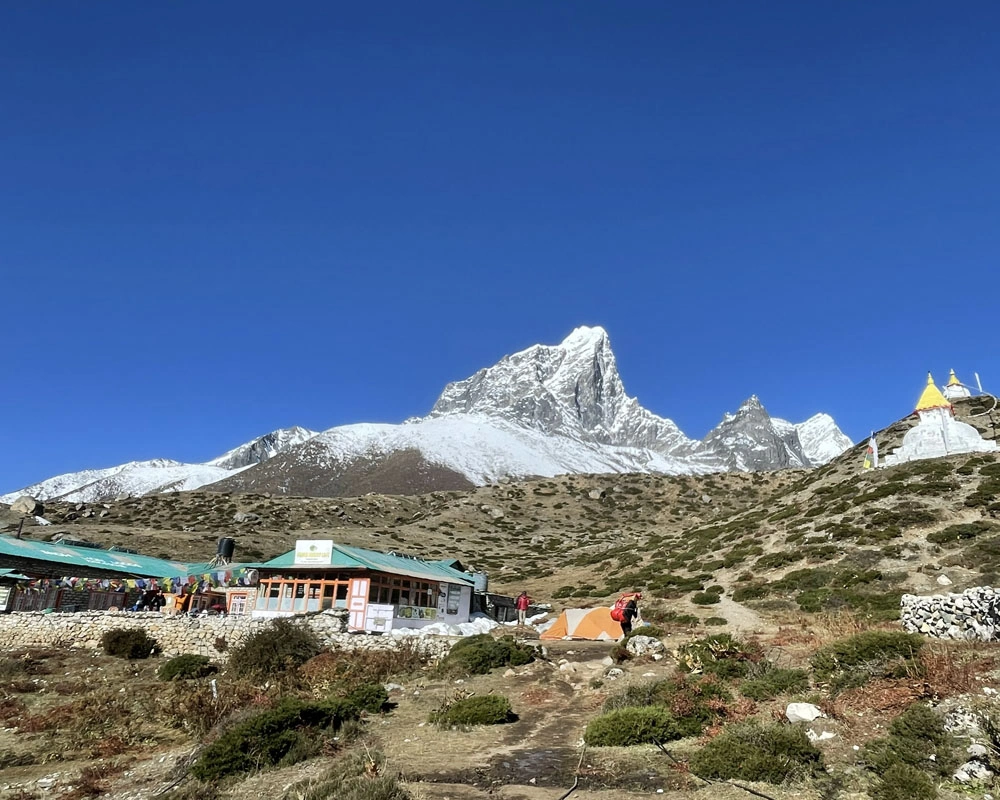
You will see the monastery where several climbers come for praying before the Mt. Everest summit. While continuing the hike, you will traverse settlements like Shomare. Following the Imja Valley, you will finally reach Dingboche, a Sherpa village with some teahouses, tea shops, restaurants, and shops. As it is located at high elevation, your family can see unobstructed panoramas of peaks. 

  • Max. Altitude:4410 m / 14464 ft.
  • Accommodation:Teahouse
  • Meals:Breakfast, Lunch, Dinner

Trek Duration: 3 hours and  2 hours (Trek to Thukla pass and back)

Trek Distance: 3-4 kilometers and 2 km (Trek to Thukla pass and back)

After a hearty breakfast, begin the trek with gradual ascents mostly on open grasslands, savoring the charm of Mt. Ama Dablam. Before ascents via steeper and more rugged trails, cross a river near the Dusa, a small yak pastureland. As you continue the trek for a few hours, you will reach the village of Thukla, also known as Dhugla, a seasonal settlement where locals open teahouses during peak seasons (spring and autumn) to serve travelers. 

On this day, you can go on a side hike to Thukla Pass, 5106 m (16752 ft.), a memorial site on the EBC route where you can see several memorial monuments and tributes to the sacrifice of mountaineers and guides who have lost their lives during mountain climbing. This is not only a spot to know history but also popular for its expansive scenery. After spending time for a while, descend down to Thukla.


  • Max. Altitude:4620 m/15157 ft.
  • Accommodation:Teahouse
  • Meals:Breakfast, Lunch, and Dinner

It’s a short but quite strenuous hike, as you cross Thukla Pass (4830 m) to reach Lobuche. You might feel emotional while seeing stone memorials honoring climbers who lost their lives on Mt. Everest and other nearby peaks. Struggling through steep terrain becomes worthwhile due to breathtaking panoramas of peaks such as Khumutse, Maha Langur, Lingtren, Tawtse, Ama Dablam, and Pumori from Khumbu Glacier moraine. After covering a few more distances, reach Lobuche, the most famous stop for mountaineers on the route to EBC. 

  • Max. Altitude:4940 m/16210 ft.
  • Accommodation:Teahouse
  • Meals:Breakfast, Lunch, and Dinner

Trek Duration: 6 to 8 hours 

Trek Distance: 6. 5 kilometers 

This is the most anticipated day of the 14 days Everest Base Camp trek since you will trek to Gorekshep and then to the base of Mt. Everest (8848 m) today. Gorakshep is the last settlement before EBC, which you reach after walking a few hours alongside the Khumbu Glacier moraine. Keeping the backpack at the teahouse, head to Everest Base Camp (5364 m), navigating snowy and rocky landmarks. 

When you reach there, the breathtaking environment, decorated with fluttering prayer flowers and encompassed by towering peaks, welcomes you to savor the charm of nature. Spend quality time together with fellows, enjoying the Khumbu icefalls and wonderful vistas of mountains. Get back to Gorakshep, avoiding unpredictable weather challenges after clicking some photographs in the dramatic environment. 

  • Max. Altitude:5160 m/ 16929 ft.
  • Accommodation:Teahouse
  • Meals:Breakfast, Lunch, and Dinner

Trek Duration: 11.5 kilometers

Trek Distance: 6 to 7 hours 

Today, you will hike up to Kalapatthar, a popular vantage point in the Everest region for extensive vistas of the Everest massif and surrounding scenery. The journey starts early in the morning to witness the magical moment of dawn, when the sun begins to rise and casts golden rays over the white mountains, creating a truly captivating backdrop. After spending some time, return to Gorakshpe and make your way towards Pheriche (4200 m), following mostly descending trails adorned with alpine forests and some terraced farms. 

  • Max. Altitude:4200 m/ 13776 ft.
  • Accommodation:Teahouse
  • Meals:Breakfast, Lunch, and Dinner

  • Max. Altitude:3840 m/ 12598 ft.
  • Accommodation:Teahouse
  • Meals:Breakfast, Lunch, and Dinner

  • Max. Altitude:3440 m/11284 t/
  • Meals:Breakfast, Lunch, and Dinner

Trek Duration: 7-8 hours

Trek Distance: 18 kilometers

Today is your last night in the Khumbu region as you get back to Lukla via Phakding, Monjo, and Namche Bazaar, walking alongside the Dudkoshi River Valley. After reaching Lukla, take a rest for a while and explore around the village once before returning to the capital city. Celebrate the moment after completing the trek successfully. Prepare for the next day’s flight before bed. 

  • Max. Altitude:2800 m/ 9184 ft.
  • Accommodation:Teahouse
  • Meals:Breakfast, Lunch, and Dinner

Wake up early in the morning with the sunrise and then have a hearty breakfast before flying back to Kathmandu. As you land at the airport of Kathmandu, our representative of Green Society Adventure transfers you to the hotel. After taking a rest for a while, you can visit World Heritage Sites such as Pashupatinath, Boudhanath, Swayambhunath (Monkey Temple), Patan Durbar Square, and Kathmandu Durbar Square. Explore around bustling markets like the Asan, Thamel, Lagankhel, and Bouddhanath areas to buy souvenirs for your loved ones

  • Max. Altitude:1320 m/ 4330 ft.
  • Accommodation:Deluxe Hotel
  • Meals:Breakfast

Drive Duration: 35 to 40 minutes 

Today, you will return to your homeland, leaving the country of the Himalayas, carrying lots of memories in the Everest region. Our team will transfer you to the Tribhuvan International Airport approximately 2-3 hours before the scheduled flight. 

  • Meals:Breakfast
Cost Details
Includes
  • Free airport-hotel-airport pick up and drop-off as per itinerary in a private vehicle
  • Accommodation in a deluxe hotel in Kathmandu on a twin-sharing basis with breakfast.
  • Lukla round-trip flight to Kathmandu, including departure taxes.
  • Full board meals (breakfast, lunch, and dinner) during the trek.
  • Three/four cups of tea/coffee during the trek. 
  • Teahouse or lodge accommodation during the trek.
  • Seasonal fresh fruits as dessert every evening after dinner, during the trek.  
  • An experienced English-speaking trek leader (trekking guide) and Sherpa porters to carry luggage (2 trekkers: 1 porter).
  • All salary, insurance, equipment, flight, food, drinks, and accommodation for the guide and porter. 
  • Assistance guide for groups of 5 or above. 
  • Trekking equipment: such as a sleeping bag (the sleeping bag is to be returned after trip completion) and a duffel bag. 
  • Green Society Adventure's complimentary free T-shirt and route map (if needed)
  • All necessary paperwork, national park permits, and TIMS
  • Khumbu-Pasang community entry fee. 
  • Farewell dinner at a typical Nepalese restaurant with traditional performances. 
  • A comprehensive medical kit/first-aid kit and an oximeter to measure your oxygen and pulse level during the trek. 
  • All government and local taxes
Excludes
  • Nepalese visa fee
  • Excess baggage charges
  • Lunch and dinner in Kathmandu.
  • All bar bills along the trek.
  • Extra night accommodation in Kathmandu in case of early arrival, late departure, and early return from the mountain (due to any reason) compared to the scheduled itinerary.
  • Travel and rescue insurance.
  • Personal expenses (phone calls, laundry, bar bills, battery recharge, extra porters, bottle or boiled water, shower, etc.)
  • Tips for guides and porters.

Optional Add-ons

  • Luxury Hotel During the Trek: USD 1360
  • Extra (Private) Porter: USD 325
  • The helicopter flies in and out (cost depends on sharing the helicopter, $900, or private, $2700 per helicopter)
Useful Information

When is the best time for the Everest Base Camp trek suitable for children? 

Neither high temperature nor lower is suitable to walk on at high altitudes, especially with seniors and children, because of the extreme risk of skin damage due to UV rays or severe cold. As a result, selecting spring (March to May) and autumn (September to November) are the best times of the year due to pleasant weather, moderate temperatures, and better trail conditions. The temperature ranges between 15°C and 22°C in the daytime at lower elevations. The temperature may drop lower in high elevations, sometimes to freezing temperatures in the spring.

All members truly enjoy greenery, blooming rhododendrons, and spectacular scenery without obstruction and rush in these months, as daytime is longer compared to other seasons. Similarly, autumn brings vibrant color to the region just after monsoon, ensuring comfort and safe hiking. Along with vibes of festivals like Dashain, Tihar, and Chhath, trekkers can navigate the trail easily due to a suitable climate with a temperature of 12°C to 20°C in the daytime at lower elevations and quite a bit more in higher terrain. The night temperature may drop sometime to -15°C, but we provide an electric blanket, extra sleeping bags, a warm mattress, and elevations; you are kept away from cold-related problems. 

During times such as the spring and winter (December to February), temperatures may create issues on the trail due to extreme cold and heavy rainfalls, respectively. While trails become slippery, muddy, or snowy, making navigation more challenging, you may not be able to enjoy breathtaking scenery due to rains, fogs, and clouds. To avoid flight or trip cancellation in such weather, as well as sometimes getting back from the middle of the trails, you can choose either spring or autumn. Family can have fun together without unnecessary concern.

What permits are must-haves for the Everest Base Camp trek for family?

Documents like Nepal visas and passports are not enough to explore trekking and tourism areas, especially high-elevation preserved ones, for both Nepalese and foreigners. A Sagarmatha National Park entry permit and a Khumbu Pasang Lhamu Rural municipality permit are crucial. The cost for them may vary depending on nationality and timing, as it may be cheaper for SAARC citizens as well as during off-seasons. On your behalf, the chosen company proceeds with these official papers before trekking’s initiation, as you have to verify them at different distinct checkpoints like Lukla and Monjo.

Obtaining permits is not only to maintain the number of tourists and to collect funds for reconstructing trails and the welfare of wildlife but also to guarantee each individual’s safety. Authorities like the Nepal Tourism Board (NTB) and the Lhamu Rural Municipality keep all your documentation, including a passport-size photo and a detailed itinerary. They will track you until the trip completion, providing rescue in case of injury or acute mountain sickness. Follow the government's rule to skip the penalty and enjoy nature freely. Remember that you must proceed through the registered travel company, including a licensed guide. 

What kind of accommodation and meals are available on the Everest Base Camp trek for family?

You can expect common but family-friendly teahouses, guesthouses, or lodges for your family members during the Everest Base Camp trek for an overnight stay, where you will eat dinner and breakfast. You will find shared rooms with twin beds, pillows, blankets, and simple furniture in most settlements. Even though you get many services like a hot shower, a private room, and good internet in Namche Bazaar, we can manage the same facilities for you in higher-altitude villages as well, where possible, upon your special request at an extra cost. Rooms are basic but clean and safe for all members.

In such teahouses, you get fresh, hot meals, prepared by local chefs. You really love Nepalese dishes rather than international foods. You children may have a craving for spicy and heavy food, but we recommend eating light but nutritious food like dal and bhat. This meal is popular on treks, as it includes steamed rice, seasonal vegetables, spinach, lentil soup, salad, and pickles. Teahouses offer food like pizza, burgers, pasta, mein, thukpa, porridge, sandwiches, and fried rice but may cost higher.

In addition, we also suggest you not eat meat, as high terrain has electricity problems, and meat is not always fresh. Avoid drinking alcohol, which can make your body dehydrated. Overall, you will get good hospitality and authentic Himalayan dishes on the Everest Base Camp family tour.  

How difficult is the Everest Base Camp trek for family 2026? 

The Everest Base Camp trek is itself moderately challenging, yet it is one of the most popular routes. The trek may become more difficult due to a lack of proper preparation and strategic packing during hiking with kids and seniors. Rugged terrain, some avalanche-prone areas, and routes with a risk of landslide or flood add to the difficulty level of the EBC trek. 

A short acclimatization period, long daily trekking distance, trekking season, weather, topography, trail condition, availability of accommodation, meals, and more stays in higher villages are the major influencing factors of Everest trekking difficulty. Nevertheless, a guided trip generally becomes more successful than a solo one in the region, like Everest. 

Is altitude sickness a concern on the Everest Base Camp trek with kids in Nepal? 

Yes, altitude sickness is a significant concern on this Everest trip with kids and adults. While there is a possibility of experiencing symptoms of altitude sickness, whether you have prior experience or not, it can be prevented with caution. Keeping your body hydrated, ascending gradually to higher elevations, and following a guide can reduce risks of such altitude-related issues. For more information about this, click “About Altitude Sickness" and be safer on the trail.

Symptoms: Headache, dizziness, nausea, sleeping difficulty, shortness of breath, chest tightness, fatigue, rapid pulse, etc.

Is travel insurance mandatory for the Everest Base Camp family trek? 

Yes, travel insurance is essential for each member of the family while on the EBC trekking, although it is not compulsory according to the government's rule. The route takes you up to 5,644 m, where the oxygen level is significantly low compared to lower settlements. Even if you have prior experience and enough physical preparation, insurance plays as a safeguard for your economy and your overall health condition in case of unforeseen circumstances.

Ensure that the purchased insurance has the right policy for all kinds of trekking activities and helicopter evacuation above 5,000 m. Due to unpredictable alpine weather, flights may be cancelled or delayed sometimes. As a result, the policy must cover flight/trip cancellation and personal belongings' loss, damage, or theft. With this document, your family can just enjoy the trip and share much love with each other.

Do you need a guide for the Everest Base Camp family tour?

Yes, the guide’s role cannot be neglected in Everest region trekking, especially when determining to go with family to the base of the tallest mountain. Since the guide has many years of experience leading both large and small groups of trekkers, consisting of kids and adults, the guide’s support elevates the entire Everest Base Camp trek. A seasoned guide has the training and knowledge to treat all ages, as well as take care of all members in case of health problems. 

The guide recommends you wear suitable clothes, have appropriate meals, and also supports communicating with teahouse owners to ask for needed things. Due to deep insight into Himalayan cultures, weather patterns, mountain lifestyle, each place, and major/alternative trails, you do not have to suffer through many possible issues. 

The guide keeps updating your health status, weather forecast, and trail condition using different tools, as well as contacting guides returning from Everest Base Camp or teahouse owners. Similarly, the porter will let you walk comfortably on demanding trails by carrying your heavy backpack of up to 15 to 20 kg.

How can family prepare for the Everest Base Camp trek with kids in Nepal? 

Every trek needs careful preparation, but more caution is essential while going on a trek with family, from physical to mental preparation. Even if our team guides you through Everest trails during this 16-day journey, you should do some common cardiovascular exercise, such as walking, cycling, running, jogging, and hiking to nearby hills, gaining some elevation. Continuing these workouts for 8 to 12 weeks makes you stronger by making your muscles ready for long-distance walking.

Similarly, your heart and lungs work better in high-altitude terrain with consistent fitness training and yoga practice. Prepare mentally to adapt to thinner air and isolated settlements with limited facilities and health services, far from social media life, as the internet becomes weaker the higher you climb. 

What should a family pack for the Everest Base Camp trek in 2026? 

Any of you should not be unwell during this Everest trek because no one can truly enjoy it by seeing someone suffering from a health problem. To keep all your family members safe and comfortable, your packing essentials also affect all of you. As a result, pack a layered system of clothes—base, mid, and outer. Purchase or take essentials on rent of premium quality. Do not forget to carry a waterproof and windproof jacket along with trekking boots with good grips. To protect all your documents and equipment, take a waterproof cover for your backpack.

A first aid kit, sunscreen, UV ray glasses, gloves, insect repellent, biodegradable soap, toothpaste, a mask, wet tissues, sanitizer, a sun hat, and a woolen hat seem like small things but play a great role in keeping you hygienic and safer. Carry an extra sleeping bag with its liners to provide yourself extra warmth at higher altitudes. To hydrate and provide energy for your body, do not miss a reusable water bottle and healthy snacks like chocolate bars, dry nuts, fruits, beaten rice, and cookies.

What offer do you have for an Everest Base Camp trek for family for 2027? 

We often provide offers for travelers to plan a budget for adventure in a strategic way. As a result, you will get a 10 % discount on the Everest Base Camp family tour If you book the trip before 2027. Do not miss this golden opportunity. If you can have a lot of fun with your family member at lower cost by booking earlier, then why are you against it? Click the “Book This Trip" and make your dream come true. 

Conclusion

Our assumption is not only selling packages but also providing travel information. We have many packages for different regions and travel blogs. If you are seeking a trustworthy trekking company in Nepal for your trip in 2026/2027, you are at the right place and in safe hands, as we have been serving adventurers for more than a decade. Check our clients’ reviews, and once you believe us, then we fully attempt to satisfy your family. 

To sum up, are you ready to reach the base of the highest mountain, locally called Chomolungma, at an elevation of 5364 m? To have a fun even on demanding trails, following the footprints of legendary mountaineers like Sir Edmund Hillary and Tenzing Norgay Sherpa, contact us today. 

Similar Trips
You May Also Like

Ask a Question