Everest View Trek - 10 Days

Trip Facts
  • Duration:10 Days
  • Difficulty Level: Moderate
  • Destination: Nepal
  • Max. Altitude: 3880 meters
  • Start at: Kathmandu
  • End at: Kathmandu
  • Group Size: 2 - 24
  • Best Season: Spring(March to May) and autumn (September to November)

Highlights

  • After a long-haul flight, enjoy a short yet gratifying flight to the airport of Lukla, named after legendary mountaineers Tenzing Norgay Sherpa and Sir Edmund Hillary. 
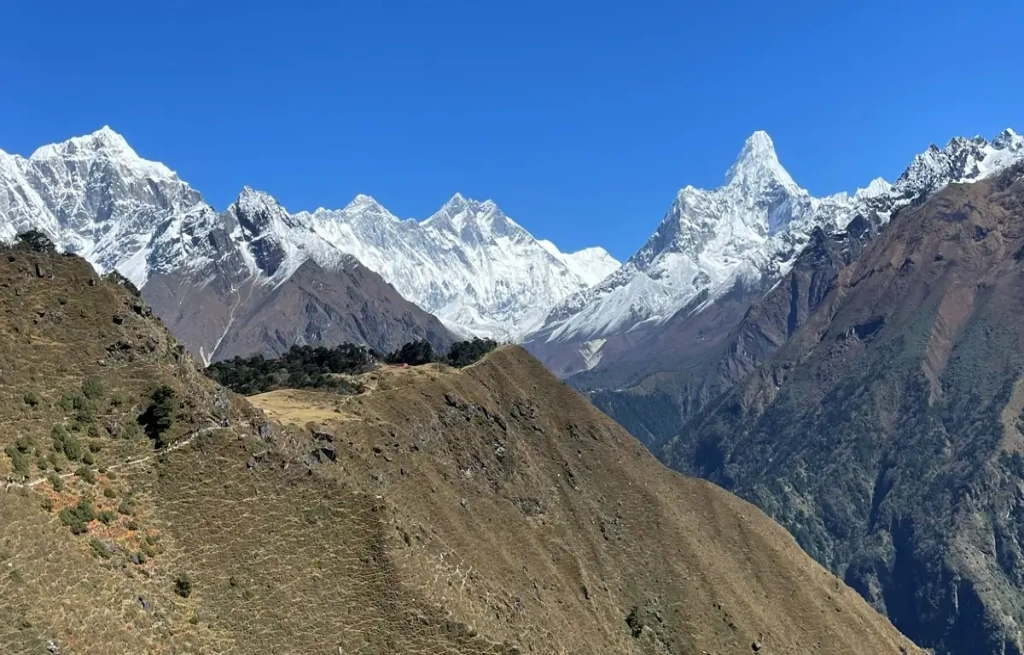
  • Relish the panoramic vistas of the Himalayas like Mt. Everest, Ama Dablam (6,812 m), Lhotse (8,516 m), Thamserku (6,608 m), Kusum Kanguru (6,367 m), Numbur Himal (6,958 m), Kongde Ri (6,187 m), and Pikey Peak (4,065 m). 
  • Immerse yourself into the unique cultures of Sherpas while crossing villages like Namche Bazaar, Benkar, Monjo, Tengboche, and Khumjung. 
  • Capture strange activities of rare animals in the dense forests of rhododendrons, maples, and oaks while trekking via parts of Sagarmatha National Park. 
  • Taste local meals of the Khumbu region prepared at teahouses, run by Sherpas, who have a deep connection to the region and are often renowned for their mountaineering skills.

Embark on the Everest View Trek, which allows you to savor the charm of Mt. Everest and other mountains from ideal vantage points, including Hotel Everest View and Tengboche (3867 m), without reaching Everest Base Camp and Kalapatthar. You will also learn the lifestyles of Sherpas, influenced by Tibetan Buddhism, while discovering villages like Namche Bazar, Tengboche, and Khumjung. 

Trip Overview 

The Everest View trek is one of the moderate Himalayan hiking routes, located in the Khumbu region of northeastern Nepal, suitable for those searching for surprises at every phase with less effort and walking length. Without reaching elevations above 4000 m, enjoy extensive panoramas of Mt. Everest (8848 m), the loftiest peak on our Earth, from a prime vantage point like Hotel Everest View (3880 m). Although it is a short trek of only 10 days, you will learn how locals reside in such isolated areas, serving adventures for decades while traversing traditional villages and staying at teahouses.

A mesmerizing flight to Lukla refreshes you and prepares you for hiking through parts of Sagarmatha National Park and peaceful trails alongside the Dudhkoshi River. Ancient monasteries, the warm hospitality of Sherpa communities, and awe-inspiring mountain vistas make it worth it. Since it’s not challenging like Everest Base Camp Trek, Everest High Pass Trek, and the combined trek of EBC and the Gokyo Lake route, the journey can be an ideal one for novice trekkers and families (including juniors and seniors). 

Lower risk of acute mountain sickness on the route allows you to immerse yourself in locals’ cultural heritage more comfortably, as you do not have to worry about physically demanding alpine passes and rugged terrain. For more details about this package, contact us on WhatsApp or send us an email. Ensure a safer and more enjoyable trip along with your loved ones according to your preferences, as our itineraries are carefully designed considering your fitness level and comfort.

Why choose the Everest View Trek in Nepal? 

Who does not love exploring a home to 14 towering peaks of 8,000 meters? Distinct trekking companies of Nepal have been conducting trips ranging from easy to strenuous. All trekkers may not have the fitness level of mountaineers to tackle demanding, uneven paths with steep ascents and descents. However, a Himalayan journey does not mean only reaching the foothills of mountain giants. As a result, for those who want to savor the charm of the Everest region without summiting the peak and reaching the base camp, this journey has become a gem. Discover below why this trek can be a special one: 

Majestic vistas of Mountains 

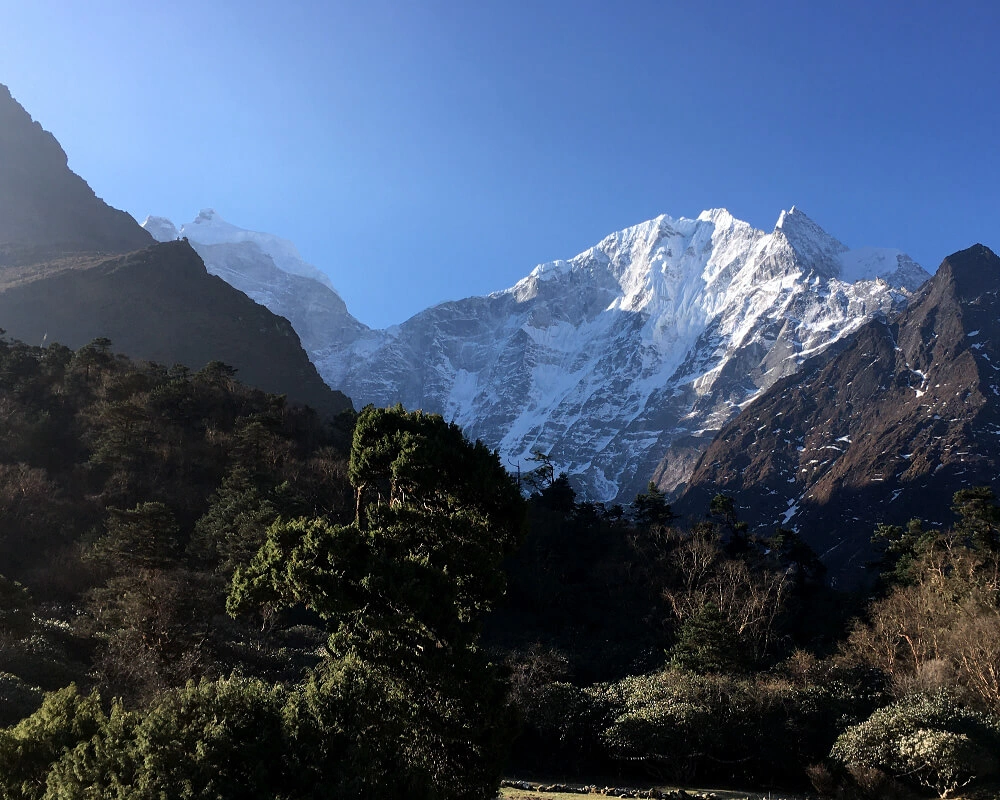
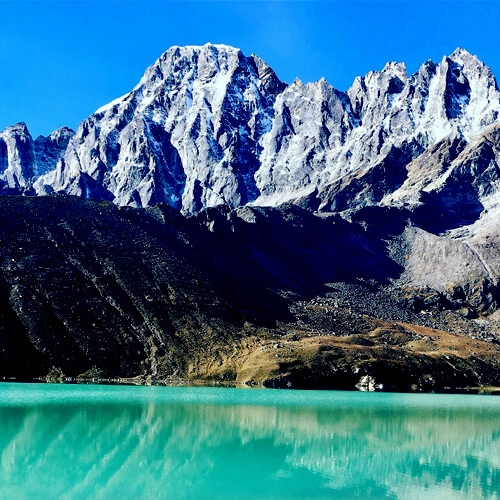
From the beginning point of official trekking, Lukla (2860 m), sweeping vistas of mountains appear along with mind-blowing scenery. Dramatic background dominated by towering, snow-clad mountains including Mt. Everest (also known as Chomolungma/Sagarmatha), Ama Dablam (6,812 m), Lhotse (8,516 m), Thamserku (6,608 m), Kusum Kanguru (6,367 m), Numbur Himal (6,958 m), Kongde Ri (6,187 m), and a distant view of Pikey Peak (4,065 m). 

Different vantage points like Namche Bazar, Hotel Everest View, Khumjung Valley, and Tengboche Monastery offer panoramic vistas of mountains along with magnificent surroundings.

Remarkable Sherpa cultural heritage experience

Ethnic groups like Sherpa, Rai, Tamang, Gurung, and Tibetan-origin people reside in quaint villages of the Khumbu, which are rich in culture. Their traditional life skills, agricultural approaches, unique attire, friendly behavior, warm hospitality, and Himalayan cuisines, prepared by locals at their teahouses, are really notable. During the 10 days Everest View Trek, you will know about the hidden stories of Sherpas, world-renowned mountaineers, and trekking guides, including Tenzing Norgay Sherpa, who was born in Thame. With their support, numerous legendary climbers have successfully reached the summit of mountains, including Mt. Everest, Island Peak, Mera Peak, Lobuche East, Ama Dablam, and Cho Oyu.

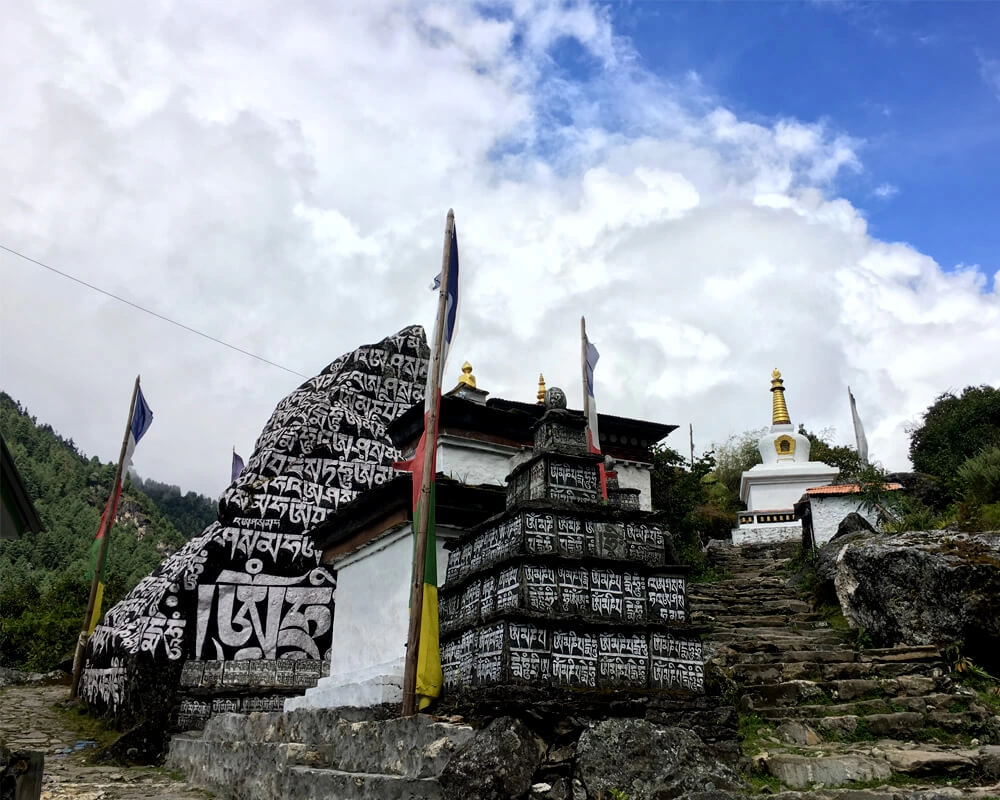
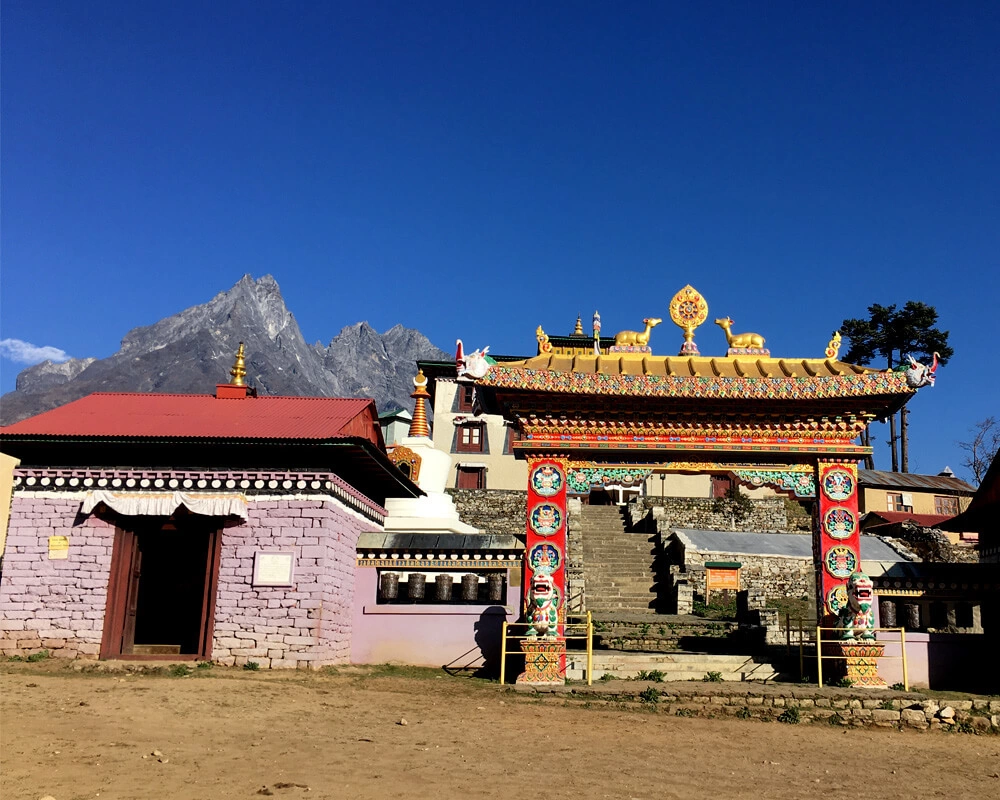
Majorly, Tibetan Buddhism has affected the modes of living and traditions, which have been handed over from generation to generation. Exploration of ancient gompas and monasteries like the centuries-old Tengboche Monastery, the largest monastery in the region, located at an altitude of 3867 m. Observe Buddhist rituals, daily prayers performed by monks and nuns, and festive activities, especially on the vibrant occasion of the Mani Rimdu festival. Small chortens, prayer flags, and prayer wheels along the trails also showcase the deep spiritual beliefs of locals, who have been serving trekkers and climbers for many years. 

Golden opportunity to capture activities of wildlife

The Everest View Trek route also falls under areas of Sagarmatha National Park, a habitat to hundreds of living beings, including some rare ones. While heading to distinct destinations, you might spot wildlife such as the blood pheasant, Himalayan tahr, musk deer, snow leopard, Himalayan griffon, yak, langur monkey, and pika. 

Keeping distance from them, you can capture their activities on your camera roll and expose them to the world, regardless of photography skills, as the magnificent background of alpine terrain makes the photos beautiful in themselves. Walking on trails adorned with rhododendrons is one of the most memorable experiences, as you forget all efforts to traverse some ascents and descents by seeing their charm and listening to rustlings. 

Who can do this Everest View trek in 2026/2027? 

Considering the physical fitness level of novice trekkers and each member of the family, the Everest View Trek itinerary is designed. As the maximum altitude of the trip is approximately 3880 m, several travelers can do it, accompanied by a licensed guide. The trek does not require advanced exercises before starting it, and only a common aerobic workout is sufficient to walk approximately 4 to 5 hours per day. 

As a result, this short yet rewarding trek is suitable for first-time trekkers in Nepal, families with children, senior travelers, beginners with a basic fitness level, nature lovers, photographers, solo travelers, small groups, trekkers with a few days' vacation, and any travelers who love to enjoy awe-inspiring panoramas of Mt. Everest without reaching its base camp (5364 m). Lower altitude and well-marked trails are safer and more comfortable for you compared to other strenuous and longer Everest trekking routes. 

What is the total cost for the Everest View trek? 

The Everest View trek cost is more affordable compared to longer treks, as trek duration and its hiking length impact daily expenses. However, trekkers can spend on better services, including lodging, meals, guides, porters, equipment, and travel insurance based on their own preferences. You have to pay out of your pocket when you prefer extras to the package’s inclusion. The total cost also depends on timing and the selected trekking agency. While permits are expensive during spring and autumn (peak seasons), trekking in offseasons (monsoon and winter) becomes cheaper due to discounts. 

We recommend choosing premium-quality services throughout the journey because well-being and safety are key to a successful trip. Our company provides some of the trekking essentials within its cost, but some are excluded. The package covers breakfast, lunch, and dinner in the Everest region and only breakfast in the Valley. Explore the following inclusions and exclusions of the trek's cost, which helps in estimating cost and makes it easier to budget.

Why is the Everest View trek itinerary of 10 days the best? 

Trekking along with beginners, small children, and seniors should go gradually, avoiding rushing. If you see our 10-day itinerary, it includes an acclimatization day at Namche Bazar to allow you to adapt to the alpine atmosphere naturally before continuing your journey through high settlements. Although the package gets activated on your arrival in the Kathmandu Valley, experience its joy with an exhilarating flight to Lukla Airport, one of the highest airports in the world. On the same day, start official trekking to Phakding, following the trail alongside the Dudhkoshi River. 

The next head towards Namche Bazar and also verify the Sagarmatha National Park entry permit at Monju before continuing to the destination via Jorsalle. Explore traditional villages such as Tengboche and Khumjung, respectively; you will get back to Lukla via Monju and return to Kathmandu. This strategic itinerary guarantees each trekker’s security together with scenic scenery, suitable hiking distances, trekking hours, and a smooth schedule by starting and ending in Kathmandu. As a result, this 10-day Everest View trek itinerary offers a perfectly balanced odyssey of culture, nature, and adventuring, presenting it as an iconic short Everest trekking trail. 

Why should you trek to the Everest viewpoints with us?

Among several regions like Annapurna, Kanchenjunga, Dolpo, and theLangtang region, trekking to the Everest region is one of the best Himalayan experiences. Since we at Green Society Adventure have been serving trekkers and climbers for more than 13 years continuously, conducting trekking, climbing, and other travel. Selecting us for this 10-day Everest View trek means not only traveling with a seasoned Nepal trekking guide but also experiencing quality services. Our team are professional travelers who ensure trekkers’ well-being and comfort and always believe in providing responsive facilities based on your choice rather than following only ours.

While our trained guide manages each logistic and handles any circumstances with sufficient qualification and deep knowledge regarding trails of many years. As a result, you can choose us for genuine hospitality, reliable accommodation, meals, and trekking confidently. We deal with tea house owners and locals when you need something during your journey and also translate to your language when needed. Before you arrive, our officials manage required documents on your behalf, allowing you to focus on the trip. Our booking process and payment method are also easy. If you want to know more about us, please contact us through WhatsApp or email.

Want to check other alternative trekking packages in Everest? 

If you are risk takers and want a more challenging and adventurous route in the Everest region, check out some packages such as the Everest Base Camp Trek, the 17-dayEverest Base Camp and Gokyo Lake Trek, the 18-day Everest High Pass Trek, and the Gokyo Lake Trek—11 Days. According to your fitness level and budget, select the best for you and customize them to your needs.

More long days on the Everest routes allow you to learn more about unique cultures and give you space to savor the surreal charm of nature. We have packages for other regions such as Langtang Valley Trek, Tamang Heritage Trail, Mardi Himal Trek, and Ghorepani Poon Hill Trek that suit beginners and all types of travelers. Click the links for details or talk to our travel expert to assist with your queries.
Itinerary
Expand AllCollapse All

If you are not satisfied with this trip itinerary, here you can customize your own trip itinerary. 

As you land at Tribhuvan International Airport, Kathmandu, our representative from Green Society Adventure welcomes you at the arrival terminal with a bookie or khada. You may feel extremely happy by standing on the land of the Himalayas and Gurkhas, who are renowned all over the world for their valor, endurance, and strength. While it is not a race, it's a symbol that we, all Nepalese, embrace as part of our identity.

After the welcoming session, you will be transferred to the hotel where you will stay at night. After a rest for a while, wander around bustling markets, purchase missing essentials, and then attend an orientation session, organized by our team, where you meet your guide and fellow trekkers. Ask anything you doubt about the trek, and sleep earlier for the next day’s travel after proper preparation. 

  • Max. Altitude:1340 meters
  • Accommodation:Heritage deluxe hotel
  • Meals:Welcome Dinner

Flight Duration and Trek Duration: 25 to 30 minutes and 2-3 hours

Trek Length:            8 km 

With excitement, enter the trekking areas of the Everest region and enjoy a flight to Lukla, a gateway to Everest Base Camp, of 25 to 30 minutes. As soon as you have aerial views while flying over valleys, high mountains, hills, and fields, begin official trekking. A short yet rewarding trek from Lukla to Phakding with some descending and ascending trails alongside the rhododendrons, magnolia trees, thick pine forests, prayer wheels, mani walls, gompas, tea houses, and traditional settlements becomes really interesting. 

Crossing villages such as Ghat, Thadokoshi, and Ghat beside Dudhkoshi River, reaching the day’s destination, and taking a deep breath after a continuous hike of 3 hours. Take a rest after checking into the teahouse and walk around it in the evening time, savoring the beauty of the surroundings. 

Tenzing Hillary Airport, Lukla(2860 m)


  • Max. Altitude:2660 meters
  • Accommodation:Teahouse
  • Meals:Breakfast, Lunch, Dinner

Trek Duration: 6 hours

Trek Length: 10.8 km

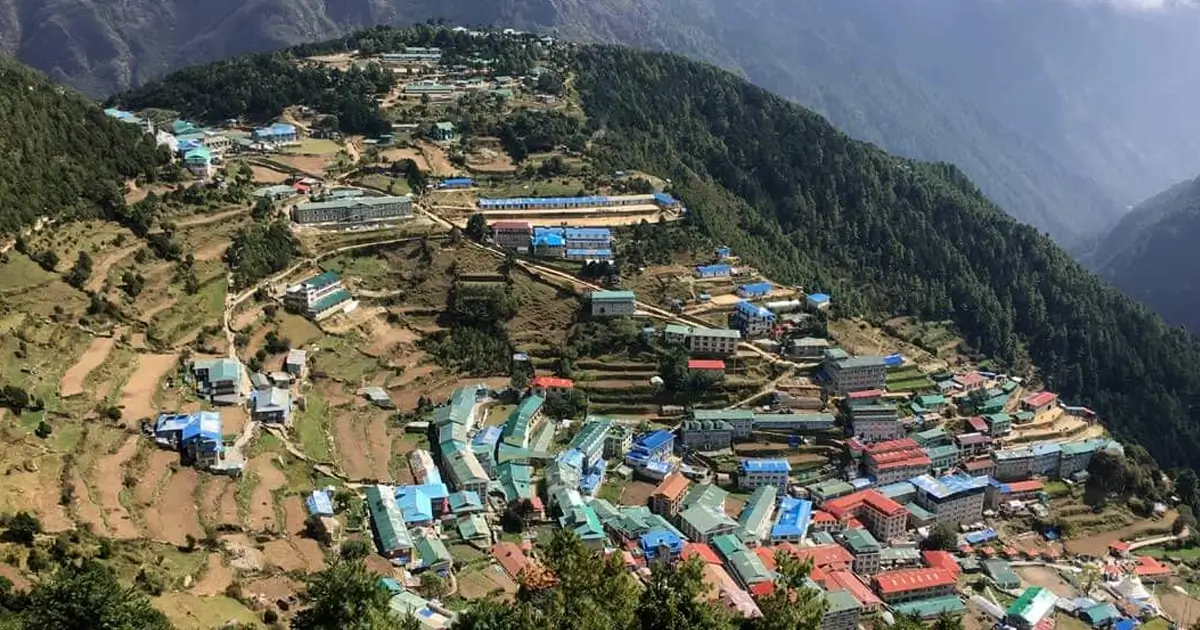
Wake up early in the morning and begin trekking towards Namche Bazar after a hearty breakfast. The settlement is often considered a Sherpa town where several Sherpas reside, serving trekkers and climbers. Rich cultures and their warm hospitality attract you the most while staying there. You will get ATM service, good healthcare at a big hospital, and also essentials in the markets of Namche Bazaar. Crossing villages like Toktok, Benkar, Monjo, and Jorsalle, finally you reach the destination. 

Since you are going through Sagarmatha National Park, a UNESCO natural world heritage site, you have to verify entry permits at Monjo before proceeding with the trip ahead. Today’s journey is quite challenging due to some steep trails, and some consider it a test of trekkers’ determination to reach Everest Base Camp.

Namche Bazaar
Namche Bazaar, a sherpa town of the Everest region
  • Max. Altitude:3440M/11284FT
  • Accommodation:Hotel
  • Meals:Breakfast, Lunch, Dinner

Trek Distance: 3 to 4 km 

Trek Duration: 2 to 3 hours 

Acclimatization day is a crucial aspect of any Himalayan trip, including the Everest View Trek, to allow your body to adapt to the environment before heading to higher terrain. Today, you will explore the cultural heritage of Sherpas and their stories, who appear in their own cultural attire. This is the most anticipated day, as you can go on a side hike to nearby vantage points and pilgrimage sites, including Hotel Everest View (3880 m), the Sherpa cultural museum, and Syangboche airstrip. Enjoy panoramic vistas of Mt. Everest, Mt. Thamserku, Mt. Ama Dablam, and Kongdi Ri. 

If you want to discover the wildlife and vegetation of preserved areas, visit the Sagarmatha National Park headquarters. Stretching your feet and gaining some elevation helps your body in acclimatizing more than sitting only at the teahouse.


  • Max. Altitude:3440M/11284FT
  • Accommodation:Hotel
  • Meals:Breakfast, Lunch, Dinner

Trek Distance: 9 to 10 km 

Trek Duration: 5 hours 

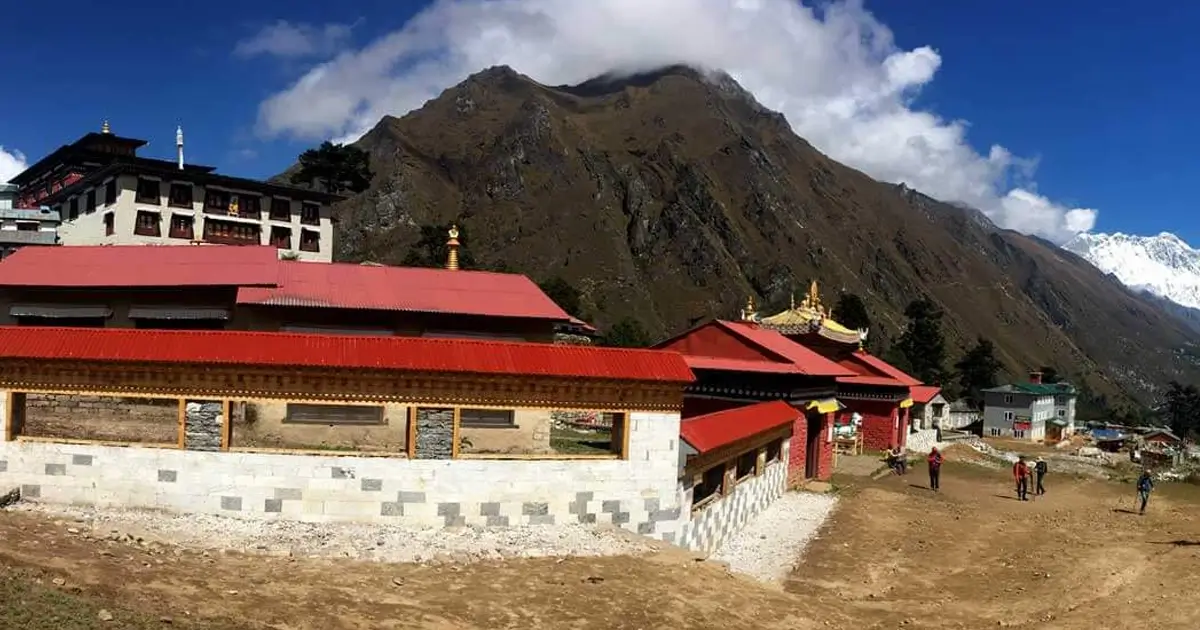
Leaving the vibrant settlement of Namche Bazaar, head to Tengboche, also known as Thyangboche, a home to Tengboche Monastery, one of the oldest and biggest monasteries in the Khumbu region. Locals are spiritual and have been preserving their cultures and living ways for centuries, which are usually influenced by Tibetan Buddhism. The hiking trails showcase more symbols of Buddhism, such as the five-color mantra flags fluttering along the way, mani wall stones, gompas, and monks. Today’s trek starts with ascents, continues to Kyanguma, and takes to the Imja Khola river after Sansa and Phunki Thenga with some downhill steps. 

Continuity of the trip with some quite steep ascents after the river leads to Tengboche via forests of rhododendrons and grazing landmarks. Reaching the destination becomes more significant while discovering the Tenzing Memorial Chorten, located in a peaceful atmosphere that offers a mesmerizing view of Mt. Everest. 

Tengboche Monastery
Tengboche Monastery


  • Max. Altitude:3790Meter, 12694FT
  • Accommodation:Teahouse
  • Meals:Breakfast, Lunch, Dinner

Trek Distance: 8-9 kilometers 

Trek Duration: 4 hours 

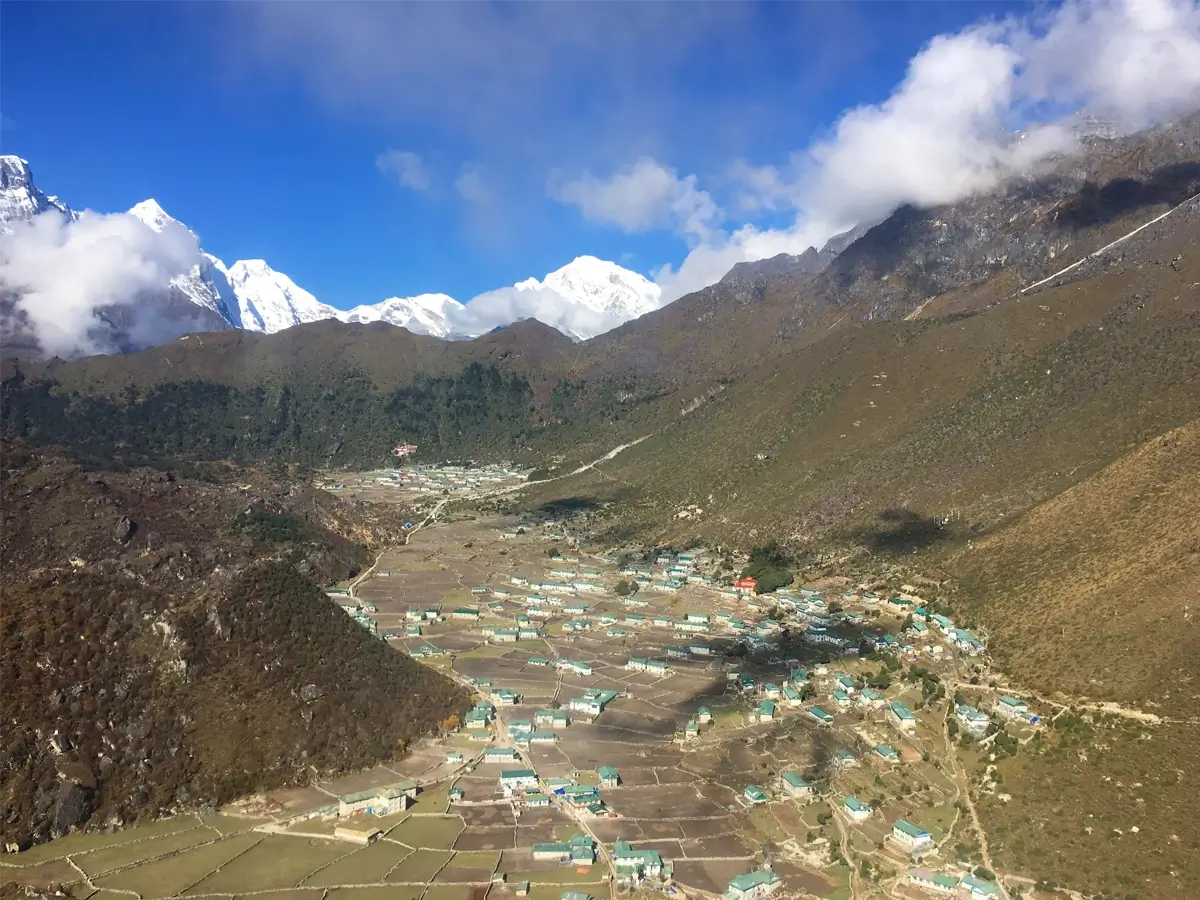
Today's retreat, Khumjung, is located at the base of the holy mountain Khumbila and is among the oldest Sherpa villages. The full-spectrum vista of Mount Everest and other peaks in the Everest Himalayan range makes this location well-liked.

Here, we shall take in the vista of Mount Everest and the Sherpas' hospitality. The monastery there is said to have the sole scalp of the legendary Yeti. But what's interesting now is getting here. The journey to Khumjung, which is gradual and occasionally steep, gives breathtaking vistas of the Everest Himalayan range.

Khumjung Village


  • Max. Altitude:3780Meters/12398 ft.
  • Accommodation:Guest house
  • Meals:Breakfast, Lunch, Dinner

Trek Distance: 10-11 kilometers 

Trek Duration: 4-5 hours 

After a delicious breakfast, it’s another day of trekking, which will be easier and enjoyable. Seeing Mount Everest and the magnificent splendor of the Mount Everest Himalayan range is never fully fulfilling. Nevertheless, we begin our journey back today, keeping all the lovely memories in our hearts.

You will travel to Monju instead of retracing the route as part of the Everest View Trek circuit. Between Namche and Lukla is the little Sherpa village of Monju. The trip from Khumjung to Monju is somewhat simpler, and as we descend from a higher altitude, your feet will feel lighter today, which will make the trek more enjoyable.

  • Max. Altitude:2830 meters/2982 ft.
  • Accommodation:Guest House
  • Meals:Breakfast, Lunch and Dinner

Trek distance: 12-13 kilometers

Trek Duration: 4 to 5 hours

You depart for the final day of your hiking in the Everest region after getting a nice night's sleep at Monju and waking up to a warm sun. You will start to see more of the bamboo, pine, and rhododendron forests as you continue to ascend. Additionally, you have an amazing view of Kwangde Peak to the north.

A fascinating feature of the walk from Monju to Lukla is seeing Buddhist prayer flags fluttering along the slopes, Mani stone walls, little Sherpa communities, and crossing glacial rivers that pour down the stream from the high Himalayas across suspension bridges. At night in Lukla, we rest and relax and share our experiences with the team, as tomorrow we will be flying out of Lukla and parting from the porters.

  • Max. Altitude:2800 meters/9184 ft.
  • Accommodation:Hotel
  • Meals:Breakfast, Lunch, and Dinner

Remembering past days’ experiences, you once had glimpses of the Everest-Himalayan range on your journey to Lukla from a distance. However, when we see those peaks through the flying window on our way back, it will make us feel happy to know the peaks and to have been a part of them. Keep an eye out for this most valuable moment.

You will have plenty of time after we return to Kathmandu, and if you feel like it, we may have a stroll about the city and discover its wonders. We will also have a goodbye meal together at night.

  • Max. Altitude:1320 meters
  • Accommodation:Heritage Hotel
  • Meals:Breakfast and Farewell Dinner

Taking incredible memories of the Himalayas during the Everest View Trek, conducted by Green Society Adventure, you will have to leave the beautiful nation of Nepal. Our members will shift you to the Tribhuvan International Airport 2 or 3 hours before the scheduled flight. Say good bye and promise to choose us for another trip in Nepal. 

  • Meals:Breakfast
Cost Details
Includes
  • Free airport - hotel - airport pick up and drop off as per itinerary in private vehicle
  • Two-night hotel in Kathmandu on twin-sharing basic.
  • Round trip flight Kathmandu – Lukla– Kathmandu including departure taxes
  • Full board meals: (Breakfast, Lunch, and Dinner) during the trek.
  • Teahouse or Lodges accommodation during the trek.  
  • An experienced English-speaking trek leader (trekking guide). 
  • All salary, insurance, equipment, flight, food, drinks, and accommodation for the guide. 
  • Assistance guide for the group of 6 or above. 
  • Trekking equipment: such as a Down jacket, and sleeping bag (down jacket and sleeping bag are to be returned after trip completion)
  • Green Society Adventure's complimentary free T-shirt, route map, and duffle bag (if needed)
  • All necessary paperwork and National Park permits and TIMS
  • Khumbu-Pasang community entry fee. 
  • Farewell dinner at a typical Nepalese restaurant with traditional performances. 
  • A comprehensive medical kit/ First-aid kit and an oximeter to measure your oxygen and pulse level during the trek. 
  • All government and local taxes

Note: If you need a sherpa porter to carry your backpack, one porter for 8 days is USD 176 (Optional). 

Excludes
  • Excess baggage charges.
  • Lunch and dinner in Kathmandu.
  • All bar bills along the trek.
  • Extra night accommodation in Kathmandu in case of early arrival, late departure, and early return from the mountain (due to any reason) than the scheduled itinerary.
  • Travel and rescue insurance.
  • Personal expenses (phone calls, laundry, bar bills, battery recharge, extra porters, bottle or boiled water, shower, etc
  • Tips for guides and porters.
Departure Dates
PLAN TRIP
Client Reviews
  • R
    RozitiamCanadaMarch 13, 2024

    It was My Best Experience Ever!

    Raj was so professional and make my trekking really enjoyable. I recommend him to everyone, he got us clean Teahouses and good quality restaurants, when I needed helicopters, he arranged everything so smoothly for me. Thank you Raj

    TripAdvisor
  • A
    AleksandraUnited StatesApril 15, 2022

    An Incredible Experience with a Wonderful Company!

    This was such a wonderful experience!! I have traveled with Raj in the past, and he is an excellent tour guide! He is knowledgeable, prepared, organized, kind, caring, and most of all - so passionate about the mountains! It really makes for an amazing trip together.

    We got the chance to do this trek, finally, after 4 years and COVID! Needless to say, we all needed it and had a great time :)

    TripAdvisor
Useful Information

When is the most ideal time to embark on the Everest View Trek? 

Timing is crucial to venturing into the Himalayan trek, ensuring safety. Although this 10 days Everest View Trek is achievable year-round, we recommend planning it during spring (March to May) and autumn (September to November) due to their pleasant weather and moderate temperature. However, those trekkers who love to see fully snow-clad mountains can trek in the months of winter (December to February) with proper gear and a layer clothing system. Frequent heavy rainfalls of the monsoon period (June to August) may disturb you not only in savoring the scenery but also in walking safely. 

Since chances of avalanches, landslides, and floods are lower during peak seasons like spring and autumn, the Everest View trek with seniors, children, and beginners becomes more effective. Rhododendrons bloom, and wild animals appear on trails in spring season, bringing vibrant color. The Dumji Festival, Buddha Jayanti, and Mani Rimdu festivals, along with monastery rituals in Tengboche Monastery and other sacred places, add value to the spring. Similarly, autumn offers you the chance to enjoy festive activities since festivals like Dashain, Tihar, and Chhath Parva take place during these months. Instead of the temptation to get discounts on packages during off-seasons, embark on the ideal time to have unobstructed vistas due to the lack of clouds and rain.

What trekking permits do you need for the Everest View Trek?

Generally, you have to obtain two permits: a Sagarmatha National Park Entry Permit and a Khumbu Pasang Lhamu Rural Municipality permit for the 10-day Everest View Trek. Even though these permits are attainable at Lukla and Monjo, our representative from Green Society Adventure handles all the processes as you book the trek and obtains them before the trek begins, allowing you to continue the journey smoothly without delays or interruptions. Along with required documents, including a passport, photos, and Nepal visa, these official papers are issued by the Trekking Agency Association of Nepal (TAAN) and the Nepal Tourism Board (NTB) through trekking companies that are registered with the Nepalese government. obtains them before the trek begins, allowing you to continue the journey smoothly without delays or interruptions. Along with required documents, including a passport, photos, and Nepal visa, these official papers are issued by the Trekking Agency Association of Nepal (TAAN) and the Nepal Tourism Board (NTB) through trekking companies that are registered with the Nepalese government. 

These permits are not only for the legal process but also for ensuring your safety and making you more responsible during the trip. Do not distract wild animals by playing music with loud sounds and producing unnecessary noise in the name of enjoyment. While these kinds of activities lead to penalties, you also get rescued on time in case of critical health conditions, as related administration keeps all of your individual records along with a detailed itinerary. We practice eco-friendly and sustainable tourism and indirectly support the local economic system, as the collected funds are used to maintain trekking trails as well as for the welfare of wildlife and vegetation. 

How difficult is the Everest View Trek 2026/2027?

The difficulty level of the trek depends on its duration, hiking distances, trail condition, elevation, terrain, and available facilities throughout the journey. Everest View Trek is usually considered easy to moderate due to more well-marked trails, lower altitudes, and more facilities compared to Everest Base Camp and Everest High Pass Trek. Trekkers do not have to cross high passes or experience harsh cold and chilly winds like in the terrain of 5000 m elevation, making the journey more comfortable and easier to complete.

However, trekkers should not ignore the prevention of acute mountain sickness (AMS), as its symptoms can appear in you while walking above 2500 m due to the lower level of oxygen. Following the guide’s instructions, the trek is doable in any season, but caution is essential.

Symptoms of AMS: sleeping difficulty, nausea, vomiting, confusion, shortness of breath, swelling in parts of the body, dizziness, etc. 

What preparations do you need for the Everest View Trek 10 Days? 

You know how essential preparation before trekking is. Until you are mentally prepared to cover distances from one point to another, you cannot lace your boots up because of fear of getting injured or spending life far from digital technologies and advanced facilities of cities. As a result, the desire of delving into the wilderness of the Everest region remains unfulfilled. Although the Everest View Trek is a moderate-level trip, prepare both physically and mentally to tackle unexpected conditions. 

Get involved in some simple stamina-building exercises such as jogging, running, jumping, cycling, swimming, dancing, and hiking nearby destinations. These activities support balancing the body on uneven terrain in a comfortable way. You must walk up and down an unsteady route for 7 days with your 5-6 kilo load daypack. Therefore, start improving yourself to make your trip to Everest easier.

Even a month before the trip start date, schedule 4-5 days of training each week. The more you exercise and hike with some load, the stronger your legs and muscles get. Due to its well-maintained trails, it does not require an advanced fitness level but requires caution, as "prevention is better than cure." 

Is a guide compulsory for the Everest View Trek 10 Days? 

Yes, a trekking guide is mandatory for any treks, including the Everest View Trek. Without a licensed guide, you cannot even obtain trekking permits due to rules and regulations regarding tourism of the Nepal government. Nevertheless, hiring a guide means guaranteeing a safer journey, as they are familiar with the weather pattern, trail condition, topography, and possible problems on the way. They have connections to different guides and teahouse owners who keep updating them about weather and trail conditions and are always alert to take actions. 

Even if you got permissions for trekking alone on the Everest route, the chance of missing is higher. Only experienced travelers can navigate difficult sections as well as take safer alternative ways in case the major path gets blocked due to natural disasters or reconstruction issues. Having a detailed map and digital tracking devices (GPS tools and direction compasses) is not enough for an alpine journey. While a guide plays a vital role, hiring a local porter can elevate the entire trekking experience as they carry a load of up to 15 kg to 20 kg, allowing you to walk freely.

What accommodations and foods are available on the Everest View Trek 2026? 

While you can stay in a deluxe hotel in Kathmandu, adjusting to common but comfortable teahouses/hotels is necessary during the Everest View trek. Trekkers feel safe in such accommodations run by locals, arranging basic facilities, fresh meals, and a hearty welcome. Expect a simple but cozy room with twin beds, a bed sheet, a pair of pillows, a blanket, and some furniture, including a cupboard. Most teahouses provide Wi-Fi, charging service, and hot showers, but you may have to pay extra for it in some cases due to limited electricity. However, you find the network very poor in isolated areas. 

On this Everest View Trek, the basic meal is “Dal and Bhat," which includes rice, lentil soup, salad, seasonal green vegetables, and pickle. Other varieties such as Tibetan bread, pancakes, fried rice, porridge, pizza, noodles, momos, pasta, omelets, and spaghetti are also available at most teahouses. Nevertheless, we recommend you have lighter foods than heavier ones at high altitudes. 

Oily, spicy, and heavy foods might create problems in your health and disturb the trek. In conclusion, our team tries its best to satisfy you by offering foods as you require and can also arrange private rooms. If you inform us earlier while booking with us in advance. Booking a single room may cost extra, as it is limited and better on such a Himalayan trip.

What to pack for the Everest View Trek 2026/2027?

Packing is also one of the important things to do earlier, as items on your checklists do really impact the entire experience during the journey. After booking the 10-day Everest View Trek, you should prepare equipment that makes travel comfortable. Whether you take them on rent or purchase them at Kathmandu or Namche Bazaar, do not compromise on their quality. Spend a budget on premium-quality gear and protect it with a waterproof backpack with its shell.

We recommend you take those essentials, which are costly and may not be useful after the completion of the journey. Depending on the season, carry proper layered clothes, and ensure that your duffel bag, along with your backpack, is well-fitted since you will carry it yourself every day for 5 to 6 hours a day. Check out this link for a list of trekking equipment and ensure you have everything you need. And if you need to discuss more of the equipment, please feel free to ask us.

Why do you need travel insurance for the Everest View Trek? 

Do you think that moderate treks like Everest View Trek do not need travel insurance? If you are thinking of saving money by not taking the insurance or purchasing the cheapest one, then you need to check travel insurance. Choosing the right policy saves you from unnecessary expenses in case you need emergency rescue or medical treatment. Reaching Kathmandu or a nearby city by road takes more time and leads to critical conditions. As a result, ensure that the purchased travel insurance covers helicopter evacuation, hospital charges, flight/trip cancellations, and personal belongings loss or damage. 

FAQs
  • Generally, the Everest View Trek takes 7 to 10 days depending on the trekker's fitness level, trekking pace, and itinerary. While some skip acclimatization day and hike to Everest View Hotel and return to Lukla after enjoying the views and complete the trek, some trekkers include trekking to Tengboche and Khumjung Village, which takes 10 days.

    Excluding exploration of these villages, trekkers can complete the trip in 8 to 9 days with an acclimatization day. However, you can extend it to Everest Base Camp. If your health supports you, as our itinerary is customizable and our guide handles the situation. 

  • During the acclimatization period of the Everest View Trek, the itinerary usually takes you to Hotel Everest View (3880 m) as a side hike, and it will be the highest point. Nevertheless, some schedules' highest spot is Tengboche (3867 m). 

  • As the Everest View Trek is designed for first-time trekkers in Nepal, novice hikers, families, and trekkers with moderate fitness levels, it is easy to moderate trekking, which has a suitable daily hiking distance and duration per day. 

  • No, the trek does not require prior experience, but if you have done trekking to Himalayan landmarks with higher elevations, it will be more comfortable for you. However, you need to have basic physical fitness and practice walking via forested trails and on uneven paths.

  • Although the Everest View trails take you to lower elevations compared to Everest Base Camp, Annapurna Base Camp, and the Gokyo Valley Trek, you should not rush while trekking, as well as drink adequate water along with proper acclimatization. 

  • You can store your extra bags either at the hotel you stay for the night in Kathmandu or at our office of Green Society Adventures. Most hotels offer store rooms, and we can also adjust to your belongings in our office. 

  • Yes, you must carry some cash (dollars/rupees), as you will not find ATM service as you cross Namche Bazaar. In case you need to purchase some essential thing, then you may face a problem on the way. As a result, carrying sufficient money is the best idea, while heading to remote villages. 

  • You do not need to reach Everest Base Camp or Kalapatthar to have magnificent views. During this Everest View Trek, you have extensive panoramas of Mt. Everest, Lhotse, Nuptse, Ama Dablam, Thamserku, Kangtega, and Kongde Ri along the route.

  • Spring (March to May) and autumn (September to November) are often known as the peak seasons/ideal periods of the year to trek on Everest routes, including the Everest View Trek, as there will be less chance of cancellation of flight/trip due to weather and trail condition. 

  • You need to obtain permits such as a Sagarmatha National Park Permit and a Khumbu Pasang Lhamu Rural Municipality Permit to start the Everest View Trek. To obtain these official documents, you have to be accompanied by a seasoned trekking guide who has a license from the Nepal government. 

Similar Trips
You May Also Like

Ask a Question