Annapurna Base Camp Trek- 13 Days

Trip Facts
  • Duration:13 Days
  • Difficulty Level: Moderate
  • Destination: Nepal
  • Max. Altitude: 4130 Meters
  • Start at: Kathmandu
  • End at: Pokhara
  • Group Size: 1 - 24
  • Best Season: Spring - Autumn

The Annapurna Base Camp trek route, located in midwestern Nepal, is one of the world's popular and most admired trekking routes. The trip provides an incredible Himalayan experience, a remarkable encounter with the pristine and enchanting grandeur of nature, especially during peak seasons. Reaching the base of Mt. Annapurna (8091 m), the 10th tallest peak on our planet, along with fellow trekkers via diverse terrain from lush subtropical forests to alpine meadows and then rugged mountainous landmarks is a combination of challenges and thrills. Mountain lovers can enjoy closer views of several 7000 and 8000 m peaks in the Himalayas during this approximately two-week trek in the Annapurna region. 

This trail to the Annapurna Base Camp, passing by Machhapuchhre Base Camp (13,500 m), offers a similar experience to Everest Base Camp (5,364 m) with less effort comparatively. Because of a more well-paced itinerary and maintained paths, along with more advanced accommodation and proximity to Pokhara, the trail is more facilitated. Whether you are a seasoned or novice traveler, joining the trip with our professional team becomes a lifetime memory with our guidance and reliable logistics. 

You will take full advantage while hiking via protected sections of the Annapurna Conservation Area because some rare animals may be spotted on the route. While exploring traditional settlements such as Ghorepani, Chule, and Jhinu Danda, learn local cultures, especially those of the Gurung and Magar communities. Warm greetings and hospitality along with delicious local food items in family-friendly teahouses add joys to the trip. Although the trek showcases some obstacles on steep paths, picturesque scenery makes each day’s hiking worthwhile.

What makes the Annapurna Base Camp trek in Nepal special? 

The route to Annapurna Base Camp has the most spellbinding highlights, leaving trekkers eager to reach it as soon as possible. Trekkers’ experience of a scenic drive and relaxation in the natural hot springs at Jhinu Danda, helping them get relief from the pains and struggles of the journey to the base camp, is truly rewarding. 

Vistas of Majestic Himalayas

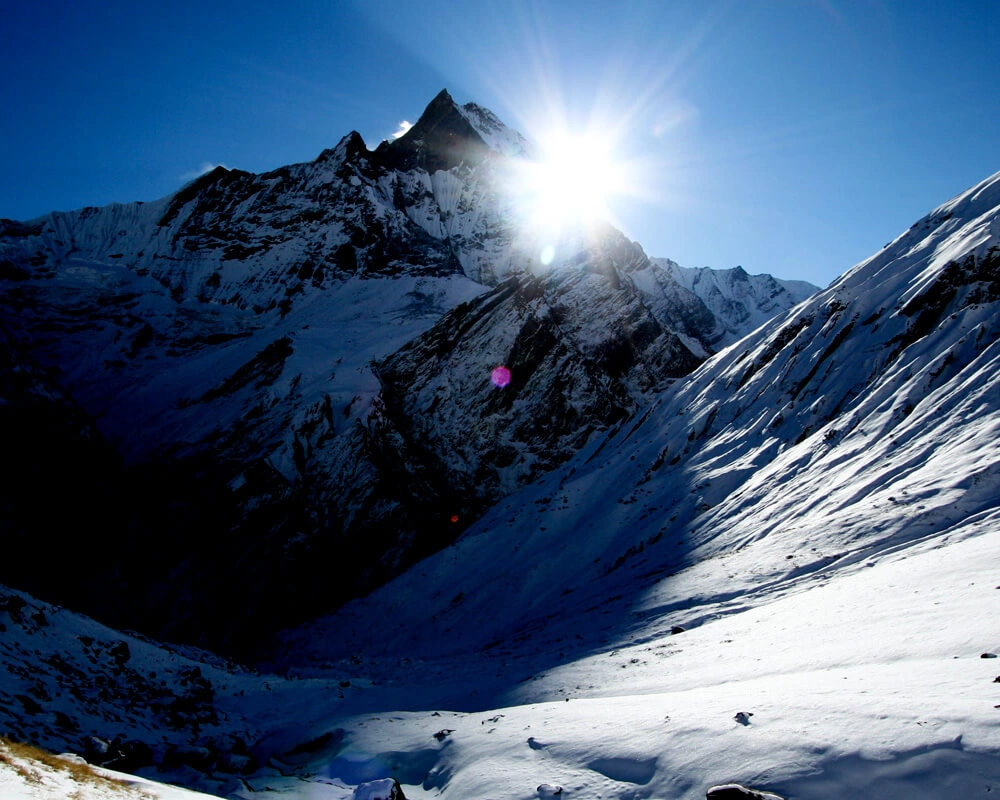
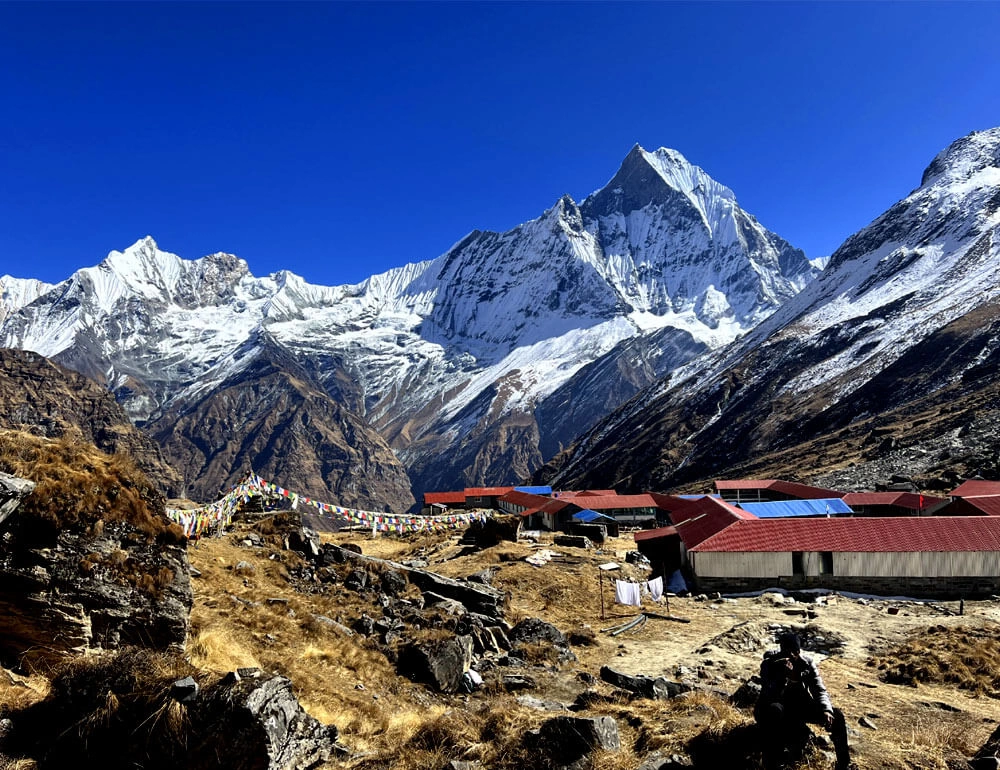
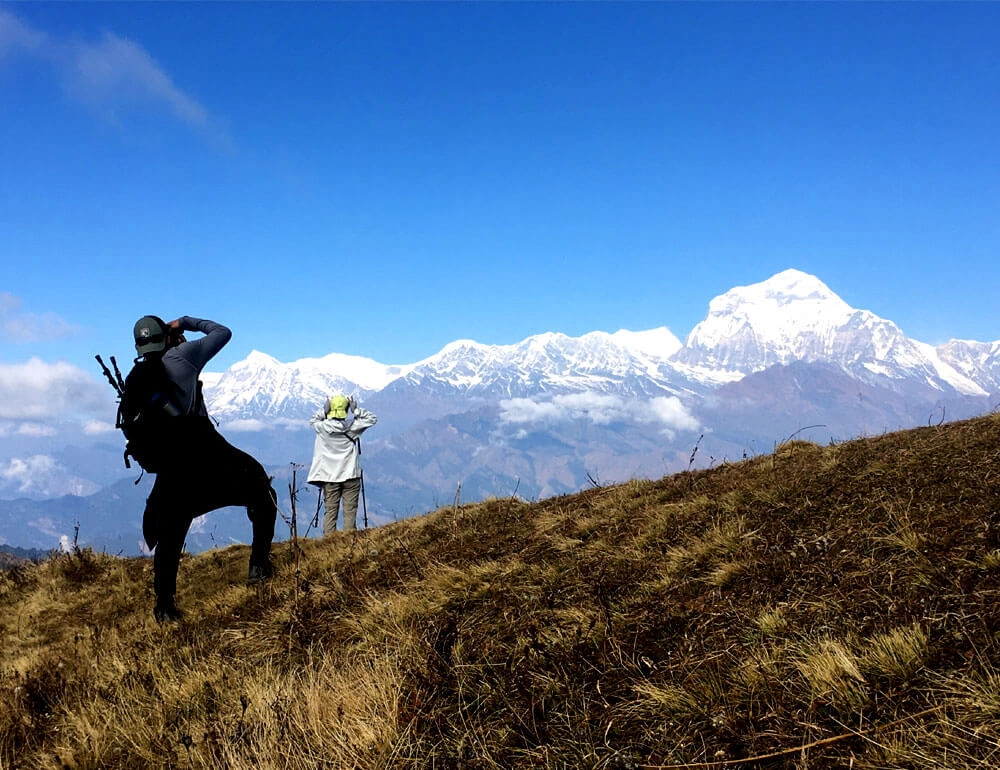
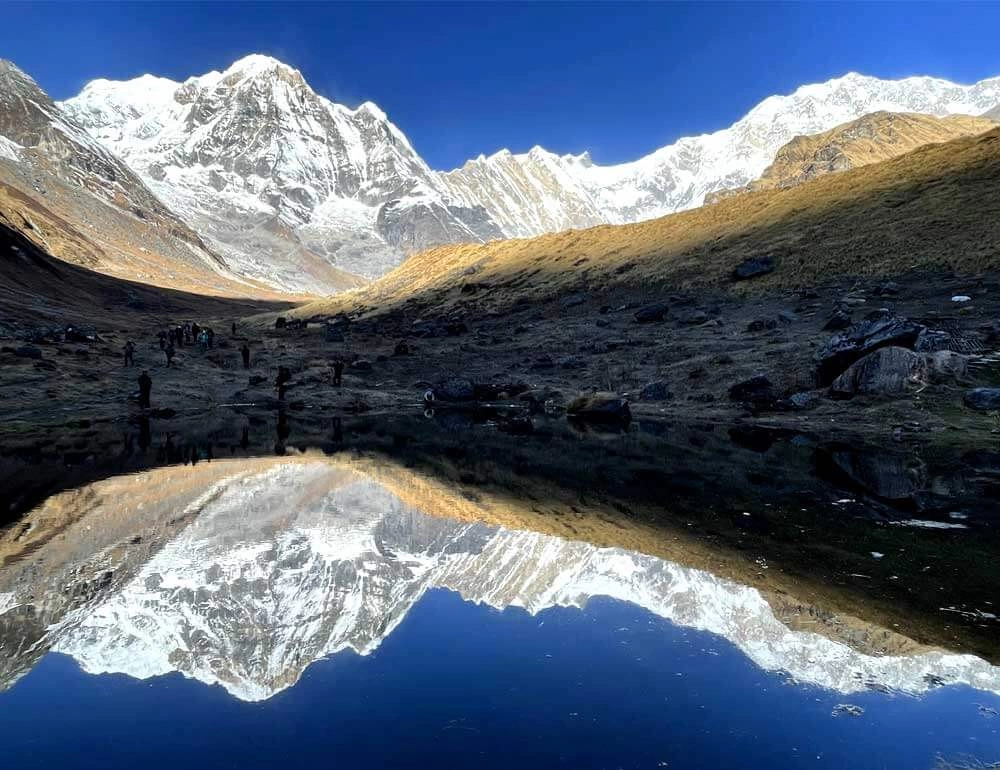
Photographer enthusiasts and nature lovers are drawn to the dramatic scenery of the terrain, surrounded by towering, snow-clad mountains. The trails in the core of the Annapurna Sanctuary present breathtaking scenes of the Annapurna Massif along with the Hiunchuli and Machhapuchhre ranges. 

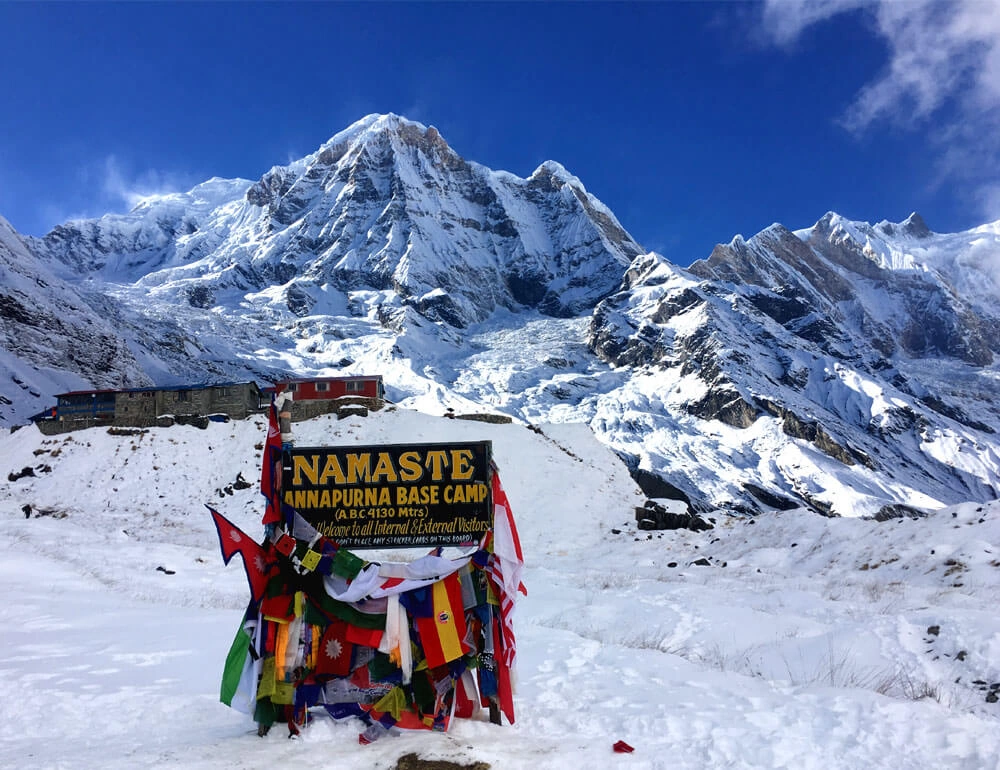
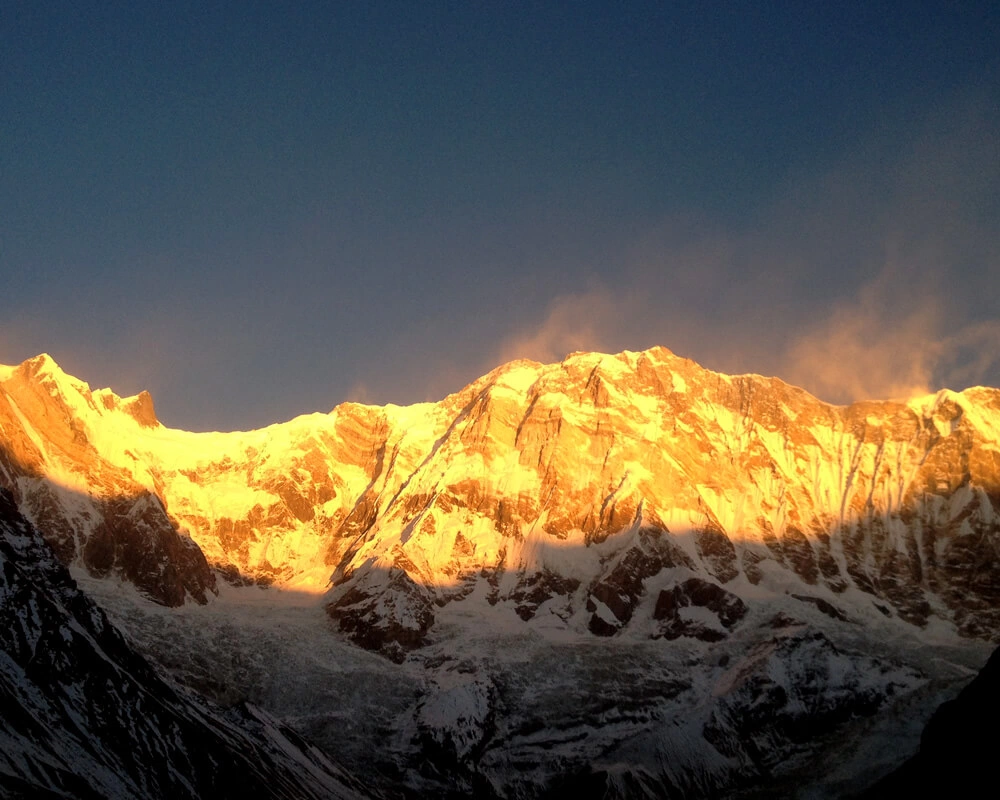
Spend a wonderful time at the Annapurna Base Camp (4,730 m), surrounded by Annapurna I (8,091 m), Annapurna South (7,219 m), Machhapucchre (6,993 m), and Hiunchuli (6,441 m). Others are Gangapurna, Annapurna III, and Annapurna IV, which you see during the journey. Some spots that also provide 360-degree panoramas are Machhapuchhre Base Camp, Poon Hill, and Chhomrong.

Explore changing landscapes and rich biodiversity of the Annapurna region.

The Annapurna Base Camp trekking route is rich in both ecological and cultural diversity, which you feel when the landscape transformations shift in a short time. Unlike this Annapurna trail, the Everest Base Camp trekmostly lets you walk on similar alpine terrain, while Upper Mustang introduces a consistent arid landscape. As a result, the ABC trek route becomes really enjoyable at every stage. The trip officially begins from Hile and leads to Ghorepani via Ulleri, crossing trails decorated with rhododendron and bamboo. 

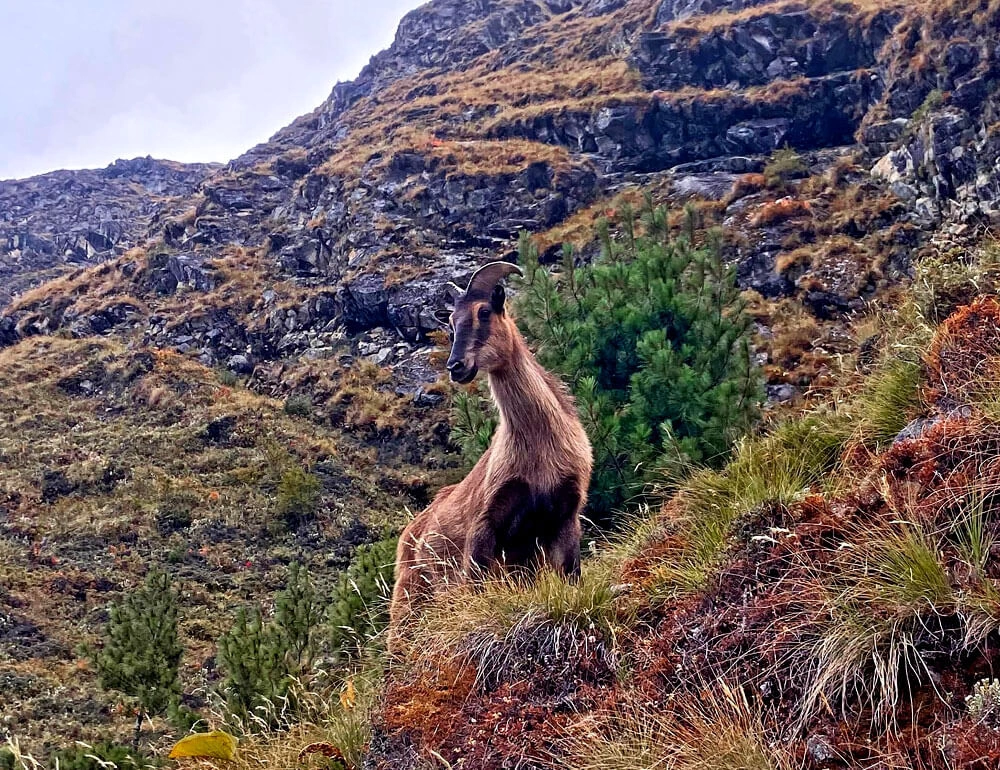
You may spot some rare animals such as barking deer, Himalayan tahr, langur monkeys, yaks, and Himalayan goral while walking through the Annapurna Conservation Area. After Chhomrong, the surroundings transform from subtropical forests into a rockier environment and gradually show fewer trees, and finally, you find yourself standing in a breathtaking glacial basin.

 A balanced adventure for all levels

Trails to Annapurna Base Camp have no technical climbing and proceed with fewer obstacles due to gradual inclines. Standing at the base of Mt. Annapurna (8091 m), covering a route of moderate difficulty level over a short duration, is really a blessing. 

Experience authentic cultures 

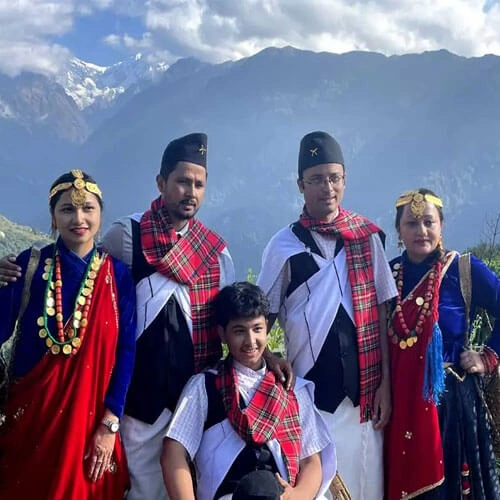
Interact with locals, who seem to have their own customs, and learn about their cultures, the history of places, and daily living ways. With their consent, also click photos and try cultural dresses along with jewelry that is usually found for rent at homestays or traditional museums. Ancient gompas, mani walls, fluttering prayer flags, prayer wheels, and chortens represent the majority of Buddhism. 

In some villages, you can enjoy a welcome or farewell performance of local music. Learn deeply about Magar and Gurung communities, observing their lifestyles. Locals feel really great while serving national and international tourists.

Budget-friendly yet rewarding

In comparison to several high-altitude treks in Nepal, the ABC trek is one that is slightly budget-friendly, although its experience is similar to costlier packages. Since the route to Annapurna Base Camp is near to Pokhara, a scenic city nestled beside Phewa Lake and considered a gateway to the Annapurna region. Due to easier trails with shorter distances, essential foods are delivered easily, making meals more cost-effective.

Is the Annapurna Base Camp trek safe and suitable for you?

Without a guide, any Nepal treks, including Annapurna Base Camp, really become challenging. However, the Annapurna Base Camp is safer and achievable year-round with proper preparation by trekkers with a basic fitness level. This trek of two weeks has a more successful rate compared to off-the-beaten-path routes like the Manaslu Circuit Trekand the Kanchenjunga Circuit Trek.

If you discover previous histories, several companies, including us, have conducted ABC treks, including those for 10 years of children to elderly members of sixty years and above. As a result, this Annapurna trek is appropriate for both novice and experienced trekkers. For those seeking a family-friendly as well as moderate trek, this is a masterpiece for them. Beyond some risks of acute mountain sickness and cold-related issues, you enjoy each moment in such wilderness.

What is the average cost of Annapurna Base Camp?

You may wonder if the Annapurna Base Camp trek cost for Nepalis, Indians, Bengalis, and citizens of other countries is the same or not. Nationality makes a slight difference for the total expense of the trek, as a trekker from a SAARC country gets some discount on obtaining a trekking permit. Nevertheless, factors like trekking company, season, meal, accommodation, services, guide, porter, itinerary (trek duration), and travel insurance play a key role in the determination of the trek’s cost.

While cost differs from one adventure to another, you can estimate yours by observing inclusions and exclusions given below and make your budget plan depending on your account balance. Know that booking a trek in a group, hiring porters and a guide in a similar way, choosing a local or national trekking agency, and simple teahouses for a night stay become more cost-effective.

Why is the Annapurna Base Camp trek itinerary the best in 2026/2027?

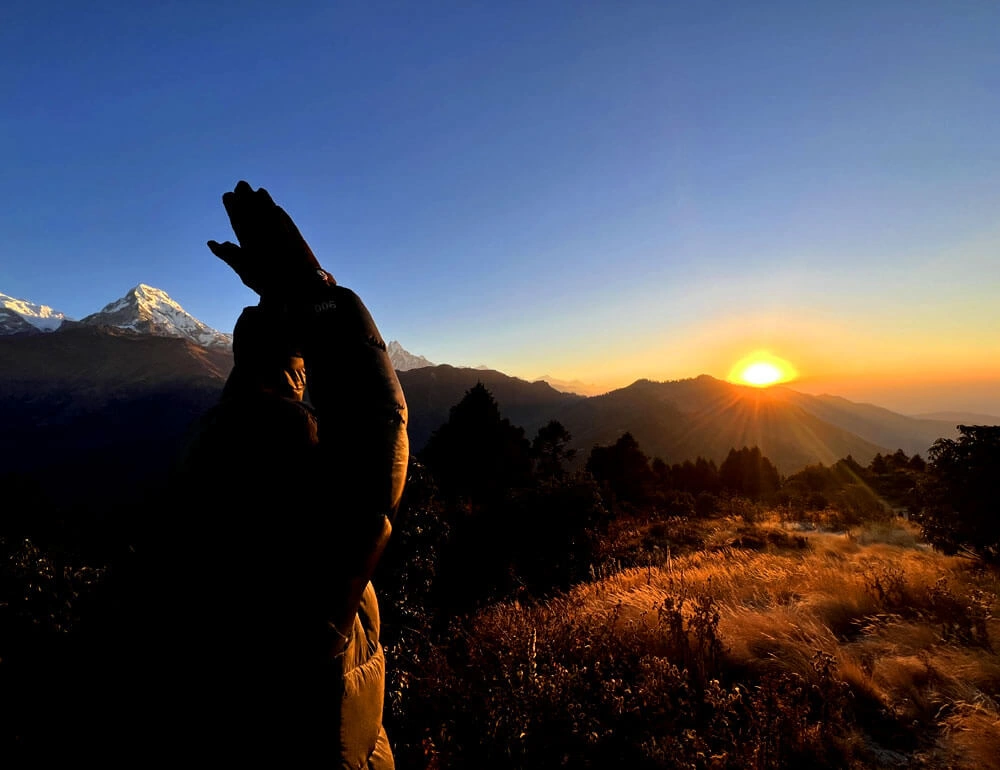
Our Annapurna Base Camp trek itinerary of 13 days can be the finest for your next trip, which begins with a relaxing and scenic road ride from Kathmandu to Pokhara. In the leisure period of the evening, stroll around Phewa Lake and feel more relief seeing the shadow of Machhapuchhre on the lake. Without rushing only to reach the destination, the route allows you to explore villages like Ulleri and Ghorepani. Before heading to Chhomrong via Tadapani, sunrise over the Dhaulagiri and Annapurna ranges from Poonhill station captivates you the most.

Traversing villages like Sinuwa, Bamboo, Dovan, and Hinku Cave, finally reach Deurali, the last permanent settlement before the Annapurna Base Camp, on the 8th day. Like on other days, wake up early in the morning to reach the base camp, avoiding changing weather challenges. Although this day is quite demanding, the struggles will pay off while standing there with a feeling of achievement. On the same day, you will descend to Bamboo with most descending trails, and the next day head to Jhinu Danda.

At Jhinu Danda, enjoy natural hot springs, which are believed to heal pains of the body and skin diseases according to local legends. After this, trek to Samrung the next day and drive back to Pokhara City. With memories of the Annapurna region, get back to Kathmandu and attend the farewell dinner. If you check our itinerary, each day allows you to cover an appropriate trekking distance, including sufficient rest time and an adaptation period to reduce the risk of AMS. In addition, the combination of trekking and 4WD at the last phase minimizes unnecessary backtracking. To sum up, the itinerary provides the best experience, making it perfect for all trekkers regardless of fitness level.

Reasons to Choose the Annapurna Base Camp Trek

  • To experience the stunning close-up views of iconic mountains, including Dhaulagiri, Annapurna I, Annapurna South, and Machhapuchhre.
  • Enjoying the natural hot springs near Jhinu Danda is perfect for relaxation after a long trek.
  • Immersive cultural experience in Gurung and Magar villages.
  • Rich biodiversity and beautiful landscapes within the Annapurna Conservation Area.
  • Easily accessible from Pokhara, making it one of the most suitable treks in Nepal.

ABC Trek Duration, Distance, and Altitude Chart

During your trek to Annapurna Base Camp, you will have to hike about 115 kilometers within a 10-day period of time. Here you can check the brief chart.

Destination DistanceDurationElevation
Drive from Kathmandu to Pokhara 205 km/ 128 miles 6-7 hours 820 m/2690 ft. 
Drive to Hile, and trek to Ulleri 6 km/3.8 miles 3-4 hours 1960 m/6428 ft. 
Ulleri to Ghorepani11 km/6.9 miles 4-5 hours 2860 m/9380 ft. 
Hike to Poon Hill, and trek to Tadapani13 km/ 8.1 miles 6-7 hours 2630 m/8626 ft. 
Tadapani to Chhomrong 10 km/6.3 miles 4-5 hours 2165 m/7150 ft. 
Chhomrong to Dovan 10 km/6.3 km5 hours 2570 m/ 8430 ft. 
Dovan to Deurali6 km/3.8 miles4 hours 3230 m/10595 ft. 
Deurali to ABC8 km/5 miles 5-6 hours 4230m/13546ft. 
ABC to Bamboo16 km/10 miles 6-7 hours 2310 m/7576 ft. 
Trek to Jhinu 11 km/6.9 miles 6-7 hours 1780 m/5838 ft. 
Trek to Samrung, and drive to Pokhara 1 km/1.6 miles 4 hours 820 m/2690 ft. 

Why is Green Society Adventure for the Annapurna Base Camp trek? 

Green Society Adventure believes in sustainable tourism in Nepal, conducting eco-friendly trekking and travels in Nepal along with trustworthy services until now. Our priority is clients' security and satisfaction for all logistics, and from booking our trips, we assist you in every step for processing documents and throughout the entire journey. Our professional team, with many years’ experience, will not let you complain.

Our aim is introducing Nepal’s hidden gem in the Himalayas as well as supporting the local economy. Therefore, we also help you to make your strong bond to locals and purchase needed things from them happily. For a safer and more enjoyable journey, join us today and reserve the Annapurna Base Camp trek or other packages to make this year unforgettable. To have more information, contact us on WhatsApp or send an email.

Is there an alternative option to the Annapurna Base Camp Trek?

Yes, depending on your travel duration and interests, alternative options to the ABC Trek are available. Check out these options and choose the one that best fits you:

1) Short Annapurna Base Camp Trek – Ideal for those with limited travel time and willing to reach ABC.

2) Annapurna Base Camp Trek with Mardi Himal – Perfect for travelers with a few weeks' holiday who are looking for a combined trek experience.

Note*

Our ABC Trek begins with a 6–7 hour drive (by comfortable tourist bus) from Kathmandu to Pokhara, covering approximately 210 kilometers. Alternatively, you can take a flight from Kathmandu to Pokhara at an additional cost of USD 105 (one way).

For your comfort and a smooth journey, we recommend arriving in Kathmandu at least one day before the trek start date. This will allow time for any last-minute preparations.
 

Itinerary
Expand AllCollapse All

Not Satisfied with this trip itinerary? Share your travel plans. Our travel experts customize the trip as per your interest.

Upon your arrival in Nepal, our representative from Green Society Adventure will be waiting at the terminal point of Tribhuvan International Airport, Kathmandu, with your nameplate. After welcoming you with a bookie or khada, you will be shifted to the deluxe hotel of Thamel. 

In the evening, attend orientation season and the welcome dinner, organized by us. Ask questions to your guide. If you have any doubts about the itinerary or other aspects. 

Note: You have an option to add more days to refresh yourself by exploring Kathmandu Valley before alpine hiking.

  • Max. Altitude:1320 m/ 4329ft.
  • Accommodation:Deluxe Hotel
  • Meals:Welcome Dinner

With excitement of heading to Pokhara City, near Annapurna trekking routes, wake up early in the morning and enjoy dramatic scenery while traveling in a private vehicle or deluxe AC bus, mostly on the Prithvi Highway after leaving the busy capital city, alongside terraced fields, traditional villages, and green hills.

Continuously drive for approximately 5–7 hours to reach the city of lakes, 200 km away from Kathmandu, renowned for its rich natural and cultural heritage such as Phewa Lake, David’s Fall, Mahendra Cave, Sarangkot vantage point, Bindabashini, White Gompa, etc. During the leisure period, stroll around the lakeside and enjoy beautiful scenes such as the reflection of Mt. Annapurna, Mt. Machhapuchhre, and Mt. Dhaulagiri.

  • Max. Altitude:820M / 2690FT
  • Accommodation:Hotel
  • Meals:Breakfast

Depending on the Annapurna Base Camp trek itinerary, head to Hile within 1.5 to 2 hours, traversing settlements like Nayapul. Up to Nayapul, the journey is more comfortable and easier compared to the bumpy and off-road conditions further ahead toward Hile.

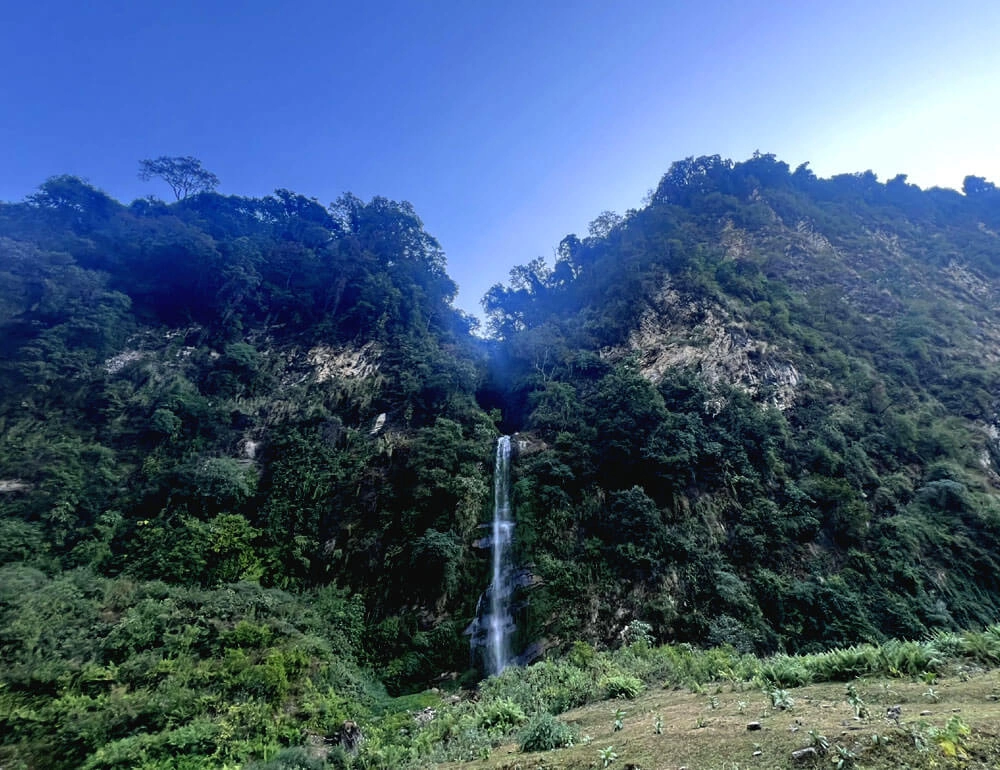
Official trekking begins here, and you will walk on mostly uphill trails on steps. Covering about 6 kilometers within 2 to 3 hours via farmland, rivers, waterfalls, and rural villages, you finally reach Ulleri for an overnight stay.

  • Max. Altitude:1960 m/6428ft.
  • Accommodation:Teahouse
  • Meals:Breakfast, Lunch, and Dinner

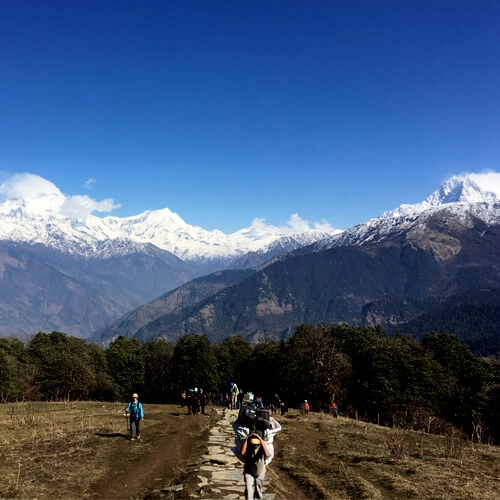
This day’s trekking becomes more delightful via lush forests of rhododendrons and oaks with distant vistas of Himalayan ranges. Crossing by villages like Banthati and Nangethati, the trail takes you to a river, crossing it over a suspension bridge. With a few more steps, reach Ghorepani, a famous hill town on the ABC trekking route. Travelers savor the views of the Annapurna and Dhaulagiri ranges. Warm hospitality and rich cultures also make the day more worthwhile. 

  • Max. Altitude:2860m/9380ft.
  • Accommodation:Teahouse
  • Meals:Breakfast, Lunch, Dinner

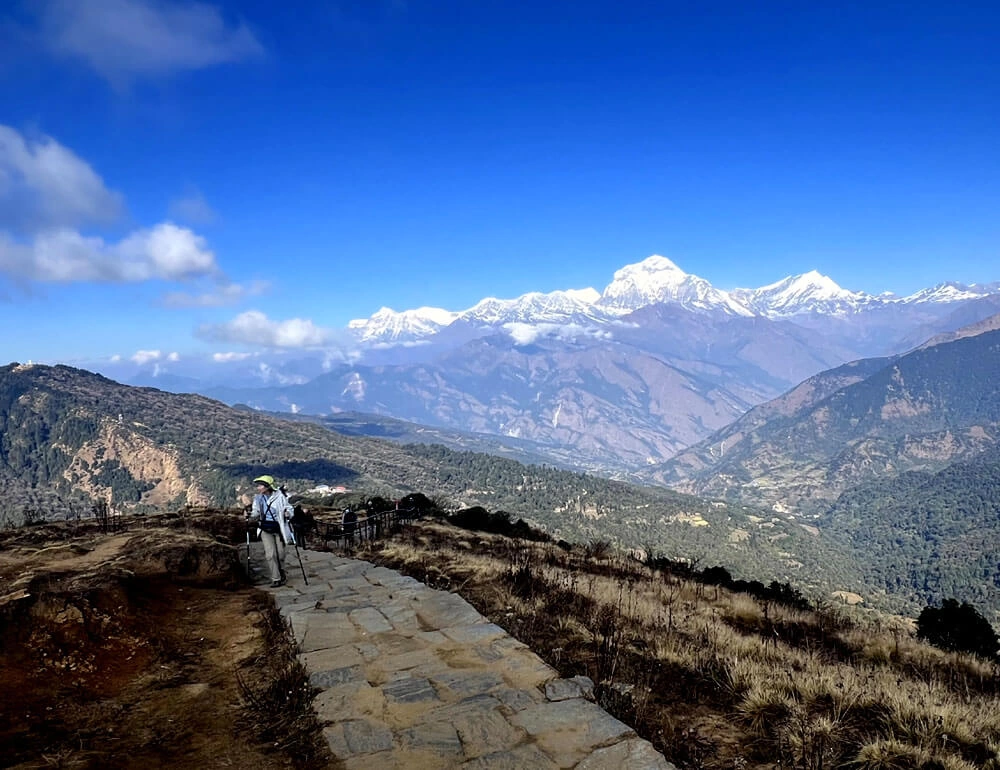
This is the most anticipated day to reach Ghorepani Poon Hill Station, the most popular vantage point in the Annapurna region. This place is renowned for sunrise/sunset views and panoramic scenes of snow-clad mountains such as Mt. Annapurna, Machhapuchhre, Dhaulagiri, Nilgiri, and Tukuche Peak. Beginners can only do the Ghorepani Poon Hill Trek, which is achievable within a week.

After spending for a while at Poon Hill, retrace the same trail to Ghorepani to have lunch. Crossing Deurali Pass and Banthati, we reached Tadapani for an overnight stay with some ups and downs. Tadapani is a popular pausing stop on the ABC trail, which is quieter compared to Ghorepani, and you enjoy the dramatic atmosphere, created by clouds and fog, early in the morning.

  • Max. Altitude:2630M/8626FT
  • Accommodation:Teahouse
  • Meals:Breakfast, Lunch, Dinner

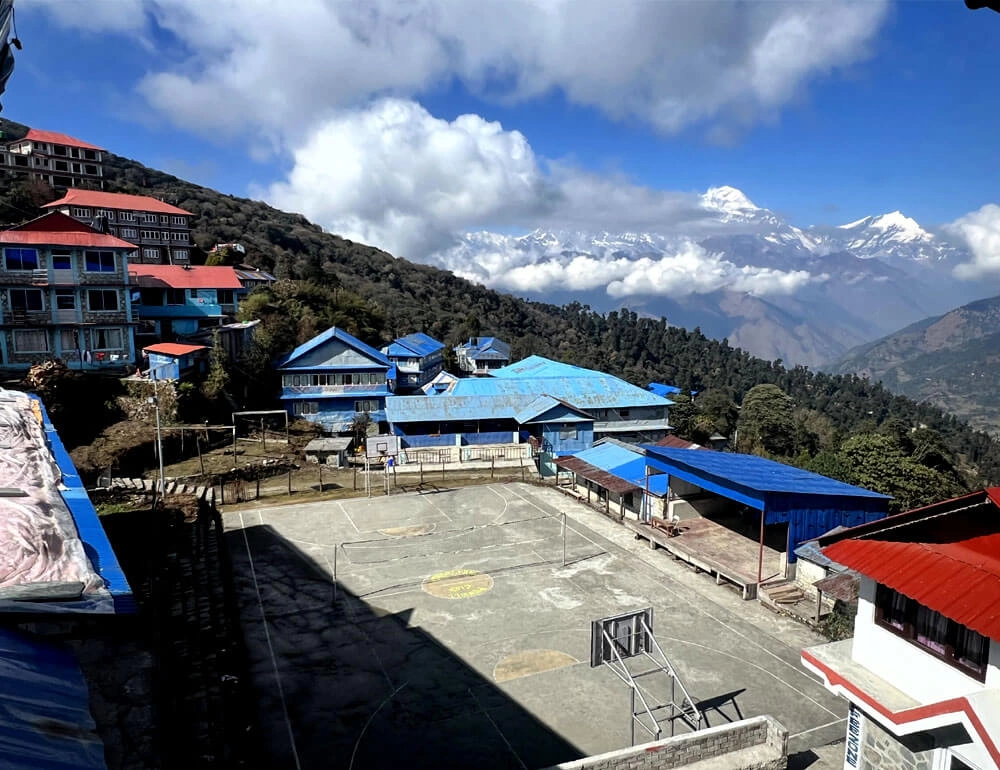
Leaving Tadapani, proceed towards Chhomrong Village, taking mostly descending trails through lush jungles in the first section, and reach Gurjung Village with some ascents for lunch after crossing the river over a suspension bridge. The continuous hike finally takes you to today’s destination, which is considered one of the biggest traditional Gurung villages in the Annapurna region. 

Explore village life, and click photos of stone houses along with enjoyment in the background of Annapurna South, Hiuchuli, and Machhapuchhre. The journey may be demanding in steep parts but is really entertaining.

  • Max. Altitude:2170m/7118ft.
  • Accommodation:Teahouse
  • Meals:Breakfast, Lunch, and Dinner

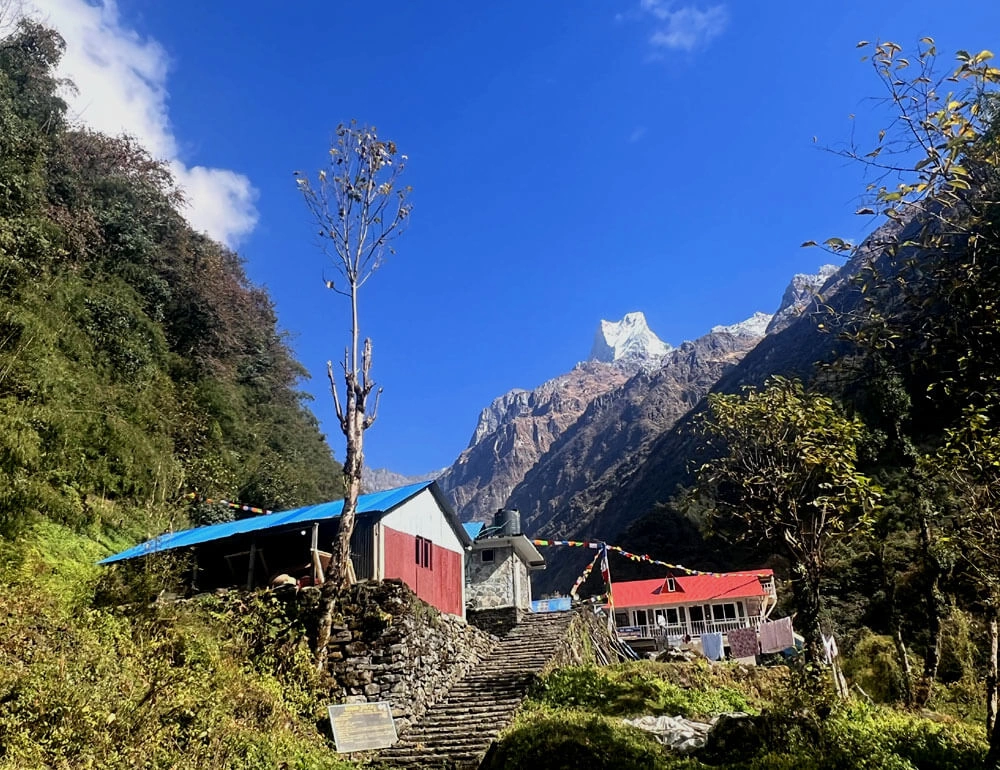
Begin the trek on the downhill trail of carved stone steps to Chomrong Khola, cross the suspension bridge, and ascend to Sinuwa, a small village surrounded by terraced farms. From Sinuwa, the trail pleasantly goes through the pine and rhododendron forest to Bamboo, where most of the trekkers stop for a lunch break and continue to Dovan. All along the journey, you can catch amazing sights of Machhapuchhre Peak, Himchuli, and Ghandwarwa Chuli. Overnight stay at a guesthouse. 

  • Max. Altitude:2570m/8430ft.
  • Accommodation:Teahouse
  • Meals:Breakfast, Lunch, Dinner

Trek through the pine and bamboo forests, ascending steps along the Modi Khola to reach Deurali. The breathtaking views of waterfalls, temples, the Himalayan landscape, and Hinku Cave are the major attractions of today’s hike. After 4 hours of hiking, trekkers reach the small mountain settlement (Deurali), which lies just beneath the high rocky mountain.

  • Max. Altitude:3230m/10595ft.
  • Accommodation:Teashoue
  • Meals:Breakfast, Lunch, Dinner

  • Today is the most-awaited day of the trip. After breakfast, we begin our hike towards the legendary Annapurna Base Camp.
  • The trail gradually ascends along the riverbed, and as you move forward, the valley opens up with stunning mountain views.
  • After about two hours of hiking, you will reach Machhapuchhre Base Camp, offering a 360° panorama of the mountain range, including the iconic Machhapuchhre (Fishtail).
  • Due to the high altitude and thin air, you may feel short of breath and more exhausted than usual.
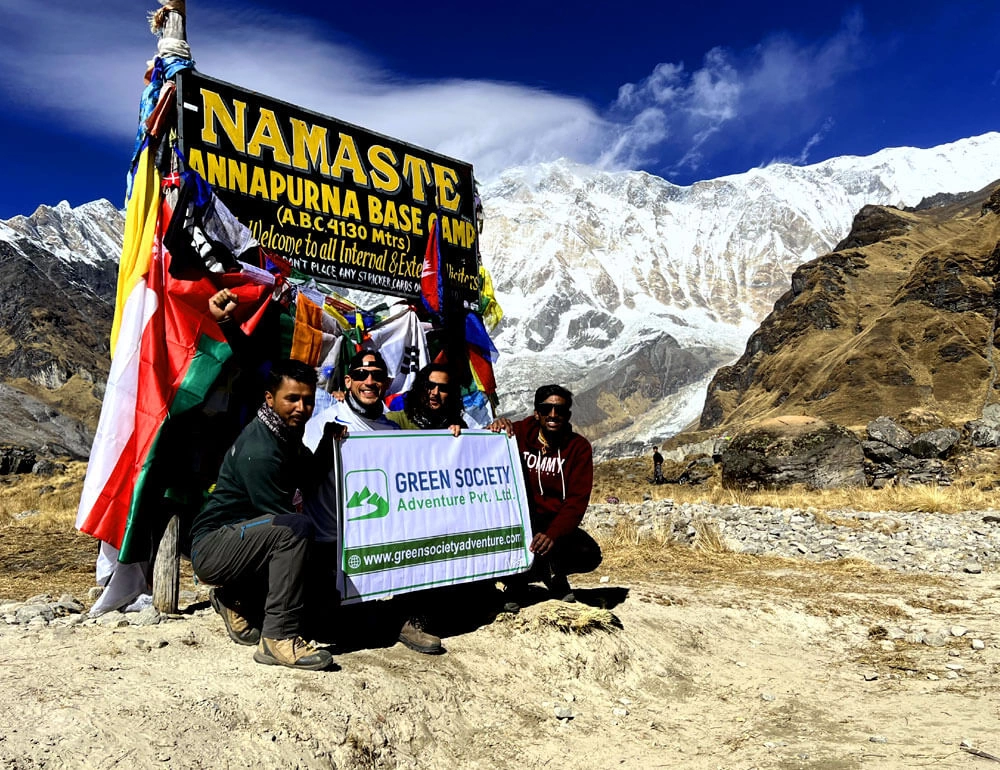
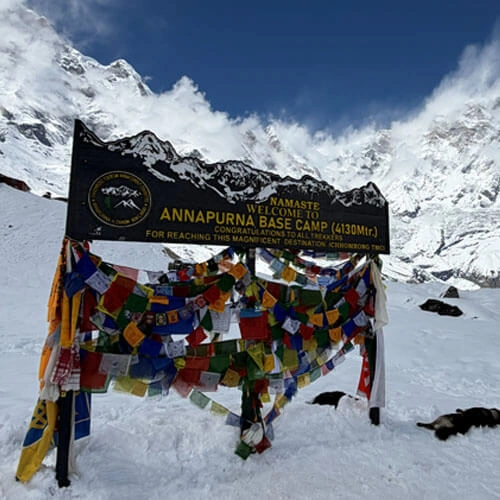
  • The final two hours of the trek are more challenging, but soon you will arrive at the dream destination—Annapurna Base Camp—surrounded by towering peaks, including Annapurna I.
  • After a short rest, you can explore the base camp area and the nearby glacier. Overnight stay at Annapurna Base Camp.
  • Max. Altitude:4130M/11250FT
  • Accommodation:Teahouse
  • Meals:Breakfast, Lunch, Dinner

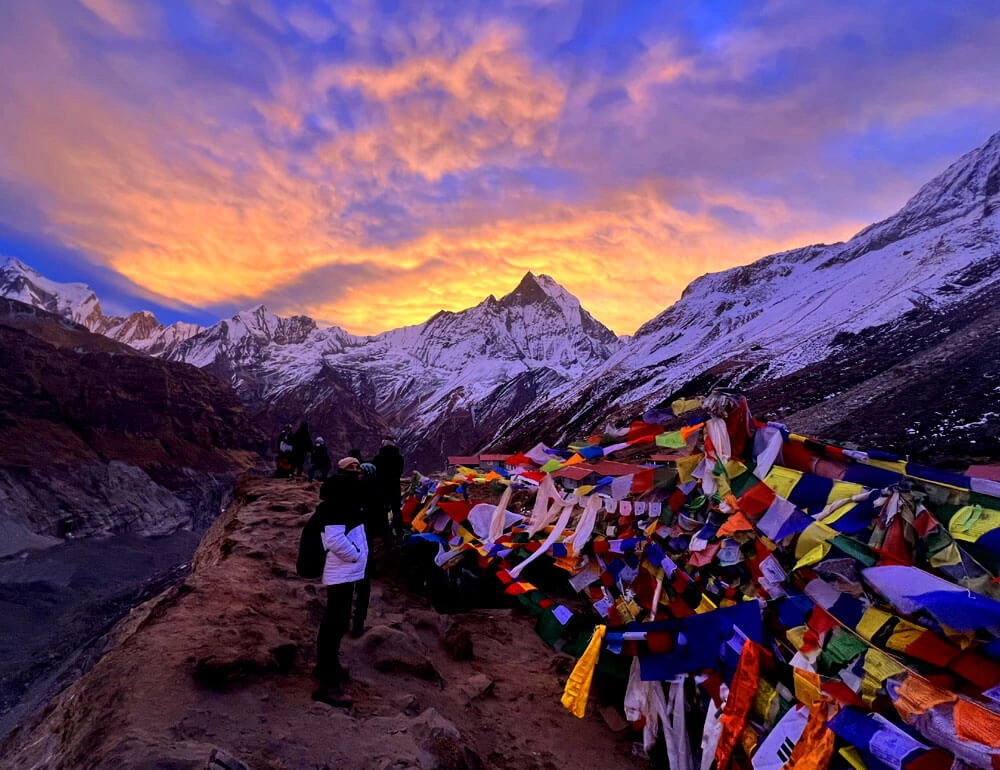
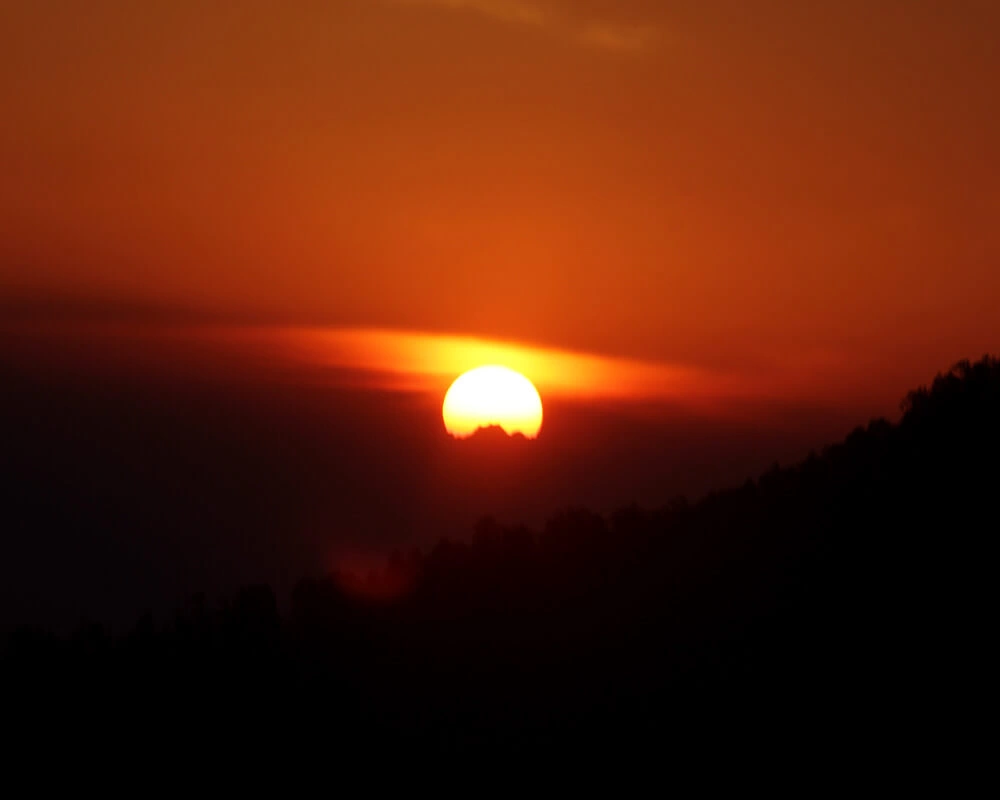
  • Early in the morning, enjoy the spectacular sunrise over the Himalayan peaks from Annapurna Base Camp.
  • After breakfast, begin retracing your steps on a mostly downhill trail back to Bamboo village.
  • Along the way, trekkers can relish the downhill walk with mesmerizing views of snowcapped mountains, lush landscapes, rivers, and cascading waterfalls.
  • Max. Altitude:2310M/7576FT
  • Accommodation:Teahouse
  • Meals:Breakfast, Lunch, Dinner

  • Trek back to Jhinu Danda, well-known for its natural hot springs with reputed healing properties.
  • The stone steps along the way up-and-downhill trail can still be challenging, even at lower altitudes.
  • A relaxing hot bath in the spring (about a 30-minute hike from Jhinu) helps relieve the soreness from your body.
  • Spend your final night in the mountains, cherishing the experience until next time. Overnight at Jhinu Danda.
  • Max. Altitude:1780M/5838FT
  • Accommodation:Teahouse
  • Meals:Breakfast, Lunch, Dinner

  • Take a short hike, cross the long suspension bridge, and arrive at the jeep station.
  • Drive for about two hours to the beautiful Lakeside city, Pokhara. Enjoy your stay in Pokhara today.
  • Max. Altitude:820m/2690ft
  • Accommodation:Hotel
  • Meals:Breakfast, Lunch, Dinner

  • From Pokhara, you will bid the mountains goodbye and drive back to Kathmandu. Optionally, you can take a flight to Kathmandu with an extra cost of $105. Farewell dinner in the evening.
  • Max. Altitude:1320M/ 4329FT
  • Accommodation:Deluxe Hotel
  • Meals:Breakfast, Welcome Dinner
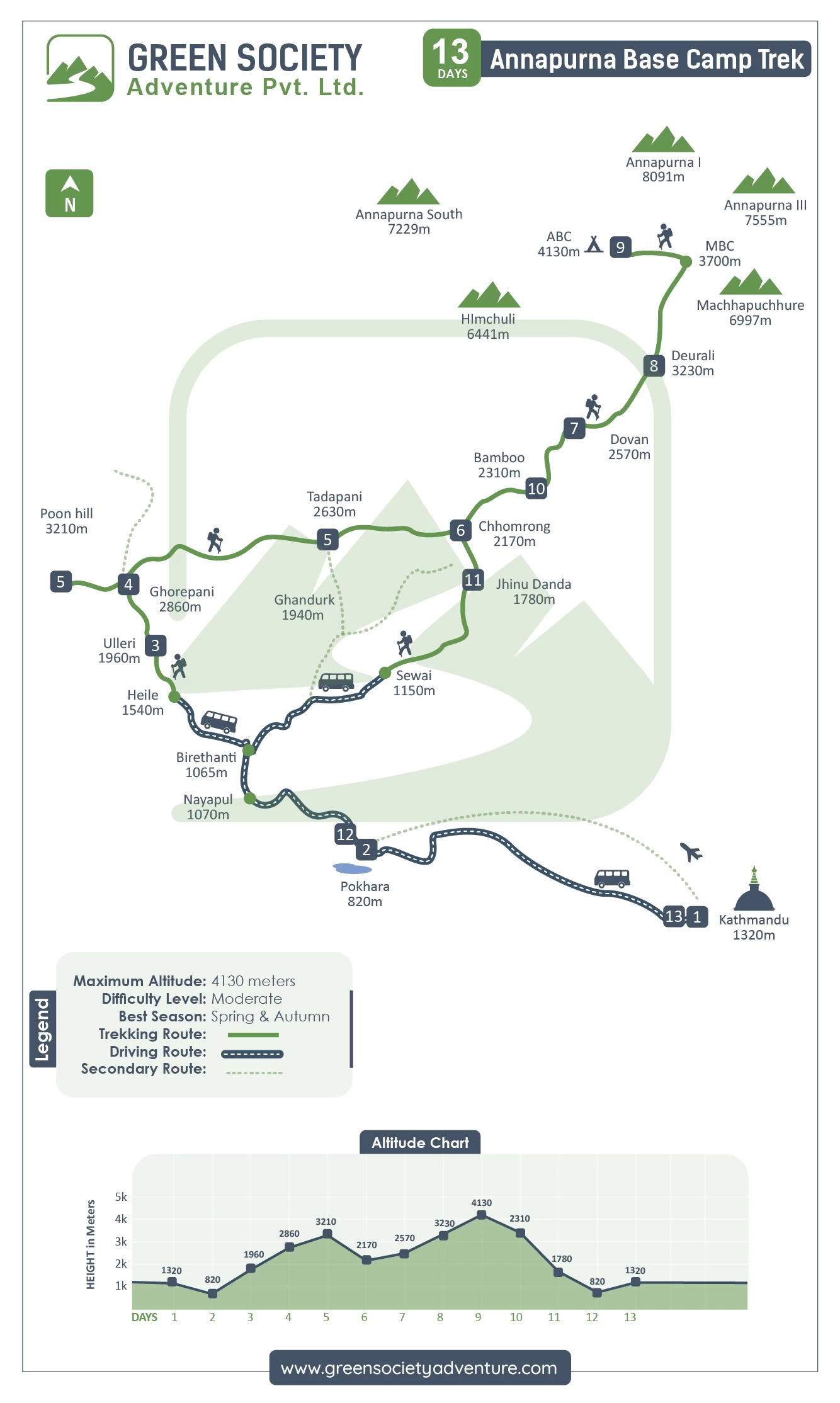
Route Map
Annapurna Base Camp Trek- 13 Days map
Cost Details
Includes
  • Free airport and hotel transfers as per itinerary in private vehicle
  • Three-star hotels (Two nights in Kathmandu and Pokhara two nights), on twin-sharing Basic with breakfast.
  • Kathmandu – Pokhara – Kathmandu transportation by tourist bus (optional flight or a private vehicle with extra cost).
  • Pokhara to Heile and Ghandruk Phedi to Pokhara transportation by private vehicle.
  • Full board meals: (Breakfast, Lunch, and Dinner) during the trek.
  • Teahouse or Lodges accommodation during the trek.
  • Seasonal fresh fruits as dessert every evening after dinner during the trek.  
  • An experienced English-speaking trek leader (trekking guide) and Sherpa porters to carry luggage (2 trekkers: 1 porter).
  • All salary, insurance, equipment, flight, food, drinks, and accommodation for the guide and porter. 
  • Assistance guide for the group of 5 or above. 
  • Trekking equipment: such as a Down jacket, and sleeping bag (down jacket and sleeping bag are to be returned after trip completion)
  • Green Society Adventure's complimentary free T-shirt, route map, and duffle bag (if needed)
  • All necessary paperwork and Annapurna conservation area permits.
  • TIMS Card fee. 
  • A comprehensive medical kit
  • All government and local taxes and office service charges.
Excludes
  • Excess baggage charges.
  • Lunch and dinner in Kathmandu and Pokhara.
  • All bar bills along the trek.
  • Extra night accommodation in Kathmandu and Pokhara in case of early arrival, late departure, and early return from the mountain (due to any reason) than the scheduled itinerary
  • Travel and rescue insurance.
  • Personal expenses (phone calls, laundry, bar bills, battery recharge, extra porters, bottle or boiled water, shower, etc
  • Tips for guides and porters.
Departure Dates
PLAN TRIP
Client Reviews
  • Samantha Groves
    Samantha GrovesUnited KingdomDecember 10, 2024

    Amazing ABC Trek

    We had a fantastic experience with Raj. From the start, Green Society Adventure and trek team was super helpful and quick via email answering all our questions. We had not been to Nepal before and he introduced us to Kathmandu and Pokhara before doing the short Annapurna trek. Raj organized everything, which was really nice. The views were amazing, and Raj had lots of knowledge of the different mountains. The Trek was great fun. We loved the walk and staying in the tea houses. The itinerary was perfect distances and flexible to our walking pace. I would highly recommend Raj and Green Society Adventures for any Nepal trekking we had the best time thank-you so much!!!!

    Google
  • M
    Marahatta AviNepalFebruary 21, 2024

    An Amazing trip to ABC

    Embarking on the 10-days Annapurna Base Camp trek with Green Society Adventure was an absolute delight! The expertise and professionalism of Raj made the journey not only memorable but also incredibly enjoyable. The attention to detail in planning the itinerary allowed me to experience the diverse landscapes of the Annapurna region seamlessly. The accommodations provided a comfortable respite after a day of trekking, and the local cuisine offered a delicious taste of local culture. What stood out the most was the genuine care and support from Raj and his team, ensuring my safety and well-being at every step. I wholeheartedly recommend Green Society Adventure for an unforgettable adventure in the heart of the Annapurna range. Kudos to the team for making this trek an exceptional experience!

    Google
Useful Information

When is the best time for the Annapurna Base Camp trek? 

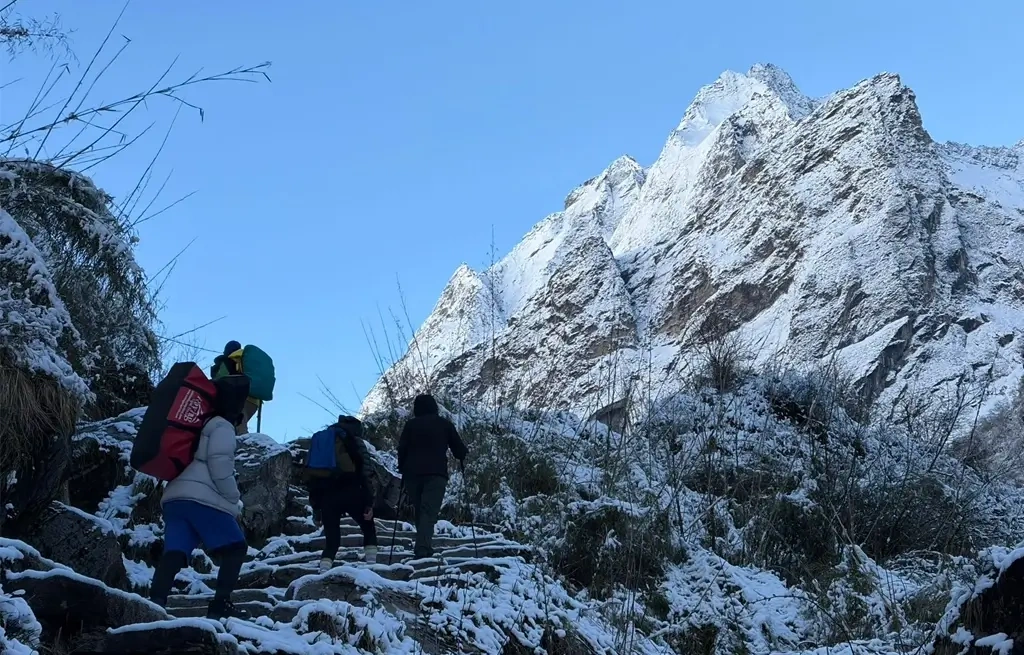
Spring (March to May) and autumn (September to November) are considered the most favorable periods of the year to trek to the Annapurna Base Camp and other hiking destinations in Nepal. Along with safety concerns, trekking in offseasons such as monsoon (June to July) and winter (December to February) may be possible, but we generally recommend this trek for peak seasons (spring and autumn) to avoid risks. Muddy or snowy trails in off-seasons bring problems in completing the trek. successfully due to the possibility of major trail blockage.

Weak visibility due to rains or snowfalls, limited foods, fewer open teahouses, and risks of avalanches or landslides may make this 13-day trekking experience the worst. As a result, select an easier trek or trekking route in rain shadow areas for winter and monsoon if you are not ready to face such complications. While you enjoy clear mountain vistas and walking via rhododendrons, festivals such as Holi, Ghode Jatra, Bisket Jatra, Buddha Jayanti, Dashain, Tihar, Indra Jatra, and Chhath add extra cultural values to the trekking. 

Note:

  •  Spring (March–May): Temperatures range from -5°C to 35°C. 
  •  Autumn (September–November): Temperatures range from -10°C to 25°C. For people who are willing to see the big waterfall and want to play with snow, this time of year would be the best for ABC Trek.

What food and accommodations are on the route to Annapurna Base Camp? 

To be safer and healthier on the trek, accommodations and foods play a key role. With our experience of more than decades, we usually provide comfortable lodges that provide fresh and hot meals in a clean place, prepared in a hygienic way. Our guides contact the teahouse owner and book before reaching the destination for ease, especially during higher demand in peak seasons.

Accommodation

Most teahouses provide rooms with twin beds, pillows, blankets, and simple furniture. You may remember stays in deluxe hotels, as you get only limited services of internet, charging devices, and hot showers in quite isolated areas. 

If you are a solo trekker, we arrange rooms with your fellow trekkers of the same gender. Several lodges offer single rooms for an extra payment, but higher demand in spring and autumn may make them not always available. Thus, we recommend preparing yourself mentally to tackle the situation. 

Food 

While we organize welcome and farewell dinners along with breakfast during stays in star hotels in Kathmandu, expect simpler cuisines and lodges on the trails to Annapurna Base Camp. Nevertheless, basic full-board meals are provided three times a day during these mountain hikes. Normally, dinner and breakfast will be served in the same lodge where you spend the night, and lunch will be taken on the way to a destination at a tea house. 

A common meal, such as lunch and dinner, is “Dal Bhat” (a set of rice, vegetables, lentil soup, pickles, and salad). Some western and Tibetan foods like pizza, burgers, sandwiches, chow mein, momos, and Thukpa are also available. Eat lighter and more nutritious foods that are easier to digest for sustaining energy to cover longer daily Annapurna Base Camp trek distances. Check the link on Himalayan foods and popular breakfasts for more information about meals during Nepal treks. 

Where can you obtain an Annapurna Base Camp trekking permit? 

Required trekking permits for the Annapurna Base Camp trek are a TIMS (Trekkers Information Management System) card and an ACAP (Annapurna Conservation Area Project) permit. Before you arrive in Nepal for the trek, our team proceeds with such legal paperwork on your behalf. 

A trekker can apply for these permits only through a registered trekking company along with a license-holder guide. While the Nepal Tourism Board (NTB) issues both travel authorization and the TIMS, the Trekking Agencies Association of Nepal (TAAN) does for the TIMS, and the National Trust for Nature Conservation issues the conservation permit. 

How difficult is the Annapurna Base Camp trek 2026?

If you think about the difficulty level of Annapurna Base Camp, it is a moderate one, suitable for all levels of trekkers. Although this trek is shorter and follows well-maintained paths, making it easy to reach the initial point from Pokhara, spending time in some remote settlements becomes tougher with limited services. While reaching above 2500 m, the risk of acute mountain sickness is higher, requiring good body adaptation to the environment. To sum up, the entire trek is doable with proper guidance as it's not a strenuous one compared to the EBC trek, Annapurna Circuit or Expedition, and some other routes.

Why is travel insurance important for the Annapurna Base Camp trek?

Travel insurance is a major official document needed for all types of adventurers on every high-altitude trekking route, including the Annapurna Base Camp trek, even if it is a moderate one. You should select the right one, whether you are doing it in peak seasons or off-seasons, to get rid of avoidable expenses. Payment is costly for rescue, health treatments, medication, and other unpredictable circumstances. As a result, you have to guarantee that the insurance policy includes high-altitude helicopter evacuation above 4000 m before purchasing travel insurance for this 13-day trek.

In an attempt to save money, purchasing cheaper insurance compromises health and well-being. At first, discover companies that have been serving trekkers for many years, and also research clients’ reviews. In addition, the insurance must cover trip or flight cancellation and individual possessions' loss, damage, or theft. Enjoy the trip in any case, ensuring full coverage and safety along with the best travel insurance for the Annapurna Base Camp Trek.

Can you do the Annapurna Base Camp trek without a guide?

You cannot do any trek in Nepal alone; not only does the government’s rule not allow it, but there are also safety considerations. Guides keep updating your health status and help prevent symptoms. They have training and many years of experience to handle situations, along with the needed medication and tools in a first-aid kit. Thus, hiring a guide is compulsory for Annapurna Base Camp trekking. While porters are optional, they elevate the entire adventure, as they can carry loads of up to 15 kg to 20 kg. If you feel awkward asking for essential things at a teahouse, porters and guides help you, making it easier to communicate with locals and acting as mediators.

How to prepare for the Annapurna Base Camp trek in 2026? 

You need to know complete Annapurna Base Camp trek details, from itinerary to needed exercises before the trek. Beyond budget planning and the best trek company for the trek, preparation also includes organized packing lists. Let’s breakdown the entire process. 

Cardio exercise and Yoga Practice 

Improved stamina, strong leg muscles, and mental resilience are essential to walk on some uneven, rocky trails in a balanced way. Simple aerobic training like cycling, stair climbing, brisk walking, dancing, jogging, and running especially empowers regulation of the heart and lungs. In addition, yoga practice helps in improving breathing management in thinner air. Make the 13-day trip more flexible, preventing injuries with such a workout.

Annapurna Base Camp trek essentials

Some of the equipment, such as a sleeping bag (rated for -10°C to -15°C) and down jacket, is provided by Green Society Adventure and taken back after trip completion. Whether you buy or take the rest of the gear on rent, ensure it is durable and of premium quality. Carry protective accessories such as a waterproof backpack, gear covers, sunglasses, knee pads, gloves, and gadget cases to skip loss or damage of individual items and your body parts. 

We recommend not buying things that are very expensive and not usable after the trip if you are on a budget trek. Check the link for the Annapurna Base Camp trekking equipment to pick the needed ones easily. Do not forget biodegradable soap, wiping paper, sanitizer, and lotions, which seem like small but crucial things. 

Drinking Water

Hiking on high mountain land is physically hard work. Drinking enough purified water and keeping your body hydrated is very important while you are on the journey to the Annapurna base camp trek. During the trek, one should drink 3-4 liters of water every day. In this special protection zone, buying bottled water is not available. Water bottles add to the thrashing problem in the mountain, so people avoid bottled water, and they offer boiled, purified drinking water at lodges at an additional cost. It costs anywhere between $1 and $3.

We highly recommend carrying a reusable water bottle with you. You can fill the water bottle in lodges, or you can use a built-in filtration system like a LifeStraw or SteriPen. You can also use water purification tablets to treat the water.

Internet and Phone Connectivity

In most of the places in the Annapurna trekking route, the phone & internet connections (though unpredictable and irregular at some places) are available. You can connect with your loved ones while trekking in Annapurna, Nepal. Check your important information and upload pictures on social media. Wi-Fi is available at all lodges along the trek. Normally, you must pay an extra charge for using their Wi-Fi hotspot.

Environment-Friendly Travel Practice

Responsible travel and attempting to minimize any negative effect on the environment are exceptionally vital. Green Society Adventure cares about protecting the natural and social environment of Nepal. Joining us means you're supporting the neighborhood community, and we are supporting sustainable tourism. We, moreover, participate with benefit suppliers who work toward saving the environment. Our itineraries are in concert with these values, so you'll be able to feel great about approximately how your travel dollars are being spent.

FAQs
  • Our standard trip itinerary is 13 days, including arrival and return to Kathmandu. However, shorter versions of 6–8 days are possible if you are experienced trekkers and willing to go straight to ABC and combine with transport.

  • This trek is considered a moderate trek. You don’t need prior high-altitude trekking experience, but good fitness and preparation are important. Daily walking ranges from 5 to 7 hours on uneven terrain.

  • Yes. Trekkers need two permits:

    Annapurna Conservation Area Permit (ACAP), Cost 3000|- Nepalese Rupees.

    TIMS (Trekkers Information Management System) Card Cost USD 20|-

  • The Annapurna Base Camp trek cost usually ranges from USD 460–1350 depending on the itinerary, group size, guide/porter services, and inclusions (meals, permits, accommodation, transport).

  • The trek has well-established teahouses and lodges offering both local and international dishes. The staple is dal bhat (rice, lentils, vegetables, curry), but you can also find noodles, pasta, pizza, soups, tea, and coffee. Lodges provide simple rooms with twin beds & dormitory beds, blankets, and shared bathrooms.

  • Yes, but it is less common compared to the Everest Base Camp or other high pass treks. The highest point is 4,130m at Annapurna Base Camp. Proper acclimatization, hydration, and slow hiking help minimize risks. If symptoms occur, rest or descend immediately.

  • ABC Trek offers close-up Himalayan views, diverse landscapes, cultural villages, natural hot springs, and comfortable trekking infrastructure — all within a relatively short and accessible route from Kathmandu and Pokhara.

Similar Trips
You May Also Like

Ask a Question