Everest Base Camp Trek for Seniors and Beginners - 14 Days

Trip Facts
  • Duration:14 Days
  • Difficulty Level: Moderate
  • Destination: Nepal
  • Max. Altitude: 5540 Meters
  • Start at: Kathmandu
  • End at: Kathmandu
  • Group Size: 1 - 24
  • Best Season: Spring - Autumn

Highlights

  • With a well-planned schedule, fly to Lukla (2830 m), a gateway to the Everest region, to begin the official trek of 14 days, enjoying the aerial view.
  • Explore legendary viewpoints of the Khumbu Valley, including the Everest View Hotel, Everest Base Camp, and Kalapatthar, following famous mountaineers’ footsteps by making memories for a lifetime.
  • Enjoy a local meal, different items of yak milk, organic seasonal vegetables, and traditional hospitality.
  • Delve into the unique Himalayan cultures of Sherpa communities, often known as experienced expedition climbers, and have a deep connection to Mt. Everest (8848 m) and the Khumbu region.
  • Get a golden opportunity to test physical endurance, reaching the foothills of Mt. Everest (8848 m), the highest mountain on earth, for panoramic views of the surroundings.
  • Trek through Sagarmatha National Park, a World Natural Heritage Site, observing some rare animals, birds, and vegetation such as Himalayan tahr, musk deer, snow cock, rhododendrons, birches, and maples.
  • Enjoy walking through the diverse terrain of the mountainous landmarks, including lush forests, terraced fields, and dry mountain land, offering a diverse range of environments that provide lifetime memories.
  • Discover centuries-old gompas and monasteries of the region, along with Tengboche Monastery, the largest Buddhist monastery in the region, which showcases the great influence of Tibetan Buddhism.

The Everest Base Camp Trek is the most wonderful trip in Nepal, popular worldwide, as it takes you to the foothills of Mt. Everest (8848 m) at an elevation of 5364. The breathtaking scenery from majestic vantage points like Kalapatthar, Everest Base Camp, Kalapatthar, and Thukla Pass makes a 14-day trip worthwhile, creating lifetime memories in the wilderness of the Everest region.

Trip Overview 

The Everest Base Camp Trek is one of the most rewarding and commercialized Himalayan odysseys, located in the Everest region (Khumbu Valley), a northeastern part of Nepal. This internationally renowned trekking trip retraces the trail to the Everest Base Camp (5364 m), following the footsteps of legendary mountaineers such as Tenzing Norgay Sherpa and Edmund Hillary, the very first people to reach the summit of Mt. Everest (8848 m). Exploration of settlements of brave Sherpas, observation of various flora and fauna, the Khumbu Glacier, the Icefall, and some challenging terrain.

Adventurers get a chance to test physical endurance while passing rocky mountainous landmarks, glacial moraines, and steep and icy trails along with the mesmerizing panoramas from vantage points such as Everest View Hotel (3880 m), EBC, and Kalapatthar (5560 m). The ancient monasteries that showcase Tibetan Buddhism provide spiritual satisfaction together with knowledge. Our strategically tailored 14 days Everest Base Camp Trek itinerary allows you to ascend to the higher settlements, traversing lush forests of rhododendrons and pines, acclimatizing naturally. 

Where is Everest Base Camp located? 

Mt. Everest (8848 m), often known as the roof of the world, has two major base camps, South and North. The worldwide popular base camp—the southern one (5364 m/17,598 ft.)—is situated in the Khumbu region within Sagarmatha National Park, reachable via hiking from Lukla or Jiri. While a trek via Jiri is a classic route and reaches EBC without a flight but takes quite a few more days, a direct flight to Lukla, Tenzing-Hillary Airport, is a less exhausting one. 

The North Everest Base Camp is located in Tibet, China, at an elevation of 5150 m/16,900 ft. Several trekking companies also conduct a mountain bike trip via Tibet to reach the north base camp. Generally, trekkers from all over the world choose the South Base Camp of Everest, where you can only spend some time but cannot stay overnight, and you have to get back to Gorakshep. 

Why does the Everest Base Camp trek for beginners stand out? 

Although the Annapurna Base Camp Trek  also offers similar experiences to the Everest Base Camp, reaching the foothills of Mt. Everest (Sagarmath), also known as Chomolungma, the tallest mountain on our planet, is itself significant. However, there are several reasons to trek to this destination once in a lifetime. 

The legendary vistas of Everest Massif 

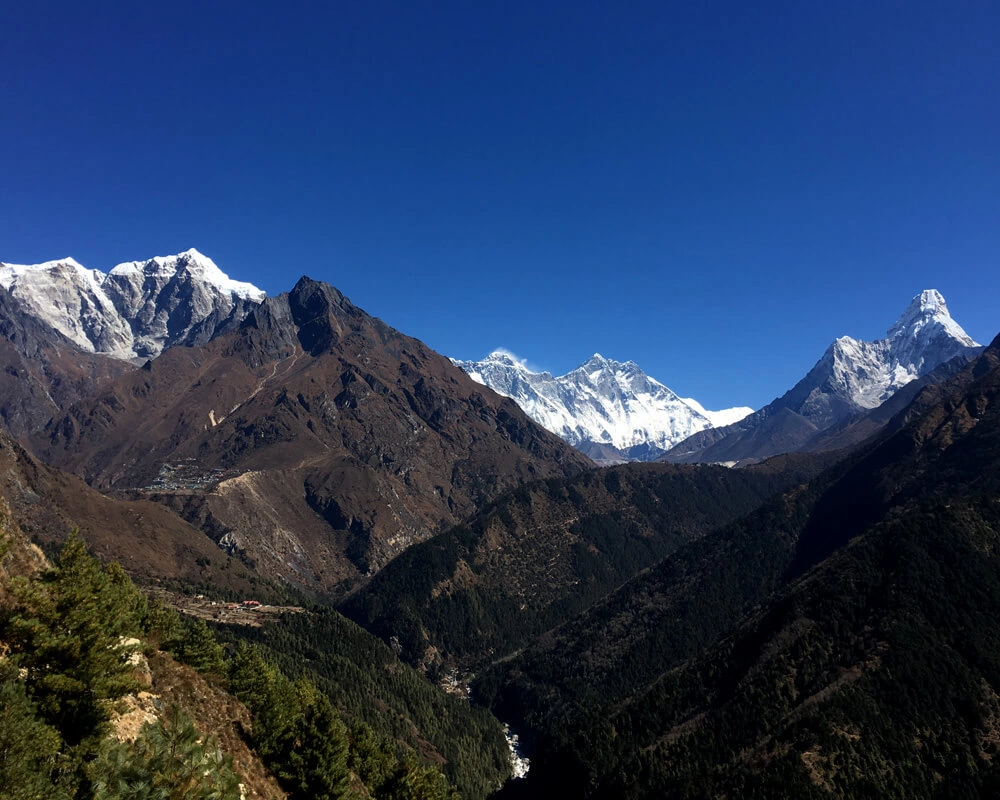
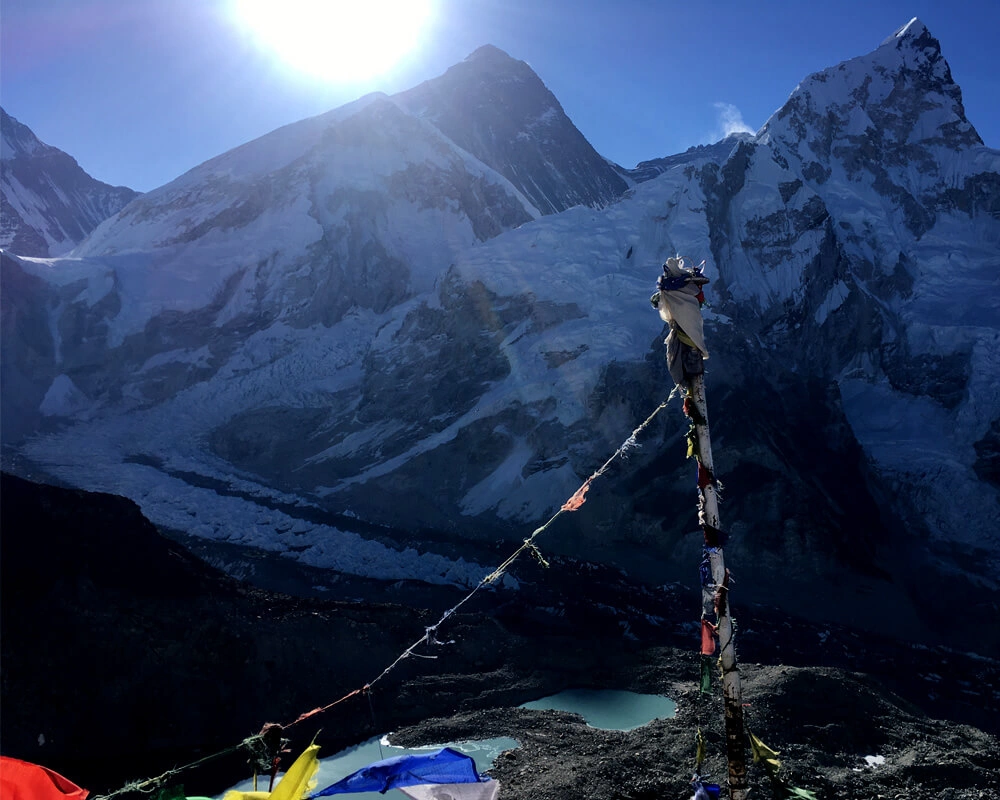
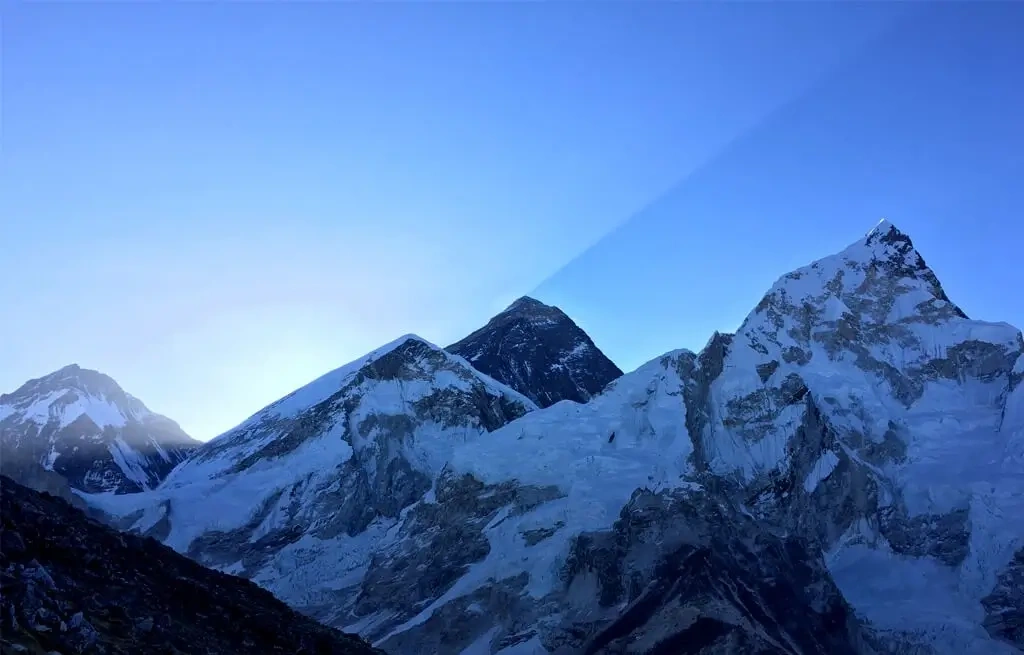
Mountain lovers can take full advantage during these 14 days as awe-inspiring views of mountains become visible from the initial point of the official trek. However, you will have the best scenery from vantage points such as Kala Patthar and Everest Base Camp. Along with Mount Everest (8,848 m), the panoramas of Lhotse (8,516 m), Ama Dablam (6,812 m), Nuptse (7,861 m), Cho Oyu (8,188 m), Thamserku (6,623 m), and Pumori (7,161 m) make the whole trip truly worthwhile. 

Sherpa villages and Ancient Monasteries

While crossing by several quaint settlements, learn the story of brave Sherpas and their struggle in rural terrain. Making a strong bond with them gets you a golden chance to immerse yourself into unique Himalayan cultures, usually influenced by Tibetan Buddhism. Capture the delightful faces of local inhabitants who seem to be in their own attire. Have blessings from nuns and monks while visiting gompas and monasteries like Tengboche. 

Get involved in morning prayer/chanting, and learn rituals, especially during occasions. Major key stops of the trek are Phakding, Namche Bazar, Phakding, Namche Bazaar, Tengboche, Dingboche, Thukla (Dhughla), Lobuche, Gorakshep, Pheriche, and Lukla. 

Glimpses of unique Wildlife and Vegetation 

The trek goes through the lush forest of Sagarmatha National Park, alpine meadows, and pasturelands, which are home to numerous rare Himalayan wildlife and vegetation. The national park was established on 19th July, 1976 A.D., and became a World Natural Heritage Site. The park ranges from 2845 m to 8848 m, covering an area of 1148 square kilometers. Although the park is home to numerous living beings, major animals are snow leopards, Himalayan tahrs, red pandas, snow leopards, musk deer, and Himalayan black bears visible on the route to Everest Base Camp.

Along with that wildlife, trekkers can capture activities of birds such as the blood pheasant, snow pigeon, and Himalayan snowcock by binoculars as well as capture them on camera roll. In different pasturelands, you can also see yaks and horses, which are generally used to carry loads. However, locals also produce dairy items from yaks’ milk by breeding them in large numbers. Generally, you will see vegetation of rhododendrons, pines, birches, and maples during this 14 days Everest Base Camp trek.

Can you do the Everest Base Camp Trek in 2026/2027? 

Since the Everest Base Camp trek itinerary goes through landscapes from 2500 m up to 5540 m, the trip requires a physically fit trekker with a sound mindset. After leaving Namche Bazar, you only get common teahouses with limited services as well as simple meals. If you are prepared to tackle changeable weather, some strenuous parts, and unforeseen circumstances, this 14-day trip is an iconic one for you that creates indelible memories. 

Even though a trekking guide and a porter accompany you throughout the journey, you must be ready with essential equipment to enjoy the natural beauty of the Khumbu region without much stress. As prevention is better than cure, you can successfully do this trek if you walk at a gentle pace, allowing your body to adjust to the thin mountain air.

Is there any way to make the Everest Base Camp trek more comfortable for seniors? 

Yes, senior trekkers who want to trek to the Everest Base Camp can make it more efficient by choosing an easygoing itinerary with extra acclimatization days in Namche Bazar, Dingboche, and Lobuche. Hiring private guides and porters as well as selecting more comfortable lodges can be effective. Seniors or novice trekkers can get involved in simple cardio exercise training for 4 to 6 months to balance the body properly. 

Additionally, you can check our Everest Base Camp Trek Guide for brief information and plan your trip. 

EBC Trek Distance, Duration, and Altitude 

Trekking From/ ToDistance (Kilometers/ Mile)Duration (Hours)Altitude (Meters/ Feet)
Lukla to Phakding7.8km/ 4.8m3 to 42655m/ 4329ft
Phakding to Namche Bazar10.5km/ 6.5m5 to 63440m/ 11284ft
Namche to Tengboche9.5km/ 5.7m5 to 63790m/ 12694ft
Tengboche to Dingboche9.2km/ 5.6m5 to 64410m/ 14464ft
Dingboche to Lobuche8km/ 5m4 to 5 4930m/ 16172ft
Lobuche to Gorakshep 4.5km/ 2.8m3 to 45160m/ 16929ft
Gorakshep to Base Camp 3.5km/ 2.2m3 to 4 5364m/ 17593ft
Gorakshep to Kala Pather 2km/ 1.3m5560m/ 18235ft
Gorakshep to Pheriche9.5km/ 5.9m4 to 54200m/ 13776ft
Pheriche to Namche 15km/ 9.3m6 to 73440m/ 11284ft
Namche to Lukla18km/ 11.2m7 to 82800m/ 9185ft

Why is the Everest Base Camp trek itinerary the best? 

The trek to the Everest Base Camp is generally achievable within 12 to 14 days along with a sufficient number of acclimatization days. Our 14-day trip is an iconic itinerary of the Everest region, which starts after you land at the international airport of Kathmandu. The next day, you will fly to Tenzing Hillary Airport, one of the highest airports in the world, named after legendary mountaineers Tenzing Norgay Sherpa and Sir Edmund Hillary. After a scenic flight, a short trek to Phakding village gives an unforgettable memory, a hike via Dudkoshi River Valley. 

Traversing settlements such as Lukla, Phakding, Monjo, Namche Bazar, Tengboche, Dingboche, Thukla (Dhukla), Lobuche, Gorakshep, Everest Base Camp, and Pheriche. One day of acclimatization at Namche Bazar, gradual ascents, and appropriate trekking distance in a day without rush make this Everest Base Camp trek itinerary the best regardless of age and fitness level. The description of key stops and highlights on this 14-day trekking route is as follows: 

Lukla

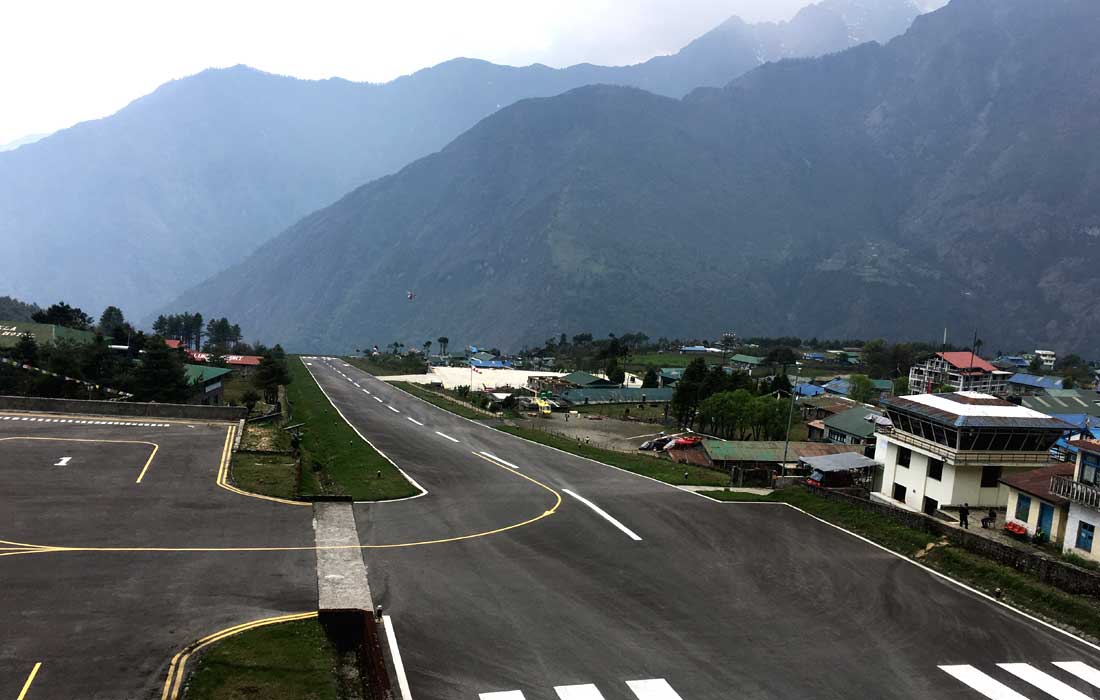
Lukla, the entry point to the Everest region, is at 2,860 meters above sea level. Many trekkers and mountaineers fly into Tenzing Hillary Airport, located in this small village in the Khumbu region, to begin their adventure experience in the Everest region. The airport is regarded as one of the most hazardous in the world due to its tiny landing strip and steep runway. Visitors spend their last night and wrap up their tour of the Everest region at Lukla.
everest-base-camp-trek

Namche Bazaar

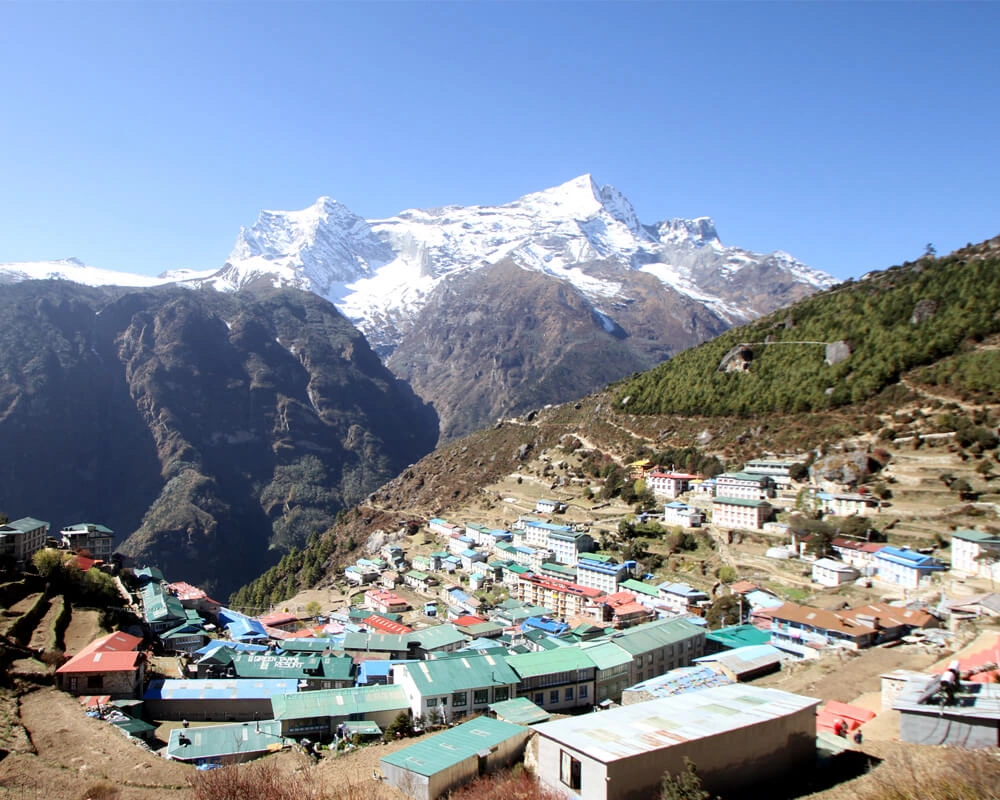
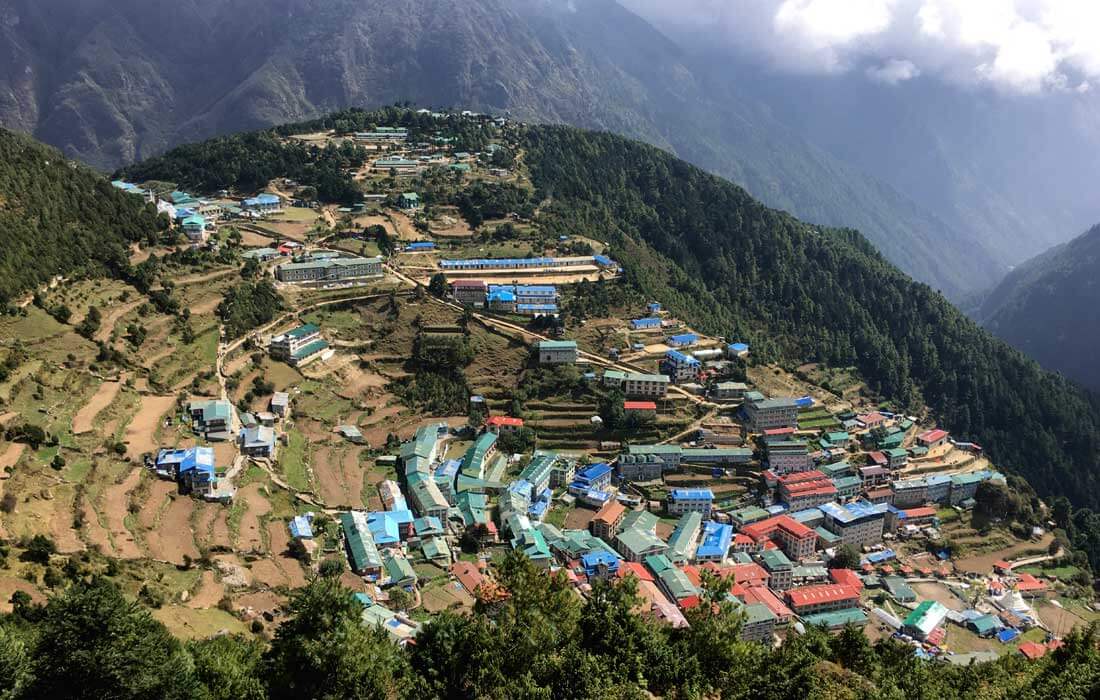
At an elevation of 3440 meters, Namche, one of the largest cities in Everest, is situated roughly 18 kilometers (11.2 miles) from Lukla. Namche, the Khumbu Valley's commercial center, is a well-liked destination for hikers and mountaineers. In addition to a few hotels, the town has a number of stores, eateries, and teahouses. Before continuing your journey, Namche Bazaar is an excellent location to acclimate to the high altitude.

You will learn more about the indigenous Sherpa people of the Khumbu region and their history and culture at the Sherpa Culture Museum in Namche Bazaar. Clothing, tools, and religious items are among the Sherpa cultural exhibits at the museum. A glimpse of the Everest region's past is also offered by the Sagarmatha Visitor Center. A breathtaking view of Mt. Everest, Lhotse, Nuptse, Ama-Dablam, Thamsherku, and numerous more breathtaking peaks can be seen from the visitor center's hillside.
everest-base-camp-trek

Tengboche Monastery

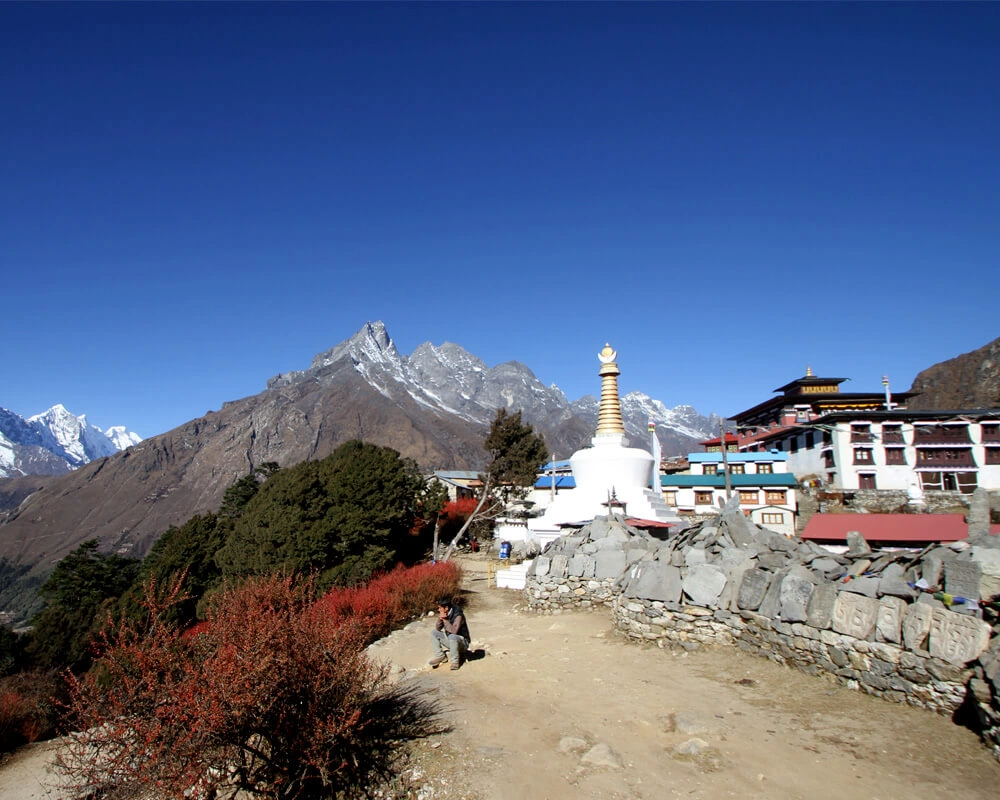
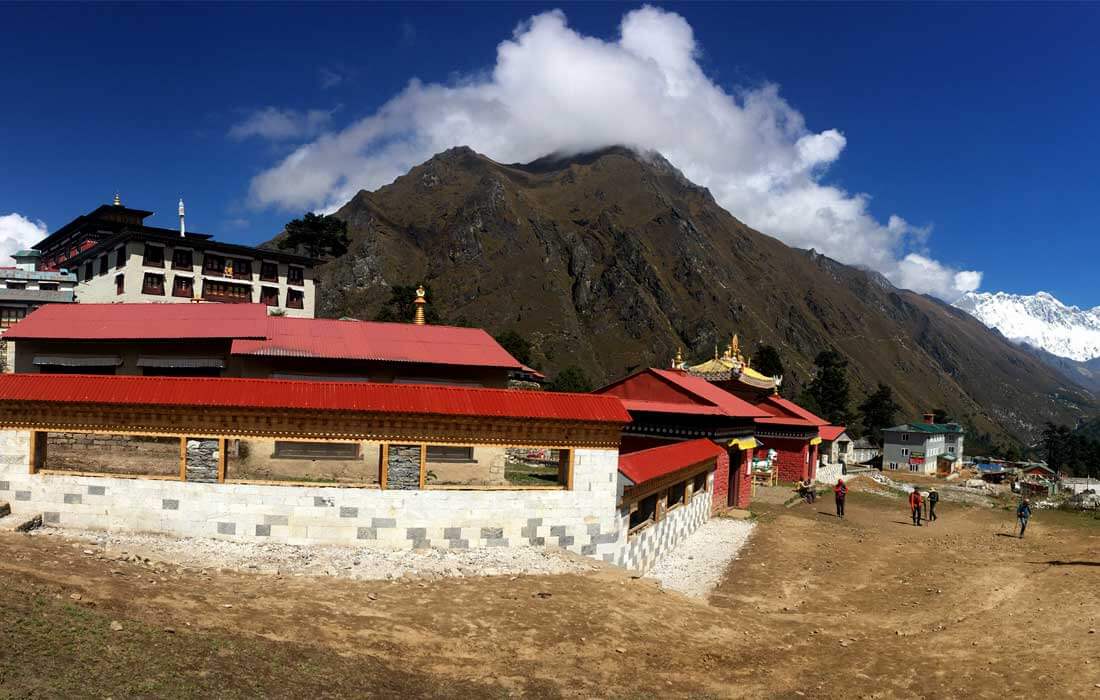
Tengboche is a small place that lies on top of the hill; it is located at an altitude of 3860 meters. This place is the home of one of the oldest Tengboche Monasteries, which is one of the most popular destinations during the Everest Base Camp trek. The monastery is a beautiful example of Tibetan Buddhist architecture and offers stunning views of the surrounding mountains, including Mount Everest and Ama-Dablam.
everest-base-camp-trek

Dingboche

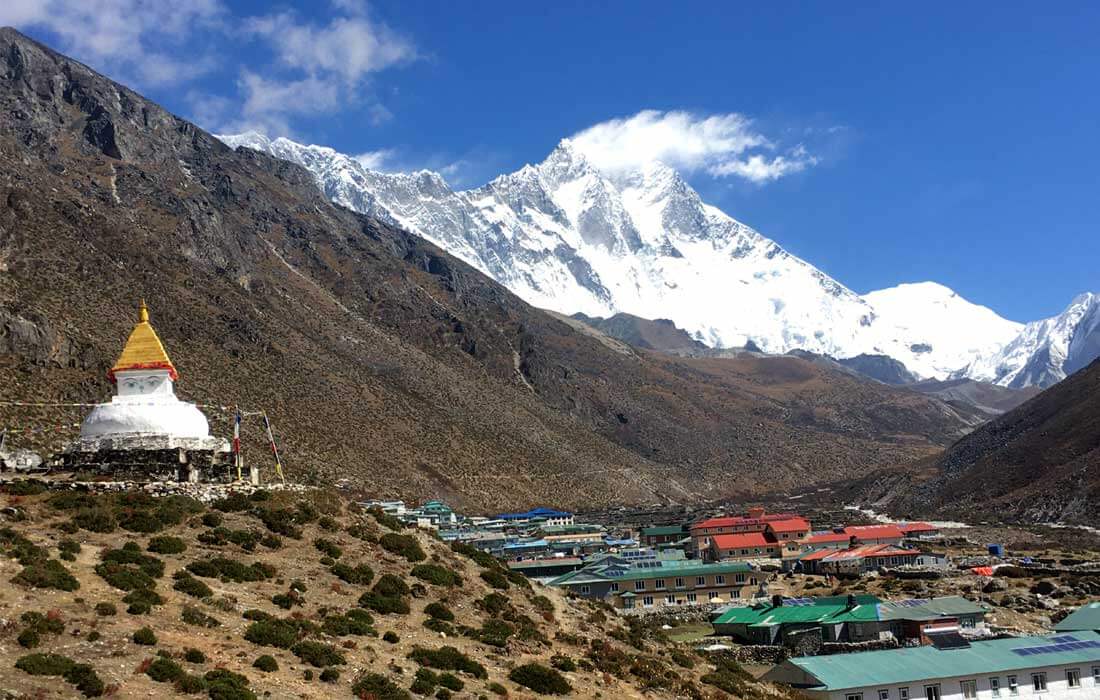
At 4,410 meters above sea level, Dingboche is the final Sherpa town in the Everest region. Trekkers frequently pause there to get used to the high altitude. Trekkers can stay and eat at a number of teahouses in Dingboche. In Dingboche, trekkers can ascend to Nagarshan Hill on the day of acclimatization. Situated immediately above Dingboche, Nagarshan Hill is a small mountain that provides breathtaking views of the Khumbu Valley and neighboring mountains, such as Mount Everest, Lhotse, and Amadablam.
everest-base-camp-trek

Gorakshep

At 5,164 meters above sea level, Gorakshep is the final hamlet on the EBC climb. After arriving at their ultimate objective, Everest Base Camp, trekkers can spend their last night at one of the several teahouses in Gorakshep. The following morning, visitors ascend from Gorekshep to the viewpoint, which offers a breathtaking view of Mount Everest and other neighboring mountains.

Mount Everest Base Camp

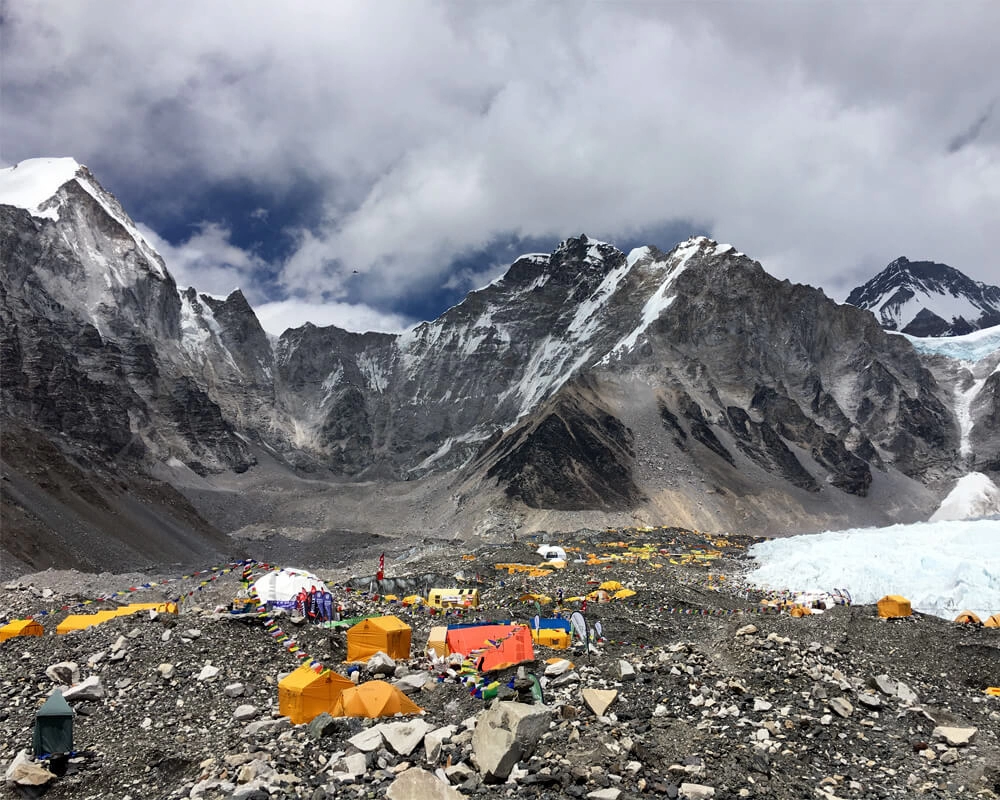
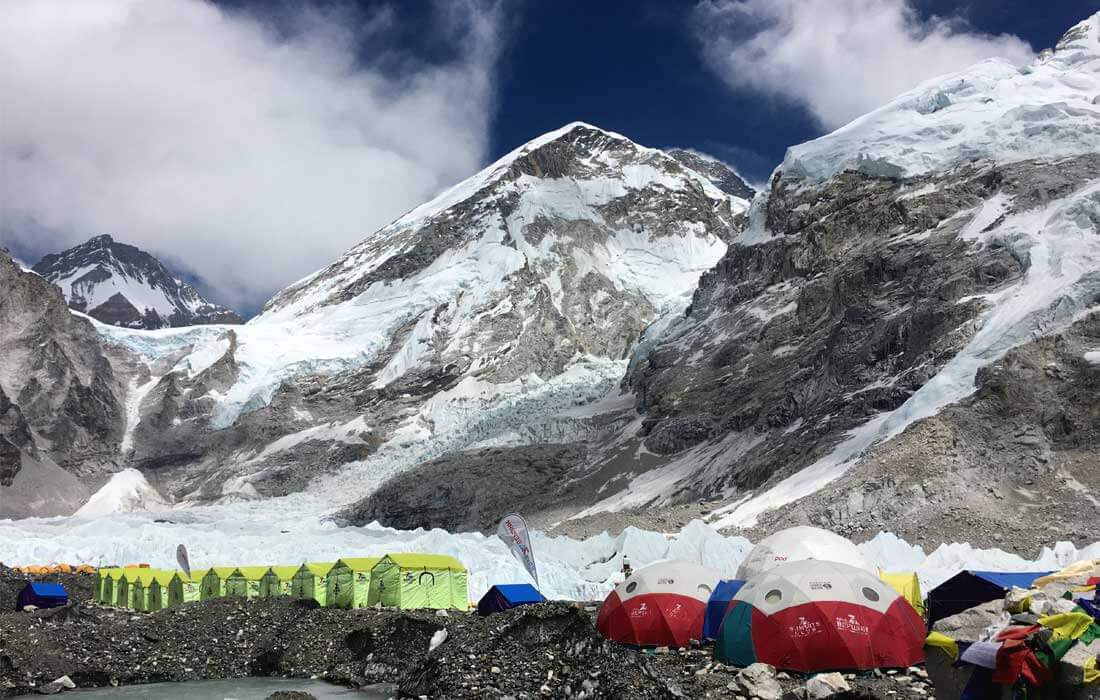
The Everest Base Camp is located at an altitude of 5,364 meters. This is one of the popular destinations in Everest and the dream place to be for many adventure seekers who plan to travel to Nepal. From Everest Base Camp, trekkers can get stunning views of Mount Everest and many other surrounding mountains.
everest-base-camp-trek

Kala Patthar

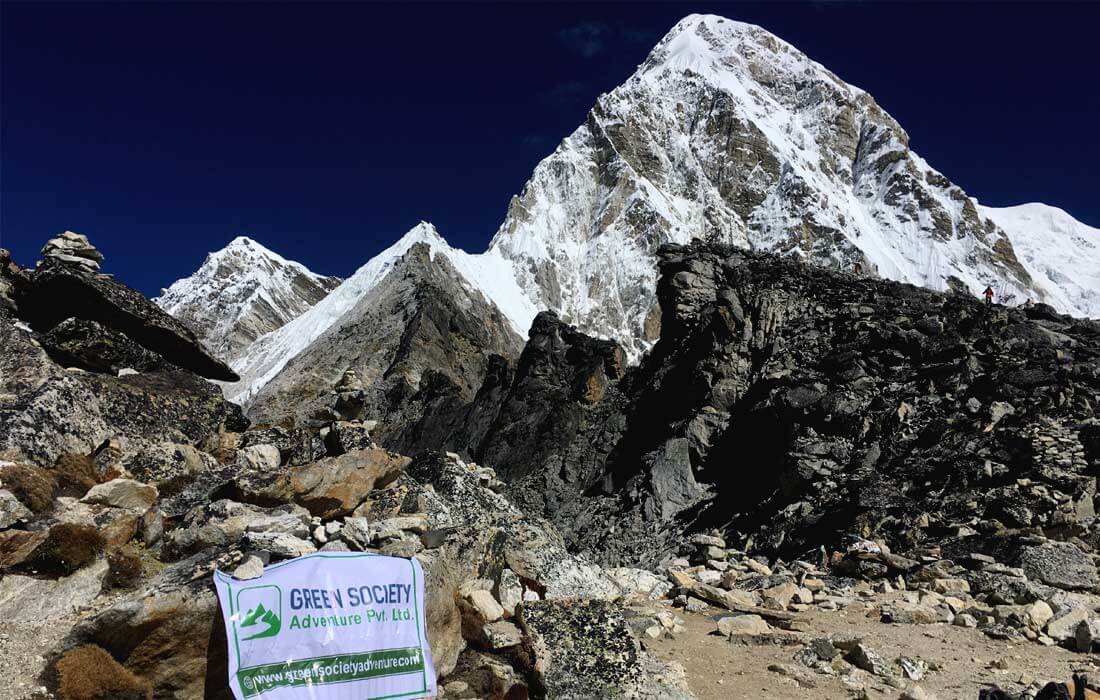
Located at an altitude of 5560 meters (18336ft), Kala Patthar is another popular destination during the Everest trek for the stunning view of the sunrise and surrounding mountains. This viewpoint is located just beneath Mount Pumori from where trekkers can enjoy even better views of Mount Everest and the surrounding mountains. The hike to Kala Patthar is steep and would be very cold in the early morning, but it is worth it for the views. This place is probably the highest place to witness a sunrise to remember.
everest-base-camp-trek

What is the cost of the Everest Base Camp trek for seniors? 

Trekkers love visiting several trekking destinations, but sometimes the budget on account does not meet the price of the package. Nevertheless, the Everest Base Camp trek 14 days, provided by Green Society Adventure, is affordable and can be made cost-effective by modifying its itinerary based on your preferences. The cost usually depends on various factors such as the chosen company, itinerary, services, meals, accommodation, porter, guide, duration, and length of the trek. Embarking on peak seasons is quite costlier than trekking in off-seasons due to higher demand for food and lodging.

Adjusting to common teahouses, simple meals, and shorter packages through local/national trekking companies becomes cheaper than a trek with advanced facilities by selecting an international one. In addition, booking in a group can be beneficial, along with hiring a guide and porter in a team to split prices. To sum up, the  Everest Base Camp trek cost  depends on the individual, but it is easier to estimate depending on the inclusions and exclusions of the package, which are given below. 

Why choose the Green Society Adventure for the Everest Base Camp trek? 

Since the establishment period of our trekking company, Green Society Adventure, our priority has been clients’ satisfaction, whether it is a shorter trip like the  Everest View trek or a longer one like the Everest High Pass Trek with Everest Base Camp—19 days. With more than a decade of experience in the field of travel and tourism, we provide different packages for you according to your fitness level, age, and other preferences. Our team includes an experienced guide and local porters who can speak English or other languages fluently and have sufficient training needed for high-altitude adventure. 

Accordingly, our seasoned guide will accompany you and keep updating your health conditions during this 14-day Everest Base Camp trekking, ensuring your safety. On your behalf, we handle all logistics from arranging official documents to accommodation and contacting the rescue team in case of any accidents on the trail. If your plan for this spring/autumn is to trek to the Everest Base Camp, hurry up as booking is open. Our booking and payment systems are user-friendly, and our team assists you if you get any confusion. 

Contact us on WhatsApp or do email for more information about the package, as we are available 24/7 for your service. Enjoy the trip to the fullest with our friendly and helpful team without hesitating to keep your thoughts If you prefer a time other than the scheduled time. If you are a beginner, prepare with our guide to make this trip more effective. 
Itinerary
Expand AllCollapse All

We can customize the trip to suit your interests and help you make it fit your budget.

When you arrive at the Tribhuvan International Airport, Kathmandu, the Everest Base Camp Trek itinerary gets activated. Depending on the plan, our representatives of Green Society Adventure will shift you to the hotel. Although the package has no plan for additional activities on this day, you can explore the historical and cultural places of the capital city, and we can manage it for you.

In the evening, our team organizes a welcome dinner and orientation program for further prolonged trekking in the Everest region, where you will meet your guide and fellow trekkers that accompany you throughout the journey. 

  • Max. Altitude:1320 meters/ 4329 ft.
  • Accommodation:Deluxe Hotel
  • Meals:Welcome Dinner

Trek Duration: 3 hours

Trek Distance: 7.8 kilometers

After a hearty breakfast, you will fly to Lukla after a drive of 35 to 40 minutes, observing incredible views of mountains, hills, valleys, farmlands, and lush dense forests from the window of the plane. The official trek begins from there with a short trek to Phakding, a quaint Sherpa settlement located beside the Dudh Koshi river. With a first glimpse of the Kusum Kangraru Peak, gradual descending paths take you to the village after traversing villages such as Chhepulung and Thado Koshi. 

  • Max. Altitude:2800 m /9184 ft.
  • Accommodation:Guesthouse
  • Meals:Breakfast, Lunch, Dinner

Trek Duration: 3 hours

Trek Distance: 10.5 kilometers 

Leaving Phakding behind, make your way towards Namche Bazar by walking. On the shores of the Dudh Koshi River. The trail takes you through the Sagarmatha National Park, a UNESCO Natural Heritage Site, and you also take a park entry permit from its office in Monjo. Crossing numerous Sherpa villages and cascading waterfalls, along with the vistas of Thamserku, as well as Mt. Everest, reaches Namche Bazar, often known as Sherpa town, which is also a popular gateway to Everest Base Camp.

  • Max. Altitude:3440M /11284FT
  • Accommodation:Stander Hotel
  • Meals:Breakfast, Lunch, Dinner

Trek Duration: 3 hours

Trek Distance: 9.5 kilometers 

Wake up in the serene atmosphere of Namche Bazar that offers breathtaking scenery. A major, bustling hub of the Everest region, which is rich in culture. It is an acclimatization day of the trek to adapt to high altitude, rocky terrain, and thin air. Stroll around the settlement, and explore monasteries, markets, and nearby destinations. To acclimatize naturally, we recommend you hike by gaining some elevation. 

Based on our itinerary, visit the popular vantage point, Everest View Hotel, for awe-inspiring panoramas of Mt. Everest, Nuptse, Lhotse, and Ama Dablam. Communicate with locals, enjoy various types of tea (butter tea, milk tea, masala tea, and herbal tea), and also visit the headquarters of the Sagarmatha National Park. 

  • Max. Altitude:3440 m /11284 ft.
  • Accommodation:Stander Hotel
  • Meals:Breakfast, Lunch, Dinner

Trek Duration: 5 hours

Trek Distance: 9.5 kilometers 

On this day, you will head to Tengboche, home to one of the oldest and largest monasteries in the Khumbu region. The Tengboche monastery was rebuilt after a fire devastated the original building with a donation from Sir Edmund Hillary. After leaving Namche, take a short climb and proceed on the journey with gradual ascents to Kyangjuma. 

Following the descending trail, you will reach Phungki Thanka, a famous stop for lunch. From here, a continued climb through terrain of rhododendron will take you to Tengboche. Observe the puja ceremony as well as spend a comfortable night at the guest house. 

  • Max. Altitude:3790 m / 12694 ft.
  • Accommodation:Teahouse
  • Meals:Breakfast, Lunch, Dinner

Trek Duration:  5-6 hours

Trek Distance: 9.2 kilometers

The journey begins with descending trails adorned with trees of rhododendrons, pines, and cedars to the Imja Khola. After crossing the suspension over this river, ascending paths will lead to the biggest and most beautiful Sherpa village of Pangboche in the Khumbu region. Explore the historically significant monastery where mostly climbers come to have blessings from Lama Geishi before determining their destination to be the top of Mt. Everest. 

Enjoying closer views of Ama Dablam, Tawetse, Lhotse, Thamserku, and Mt. Everest along with a kind of peace while walking via dense woodlands, where streams and small brooks are running. Upon reaching the day's destination, Dingboche, often known as “The summer valley," teahouses welcome you in their own traditions. 


  • Max. Altitude:4410 m/ 14464 ft.
  • Accommodation:Teahouse
  • Meals:Breakfast, Lunch, Dinner

Trek Duration: 3 hours

Trek Distance: 3-4 kilometers

Leaving Dingboche behind, a gradual ascending path takes you through a Dusa, a small yak pastureland, where you can see yaks and Himalayan pikas. After walking a few hours more from here, you can reach Thukla, a popular stop before challenging Thukla Pass (4830 m). The significance of staying here lies in the easy availability of teahouses, the peaceful atmosphere, and the stunning, unobstructed views of Island Peak.

Note: To acclimate, you can hike to the viewpoint and spend another day in Dingboche. and you can hike straight to Lobuche the following day.

  • Max. Altitude:4620M/15154FT
  • Accommodation:Teahouse
  • Meals:Breakfast, Lunch, Dinner

Trek Duration: 2.5 to 3 hours 

Trek Distance: 4-5 kilometers 

It’s a short but quite strenuous hike, as you cross Thukla Pass (4830 m) to reach Lobuche. You might feel emotional while seeing stone memorials honoring climbers who lost their lives on Mt. Everest and other nearby peaks. Struggling through steep terrain becomes worthwhile due to breathtaking panoramas of peaks such as Khumutse, Maha Langur, Lingtren, Tawtse, Ama Dablam, and Pumori from Khumbu Glacier moraine. After covering a few more distances, reach Lobuche, the most famous stop for mountaineers on the route to EBC. 

  • Max. Altitude:49301 m /1617 ft.
  • Accommodation:Teahouse
  • Meals:Breakfast, Lunch, Dinner

Trek Duration: 6 to 8 hours 

Trek Distance: 6. 5 kilometers 

This is the most anticipated day of the 14 days Everest Base Camp trek since you will trek to Gorekshep and then to the base of Mt. Everest (8848 m) today. Gorakshep is the last settlement before EBC, which you reach after walking a few hours alongside the Khumbu Glacier moraine. Keeping the backpack at the teahouse, head to the Everest Base Camp (5364 m), navigating snowy and rocky landmarks. 

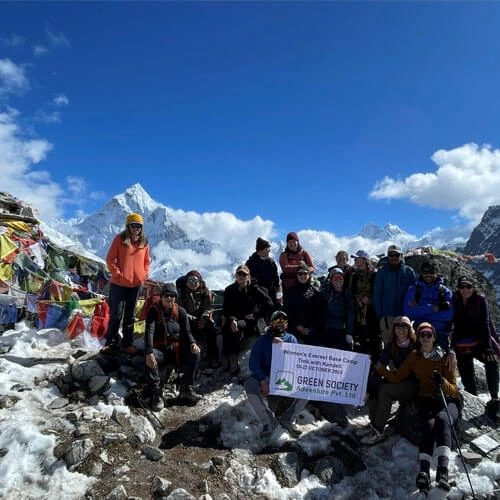
When you reach there, the breathtaking environment, decorated with fluttering prayer flowers and encompassed by towering peaks, welcomes you to savor the charm of nature. Spend quality time together with fellows, enjoying the Khumbu icefalls and wonderful vistas of mountains. Get back to Gorakshep, avoiding unpredictable weather challenges after clicking some photographs in the dramatic environment. 

  • Max. Altitude:5364 m /17593 ft.
  • Accommodation:Teahouse
  • Meals:Breakfast, Lunch, Dinner

Trek Duration: 11.5 kilometers

Trek Distance: 6 to 7 hours 

Today, you will hike up to Kalapatthar, a popular vantage point in the Everest region for extensive vistas of the Everest massif and surrounding scenery. The journey starts early in the morning to witness the magical moment of dawn, when the sun begins to rise and casts golden rays over the white mountains, creating a truly captivating backdrop. After spending some time, return to Gorakshpe and make your way towards Pheriche (4200 m), following mostly descending trails adorned with alpine forests and some terraced farms. 

  • Max. Altitude:4200 m/13776 ft.
  • Accommodation:Teahouse
  • Meals:Breakffast, Lunch, Dinner

Trek duration: 7 hours

Trek Distance: 15 kilometers 

Today from Pheriche, we will trek back to Namche. The down and uphill trails follow the beautiful alpine woodlands and occasional terrace farms with a breathtaking view of the Himalayas. Overnight stay at Hotel Namche.

  • Max. Altitude:3440 m /11284 ft.
  • Accommodation:Stander Hotel
  • Meals:Breakfast, Lunch, Dinner

Trek Duration: 7-8 hours

Trek Distance: 18 kilometers

Today is your last night in the Khumbu region as you get back to Lukla via Phakding, Monjo, and Namche Bazaar, walking alongside the Dudkoshi River Valley. After reaching Lukla, take a rest for a while and explore around the village once before returning to the capital city. Celebrate the moment after completing the trek successfully. Prepare for the next day’s flight before bed. 

  • Max. Altitude:2800 m/9184 ft.
  • Accommodation:Guesthouse
  • Meals:Breakfast, Lunch, Dinner

Wake up early in the morning with the sunrise and then have a hearty breakfast before flying back to Kathmandu. As you land at the airport of Kathmandu, our representative of Green Society Adventure transfers you to the hotel. After taking a rest for a while, you can visit World Heritage Sites such as Pashupatinath, Boudhanath, Swayambhunath (Monkey Temple), Patan Durbar Square, and Kathmandu Durbar Square. Explore around bustling markets like the Asan, Thamel, Lagankhel, and Bouddhanath areas to buy souvenirs for your loved ones. 

  • Max. Altitude:1320 m
  • Accommodation:Deluxe Hotel
  • Meals:Farewell Dinner

Drive Duration: 35 to 40 minutes 

Today, you will return to your homeland, leaving the country of the Himalayas, carrying lots of memories in the Everest region. Our team will transfer you to the Tribhuvan International Airport approximately 2-3 hours before the scheduled flight. 

  • Meals:Breakfast
Route Map
Everest Base Camp Trek for Seniors and Beginners - 14 Days map
Cost Details
Includes
  • Free airport - hotel - airport pick up and drop off as per itinerary in a private vehicle
  • Accommodation in a deluxe hotel in Kathmandu on a twin-sharing basis with breakfast.
  • Round trip flight Kathmandu or Ramachep – Lukla– Kathmandu or Ramachep including departure taxes
  • Full board meals: (Breakfast, Lunch, and Dinner) during the trek.
  • Three/ Four cups of tea/ coffee during the trek. 
  • Teahouse or Lodge accommodation during the trek.
  • Seasonal fresh fruits as dessert every evening after dinner, during the trek.  
  • An experienced English-speaking trek leader (trekking guide) and Sherpa porters to carry luggage (2 trekkers: 1 porter).
  • All salary, insurance, equipment, flight, food, drinks, and accommodation for the guide and porter. 
  • Assistance guide for groups of 5 or above. 
  • Trekking equipment: such as a sleeping bag (Sleeping bag is to be returned after trip completion) and a duffel bag. 
  • Green Society Adventure's complimentary free T-shirt and route map (if needed)
  • All necessary paperwork, and National Park permits and TIMS
  • Khumbu-Pasang community entry fee. 
  • Farewell dinner at a typical Nepalese restaurant with traditional performances. 
  • A comprehensive medical kit/ First-aid kit and an oximeter to measure your oxygen and pulse level during the trek. 
  • All government and local taxes
Excludes
  • Nepalese visa fee
  • Excess baggage charges
  • Lunch and dinner in Kathmandu.
  • All bar bills along the trek.
  • Extra night accommodation in Kathmandu in case of early arrival, late departure, and early return from the mountain (due to any reason) than the scheduled itinerary.
  • Travel and rescue insurance.
  • Personal expenses (phone calls, laundry, bar bills, battery recharge, extra porters, bottle or boiled water, shower, etc
  • Tips for guides and porters.
Departure Dates
PLAN TRIP
Client Reviews
  • Lindsey Lavaysse
    Lindsey LavaysseUnited StatesOctober 31, 2025

    Amazing Experience

    Highly recommend!! I recently went on the Everest Basecamp trek with Green Society Adventure and it was an amazing experience. The guides were incredible, knowledgeable, prepared, helpful when things arise, and fun!! We were so well cared for the entire trip and in so many ways. The guides truly work nonstop and go above and beyond. I highly recommend this company and will only travel with them when exploring in the Himalayas ☺️

    Google
  • Deanna Laga
    Deanna LagaUnited StatesOctober 30, 2025

    A Truly Life Changing Experience

    My Everest Base Camp trek with Green Society Adventures was truly a life-changing experience. From the moment I landed in Kathmandu, the team handled every detail with genuine care, professionalism, and warmth.

    Our guide, Raj, was nothing short of exceptional — knowledgeable, patient, and deeply connected to the culture and spirit of the Himalayas. He balanced humor and wisdom perfectly, always making sure our group felt safe, inspired, and in awe of the journey. His insight into local traditions, mountain lore, and the Sherpa way of life transformed what could have been just a hike into a spiritual adventure.

    Every lodge, meal, and route was thoughtfully arranged. The Green Society Adventures team checked in constantly, ensuring comfort, safety, and a sustainable approach to travel. Their respect for the mountain communities and environment was inspiring — it felt like we were not just trekking through Nepal, but with it.

    Standing at Base Camp, surrounded by prayer flags and glaciers, I felt an overwhelming gratitude — not just for the view, but for the journey that got me there. Raj and Green Society Adventures made it more than a trip; they made it a soul-binding memory that will stay with me forever.

    Google
Useful Information

What is the best time to trek to the Everest Base Camp trek for beginners? 

Trekkers are often curious regarding how to get to Everest Base Camp safely. One of the most important aspects of the trek is selecting the most appropriate period of the year to embark on this 14-day trip. Although the trails are well-marked, using sign boards with spot names and directions, embarking on this trek during Off Seasons such as monsoon (June to August) and winter (December to February) bring critical challenges due to heavy rainfalls and severe cold, respectively. Accordingly, Spring( March to May) and Autumn( September to November) are the best time to trek to the Everest Base Camp, avoiding many risks. Trail navigation becomes more comfortable on dry trails in a moderate temperature than on muddy, icy, or snowy terrain during periods of extreme heat or cold. 

While the rains or fogs disturb the views of scenery in the months of off-seasons, clearer skies of spring and autumn allow you to have unobstructed vistas of mountains. Blooming wildflowers and their fragrances, along with occasional glimpses of wildlife, really make even prolonged walking enjoyable in the spring. Therefore, we also recommend trekking to the base of Mt. Everest only during optimal periods to avoid conditions of returning to the capital city caused by landslides or avalanches. For immersing into the cultures, it is more perfect to trek during autumn when national festivals such as Dashain, Tihar, and Chhath take place. 

What are essential Everest Base Camp trek permits? 

Similar to other trekking areas, this 14-day trip to the Everest Base Camp requires a Sagaramatha National Park Permit and a Khumbu Pasanga Lhamnu Rural Municipality Permit. Our trekking guide manages all this official paperwork on your behalf, letting you only focus on the trip and enjoy each step. At various checking points such as Lukla and Monjo, as well as cross-checking at any places. The Nepalese government has regulated this system to monitor tourism, maintain a crowd of tourists for sustainable tourism, and ensure each trekker’s safety throughout the journey. Accordingly, guarantee your safety, as the related office, like the Nepal Tourism Board, keeps your details along with the detailed itinerary to track you and provide rescue in case of emergency. 

While you can obtain a Sagarmatha National Park entry permit from Nepal Tourism or Monjo, the Khumbu Pasang Lhamu Rural Municipality permits are available at Lukla or Monjo. The collected funds from these permits are useful to maintain trails, clean trekking or preserved areas, and for the welfare of workers at national parks who are dedicated to keeping vegetation and animals safe. Indirectly, you are helping the locals and promoting local economics. Although you have legal documents to visit the Everest region, do not harm any living beings. Observe wildlife by keeping distance from them, and do not destroy their hamlet.

Why obtain travel insurance for the 14 days Everest Base Camp trek for seniors and beginners? 

We always suggest having comprehensive travel insurance from a reliable company, considering the difficulty level of Everest trekking, although it is not compulsory. Big hospitals, along with many services, are only at Namche Bazar, and health posts are at distances on the trekking route. Therefore, ensure that the chosen insurance covers helicopter evacuation above 5000 m. If you need urgent rescue for health treatment, as all places are not accessible to road vehicles, it also takes longer days to reach the capital city. By attaining the right insurance, you are not only saving extra expenses for hospitals, medicines, and flight fare, but also guaranteeing safety. 

Our licensed and trained guide handles most circumstances, providing first aid until the rescue team arrives. However, keep in mind that health is wealth, and make sure you have health support throughout the entire trip along with the best insurance coverage. Additionally, you must make sure that the policy of the purchased insurance covers trip cancellations, flight delays or cancellations, and theft or damage of personal belongings. 

How hard is the Everest Base Camp trek for seniors? 

The difficulty level of the Everest Base Camp trek depends on its duration, daily trekking hours, average trek length, elevation, trail condition, unpredictable weather, and elevation. As trekkers walk above 2500 m for 14 days, covering approximately 8 to 9 kilometers within 4 to 5 hours on average. Sometimes instant climate change, which causes avalanches or landslides, can ruin the trek’s enjoyment. However, proper preparation along with essential tools assists in such conditions. 

Considering the challenges of the rocky, steep trail to Everest Base Camp and some steady ascending to Thukla (Dhukla) Pass, the entire trek is moderate to difficult. Acute Mountain Sickness (AMS) is often taken as one of the most challenging things on this trek, which sometimes creates severe cases if you are careless. Seasoned trekkers help you in preventing AMS, but you also should listen to your body and avoid activities that increase its risks. 

Symptoms of AMS:  Headache, fatigue, dizziness, difficulty sleeping, loss of appetite, mild swelling of face hands, or feet, nausea or vomiting

What meals and teahouses are along the Everest Base Camp trek route? 

Except in Namche Bazar, you will stay in simple but comfortable teahouses during the 14 days Everest Base Camp trek. As you proceed to higher elevations, the services become limited, and you get only basic amenities along with a simpler room that has a twin bed, pillows, blankets, and some furniture. Although advanced dining halls are hard to see, teahouses provide fresh, hot, and nutritious food that helps you to be healthy and energized for long distances. The most common meal for lunch and dinner on the trek is “Dal and Bhat," which includes steamed rice, lentil soup, seasonal vegetable curry, salad, and pickle. 

Some restaurants offer Western and Tibetan cuisines, including pizza, burgers, pasta, fried rice, omelets, noodles, thukpa, and Tibetan bread. However, we do not recommend oily, spicy, and heavy food during high-altitude journeys, as they take a long time to digest and leave you hungry earlier. Generally, Internet and Wi-Fi services are available in most settlements on the Everest Base Camp trek route. While Lukla, Namche Bazar, Tengboche, and Dingboche have reliable network services, Lobuche, Gorakshep, and Pheriche have weak and limited Wi-Fi and internet. 

Can you trek to Everest Base Camp trek on your own? 

In the previous years, we know that the solo trekkings were allowed in Nepal. Considering trekkers' security, the government has regulated a rule to hire a licensed guide to accompany you throughout the entire journey. If we see old news, we know that several trekkers lost lives while trekking alone because of delayed rescue or getting stuck in dangerous zones. The trail from the initial point to the base of Mt. Everest is moderate to strenuous, requiring the support of a guide on steep ascents and technical descents. The rules of Nepal do not let you trek on your own to any trekking areas. Nevertheless, it is quite impossible even if a solo trek were allowed due to the structure of the terrain, Himalayan weather, and limited services.

Porters are not mandatory for a trek, but hiring them can enhance the trip, as they can carry up to 15/20 kg on demanding sections too. You can walk freely, enjoying the natural grandeur together with fellow trekkers. For their struggle to make your dream trek successful, you can also give them tips at the end of the journey. To sum up, a guide and a porter also help you in connecting to locals by translating languages as well as dealing with teahouse owners in case of asking anything according to your choice. 

How to prepare for the Everest Base Camp trek for seniors and beginners? 

A well-planned trek always becomes more successful with minimal challenges than a random one. Generally, trek preparation includes mental and physical preparation. However, we explain here what preparation you need to trek to the base of Mt. Everest. To make your body ready to reach the high alpine areas, get involved in some simple cardiovascular exercises such as jogging, cycling, running, swimming, dancing, and hiking up to 2000 m/2500 m, starting one or two months before the trek. Proper physical training makes your leg muscles, preparing them to balance appropriately,

especially on uneven terrain and staircases.

Since mental resilience is a key to proceeding to the destinations with confidence, you have to do meditation and yoga practice, helping you to build courage to traverse challenging zones easily. A seasoned guide knows weather patterns and recognizes major or alternative trails also in the absence of a digital weather forecast, GPS tool, or detailed map. The guide does not let you suffer through causes of unpredictable weather, but you have to prepare for facing any situation.

In high-altitude terrain, you will not get shops anywhere. Accordingly, carry nutritious snacks such as dry nuts, dry fruits, biscuits, cookies, energy bars, chocolate bars, potatoes, beaten rice, and instant noodles. For more information check our blog on the topic "How to prepare for the Everest Base Camp Trek".

What to pack for the Everest Base Camp trek 2026? 

Smart packing is a key to getting to the Everest Base Camp without more challenges. Packing is quite difficult, as you might not know what essentials are required for the weather and the terrain of the EBC trek route. However, we help you in packing for the trek and also provide a free GSA duffel bag and trekking map along with a first aid kit, including basic medicines. As we have listed below crucial trekking gear and safety things, trek confidently: 

Clothes: 

  • Fleece or down jackets, woolen t-shirts, or sweaters 
  • Waterproof pants and jackets
  • Thermal layer and moisture-wicking vests. 
  • Comfortable trekking pants, and trousers

Trekking gear 

  • Premium-quality sleeping bag with its cover (comfort rating: –10°C to –20°C)
  • Trekking poles 
  • Box of some tools 
  • Backpack
  • Lightweight knee support, microspikes/crampons, and gaiters

Essentials for personal hygiene and health 

  • Hats (sunhat and woolen hat) 
  • Sunglasses, and surgical masks (To save skin and eyes from Uv rays) 
  • Wet tissue paper, and handkerchief
  • Biodegradable soap, toothpaste, and toothbrush
  • Sanitizer, and quick-dry towels
  • Water purification tablets or portable filters
  • Sunscreen, lotion, insect repellent, and ointment 
  • Reusable water bottles 

Documents

  • Sagarmatha National Park Entry Permit 
  • Khumbu Pasang Lhamu Rural Municipality Permit

Others 

  • Headtorch light with extra batteries (To use while beginning the journey early and navigating trails in the dark)
  • A smartphone or satellite phone with Nepalese card, and a power bank 
  • Binoculars and a camera 
  • Journals, diaries, games, stories, and novels
  • A digital device for the forecast, GPS tools, and a trekking map 

Can you extend the Everest Base Camp trek for beginners and seniors? 

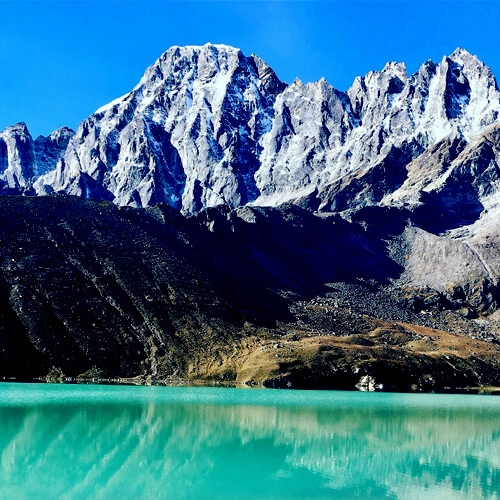
Yes, you can either extend or shorten the trip, as our Everest Base Camp trek itinerary is customizable. If you have 3 to 5 days, you can trek to include Gokyo Lake exploration via Cho La Pass or wonderful alpine passes like Cho La (5,420 m) and Renjo La (5,360 m). If you want to enjoy only mountain vistas, we have another budget-friendly and shorter package, “Everest View Trek." We have different itineraries for Everest Base Camp as follows:

Where to fly for the Everest Base Camp trek for beginners and seniors? 

Lukla (2860 m) is a popular gateway to Everest Base Camp, which you reach generally from Kathmandu’s Tribhuvan International Airport. Due to the high demand for plane tickets from international airports, sometimes the flight might be operated from the domestic airport of Ramechhap during high peak seasons (spring and autumn). Flying over the Himalayas, valleys, and traditional settlements becomes memorable due to aerial views. 

FAQs
  • Generally, the Everest Base Camp trekking route is about 80 to 85 miles round trip from Lukla, or 130 to 137 kilometers. 

  • The elevation of Everest Base Camp is 5364 m, gaining 2500 m elevation from Lukla. However, the highest point of the trek is Kalapatthar (5540 m).

  • We have different packages to reach the base of Mt. Everest, mostly trekking from Lukla. You cannot drive up to Lukla or EBC, but you can go to Jiri by tourist bus and then trek from there to reach the base camp. 

  • The Everest Base Camp trek usually takes 12 to 14 days to complete. However, you can lessen or extend the trek based on your budget and vacation. 

  • The Everest Base Camp trek begins from Lukla or Jiri. Jiri is an initial point of the classic EBC trek route, which was used mostly in the previous days. However, trekkers love choosing to trek from Lukla these days. 

  • There are two bases of Mt. Everest (south and north). However, the most popular one is South Base Camp, situated in the Khumbu region of Nepal, where the Everest Base Camp trek takes you. Another is North Base Camp, located in Tibet, China. 

  • No, you cannot drink water directly from various sources such as waterfalls, rivers, streams, and taps due to the risk of stomach infection or other health issues like diarrhea. 

  • Yes, you need to carry extra money (either Nepalese currency or US dollars) because you will have ATM service at Namche Bazar. Therefore, keep enough money in your pocket, which will be essential to purchase needed things or snacks on the way. 

  • During the Everest Base Camp trekking, leave it at our office of Green Society Adventure or store it at a hotel in the capital, as hotels generally have storage facilities.

  • Our seasoned trekking guide carries a first aid box together with a thermometer, oximeter, bandage, ointment, and medicine for high altitude. However, we advise you to bring your individual medicine, consulting with your doctor.

Similar Trips
You May Also Like

Ask a Question