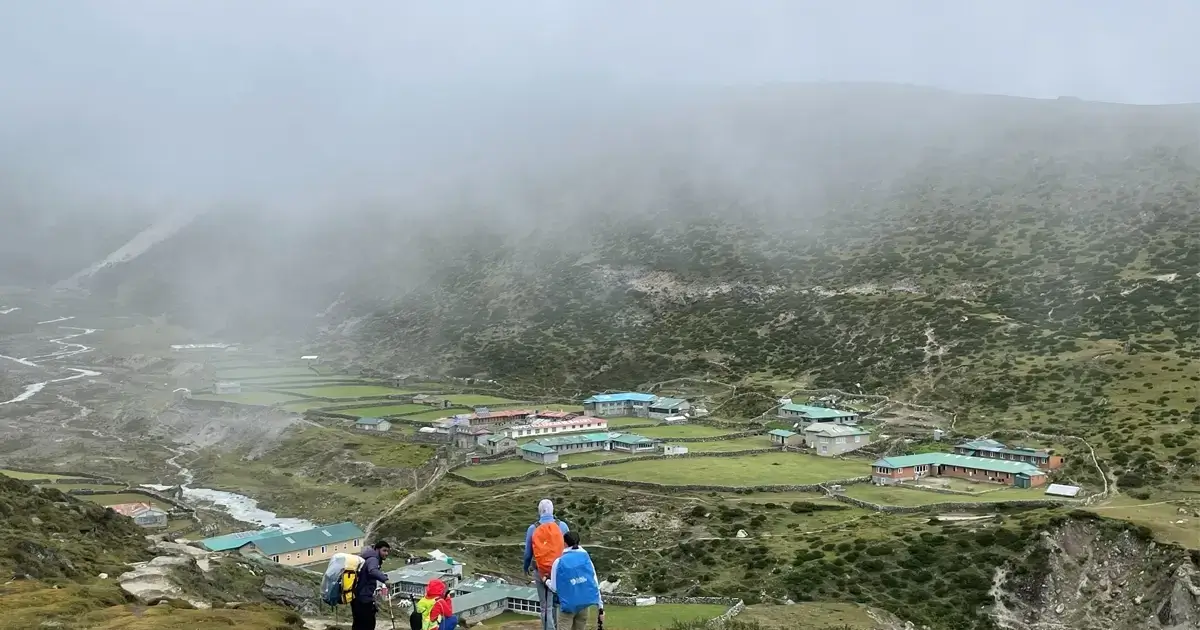
You know that several trekkers do not feel the real adventure until exploring the Everest region. So, are you curious to know which is the best among the Khumbu trekking trails? If you are seeking secluded paths that also offer wonderful, extensive vistas of the mountains, along with the astonishing scenery of the Ngozumpa Glacier, Gokyo Valley, and the surrounding area from Gokyo Ri (5,763 m), one of the topmost peaks in Nepal, the Gokyo Valley trekking is truly unforgettable.
Nevertheless, do you know how far you need to cover to reach the Gokyo Valley and back? For first-timers in Nepal or novice trekkers, this is a common inquiry, as logistics need to ensure a smoother trek. Comprehend the total mileage of theGokyo Valley trek along with the daily walking distance to prepare properly physically and mentally according to the itinerary.
Table of Contents
What is the exact Gokyo Valley trek distance?
Generally, the chosen itinerary determines the exact distance of the Gokyo trekking. Although the schedules are customizable, we will talk here about the standard route and the extended one, which connects the trail to the legendary Everest Base Camp via Renjo La Pass (5360 m) or Cho La Pass (5420 m), offering more surprises along with some challenges.
What is the total distance of the standard Gokyo Valley trek?
One of the shortest and most rewarding round-trips in the Khumbu region, the standard Gokyo Valley trek officially begins and ends in Lukla. The calculation of the trek length for the trail will be from Lukla to Namche Bazaar; the coverage for side hikes (Hotel Everest View); ascents to Dole, Machhermo, and Gokyo Valley; morning hike distances to Gokyo Ri and treks back; and gradual descents to Lukla via the same path. As a result, the total Gokyo Valley trek distance is approximately 90 to 110 km.
While it seems short, walking through an uneven trail, including some risky zones, takes time to traverse. Gradual climbing with caution leads to destinations safely at high-altitude landmarks. Enjoy each moment through lush woodlands, suspension bridges, pasturelands, terraced fields, and traditional villages, although the actual walking distance feels significantly longer.
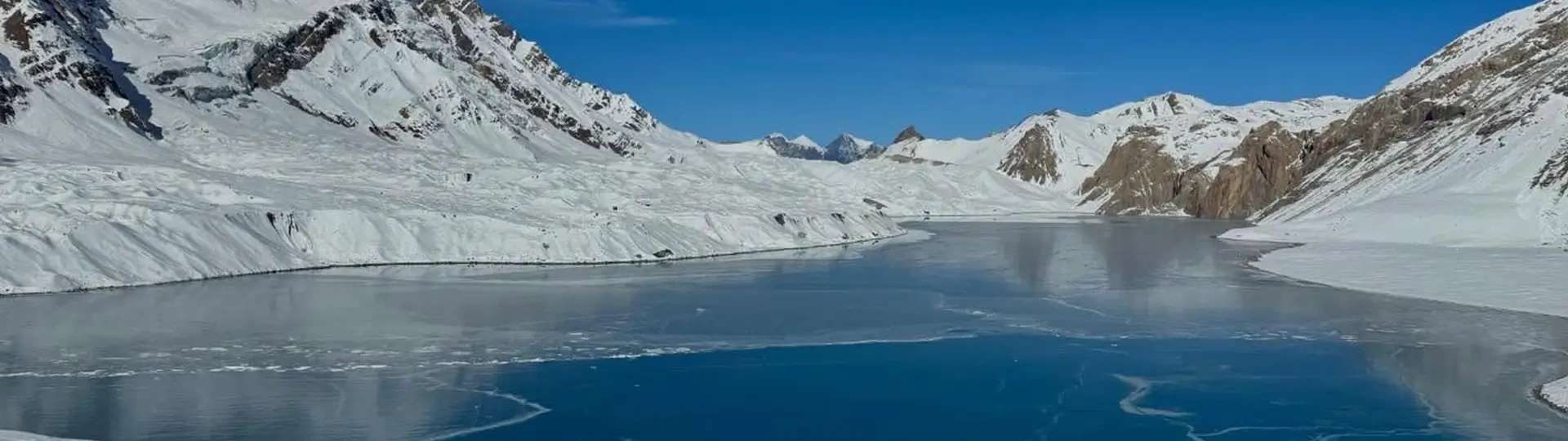
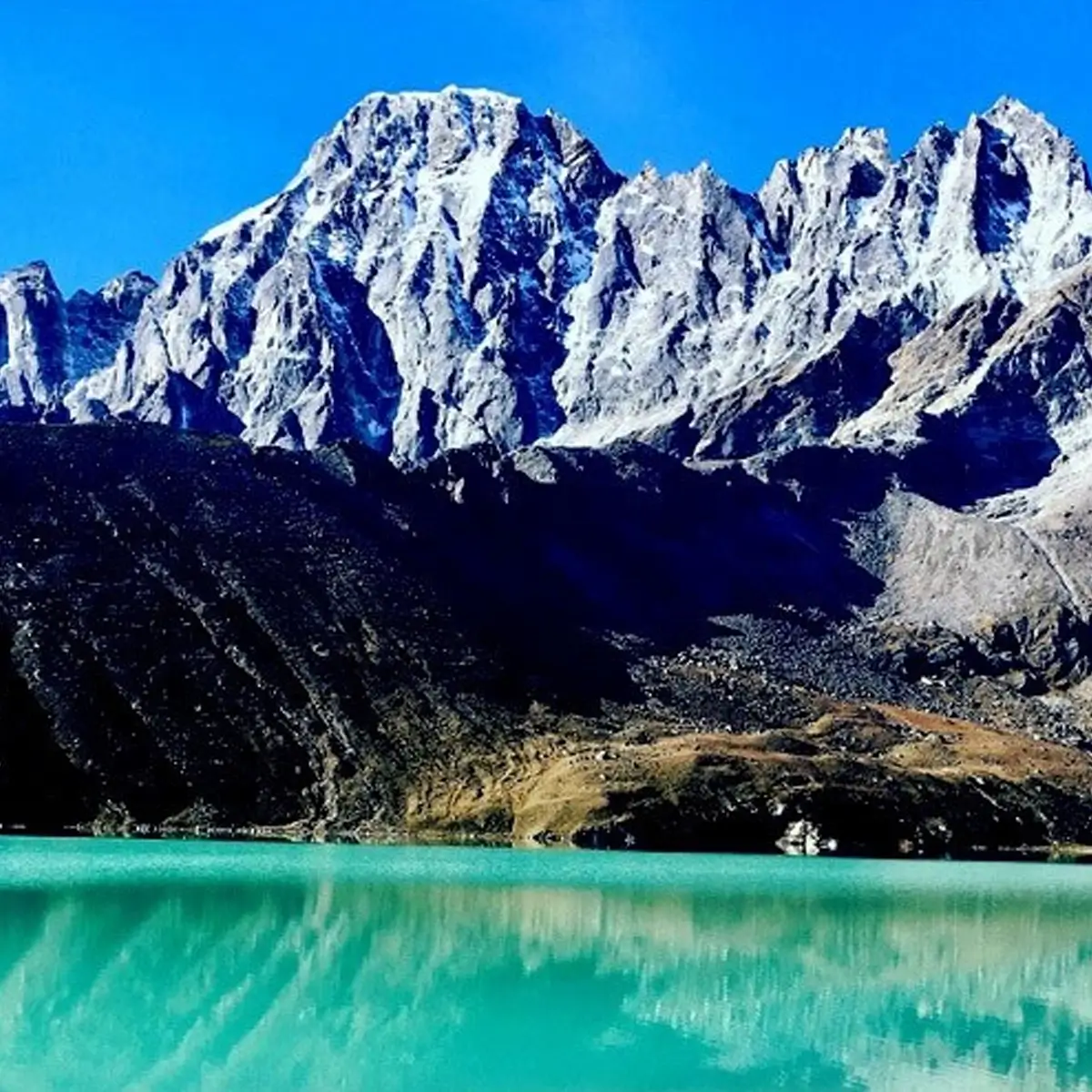
Beautiful scenery from Gokyo Lake
How many total miles is the Gokyo Valley Trek, including the Renjo La Pass or Cho La Pass?
Different trekking agencies design itineraries for the Gokyo Valley trek, including the EBC route trip via Renjo La Pass or Cho La Pass, considering trekkers’ interests in more exploration. These packages are perfect for those looking to avoid backtracking and also want to reach the foothills of Mt. Everest (8848 m). Following in the footsteps of the legendary Sir Edmund Hillary and Tenzing Norgay Sherpa, who were the first climbers to successfully reach the pinnacle of Mt. Everest/Chomolungma on 29th May, 1953.
While the total Gokyo Valley Trek length is 130 to 150 kilometers via Renjo La Pass, you have to cover approximately 130 to 135 kilometers via Cho La Pass. However, some trekkers return to Namche Bazaar after Lungden via Renjo La Pass from Gokyo village without reaching EBC. As a result, trek distance depends on your choice, and we just arrange it along with proper guidance.
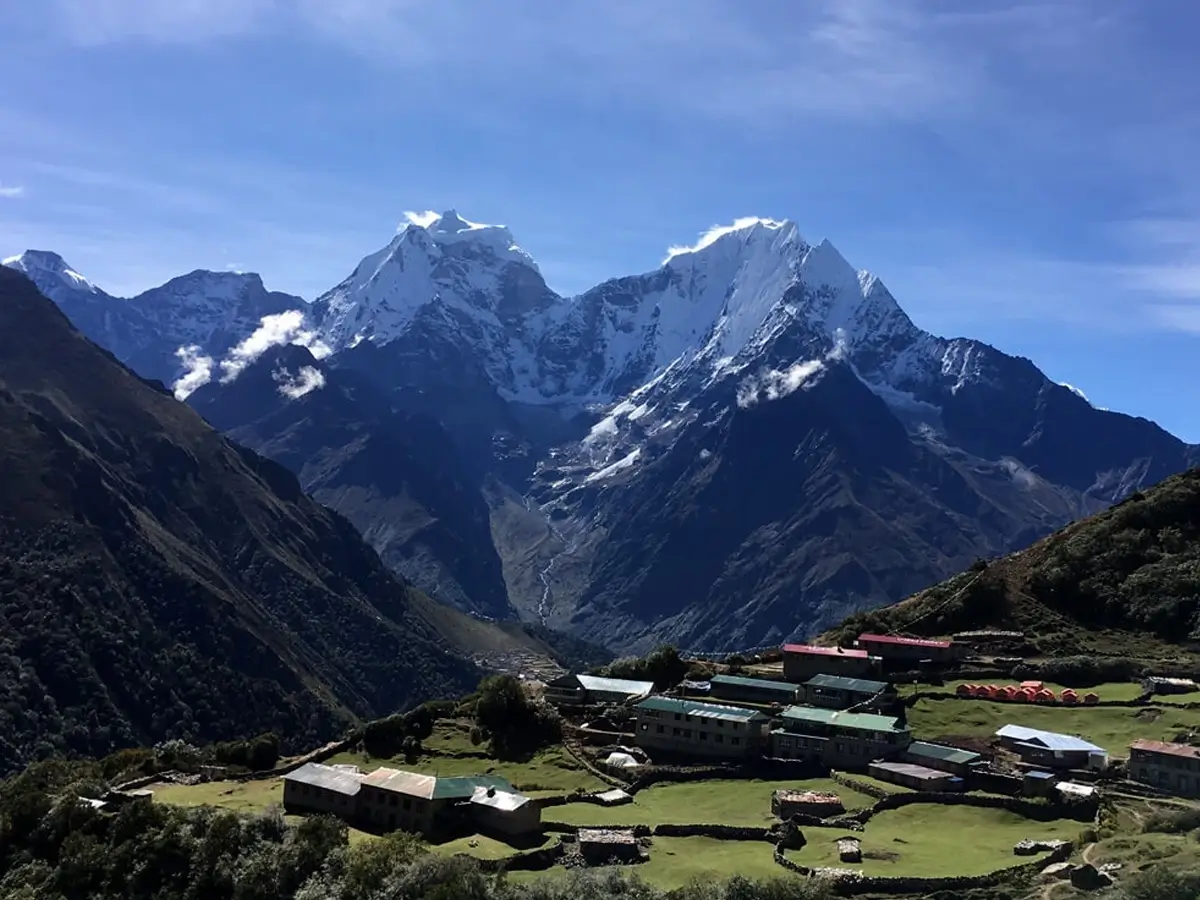
Quaint village on the way to Gokyo Valley
How is the Gokyo Valley Trek route structured?
While understanding the structure of the Gokyo Valley trekking, it will be easier to prepare, and you will not feel monotony while covering the distance. Accordingly, check the following structure and be clear why the Gokyo Valley trek feels longer and more demanding despite its moderate distance compared to lower-altitude treks.
Route: Lukla → Namche → Dole → Machhermo → Gokyo → Cho La Pass → Dzongla/Thangna → Dingboche → Lobuche → Gorakshep → Everest Base Camp
What is the daily walking distance of the Gokyo Valley Trek?
The trekking company crafts an itinerary that includes appropriate daily walking distances and durations, allowing trekkers to acclimate naturally. However, the guide discusses with you the distance you can cover on the day before starting the trip. As a result, the average daily distance on the Gokyo Valley trek also differs significantly, depending on the elevation gain and the need for altitude acclimation. Considering gradual ascents and descents, trekkers cover between 6 and 11 kilometers per day.
Here’s a simple breakdown:
Low-altitude days (Lukla to Namche): 4–6 hours of hiking, covering greater distances, approximately 8 to 11 kilometers on average
High-altitude days (above Namche): 3–5 hours of walking, covering shorter distances to allow for acclimatization, about 6 to 8 kilometers per day.
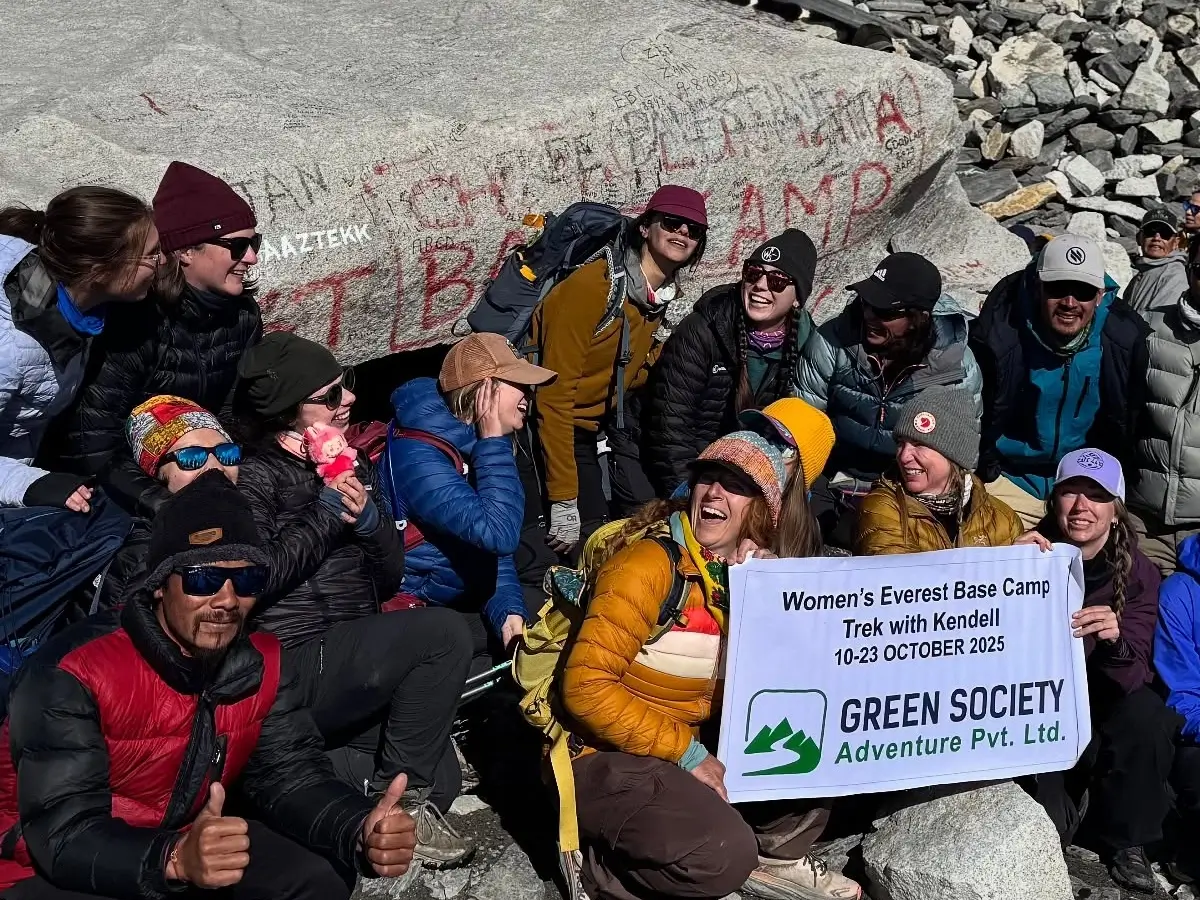
Team at Everest Base Camp
What are the major milestones of the Gokyo Valley trek route?
As we discussed above, the standard route of the Gokyo differs from the extended one. As a result, let's compare it with a trip via Renjo La Pass and Cho La Pass.
Days
Gokyo Valley Trek - 10 Days
Gokyo Valley Trek via Cho La Pass
Gokyo Valley Trek via Renjo La Pass
2
6.2 km (Lukla to Phakding)
8 km (Lukla to Phakding)
8 km (Lukla to Phakding)
3
10.8 km (Phakding to Namche Bazaar)
10.8 km (Phakding to Namche Bazaar)
10.8 km (Phakding to Namche Bazaar)
4
5-6 km (side hike to Hotel Everest View and back)
5-6 km (side hike to Hotel Everest View and back)
5-6 km (side hike to Hotel Everest View and back)
5
10-12 km (Namche to Dole)
9-10 km (Namche to Tengboche)
9-10 km (Namche to Thame)
6
7 km (Dole to Machhermo)
11-12 km (Tengboche to Dingboche)
7 km (Dole to Machhermo)
7
5.7 km (Machhermo to Gokyo)
4-5 km (Dingboche to Thukla)
8-10 km (Thame to Lungden)
8
12 to 14 km (early morning to Gokyo Ri, and trek back to Dole)
4-5 km (Thukla to Lobuche)
10-12 km (Lungden to Gokyo)
9
11-12 km (Dole to Namche)
12-13 km (Lobuche to Gorakshep, and then to EBC, and get back to Gorakshep)
2 km (acclimatization and trek around Gokyo Village)
10
17-19 km (Namche to Lukla)
9-10 km (Gorakshep to Kalapatthar, and then to Dzongla)
7-9 km (Gokyo to Thangna)
11
-
8-9 km (Dzongla to Thagna via Cho La Pass)
8-10 km(Thangna to Dzongla)
12
-
4-5 km (Thagna to Gokyo)
10-12 km (Dzongla to Lobuche)
13
12 to 14 km (side hike to Gokyo early in the morning and trek to Dole)
12-13 km (Lobuche to Gorakshep, and to Everest Base Camp and get back to Gorakshep)
14
11-12 km (Dole to Namche)
9-10 km (Gorakshep to Kalapatthar, and then to Dzongla)
15
17-20 km (Namche to Lukla)
3 km (Acclimatization at Dingboche)
-
11-12 km (Dingboche to Tengboche)
10 to 12 km (Tengboche to Namche Bazaar)
Namche Bazar to Lukla (17 to 20 km)
Why does the Gokyo Valley trek length include acclimatization days?
Acclimatization days are more than allowing trekkers to heal pains caused by walking for a prolonged period on rugged terrain. As there is a saying, “Walk high, sleep low,” when you stretch your legs to certain vantage points near teahouses, gaining some altitude, you adapt to the environment more well and make yourself ready for hiking at higher elevations. A guide accompanies trekkers throughout the journey, instructing, preventing problems, and handling cases of health problems.
Nevertheless, hikers, regardless of age and fitness level, might experience symptoms of acute mountain sickness (AMS) in alpine landmarks above 2500 m due to thin air. Since the Gokyo Valley trek packages take you above 5000 m above sea level, acclimatization is really mandatory based on your wellness and overall fitness condition. Checkaltitude sickness prevention ideas for better experiences, avoiding possible health issues during the trek.
Why do acclimatization days extend the total trip duration?
Acclimatization days often involve side hikes by covering some distances, although they do not add toward the upcoming mileage. When estimating the Gokyo Valley trek total distance, you should comprehend that “the length of the trek” is calculated both in kilometers/miles and in days. As a result, even if you only stroll around the villages, exploring cultural heritage and the way of life of locals, the trek duration continues to count as part of the overall journey.
Without acclimatization days, the daily walking distance of the Gokyo Valley trek becomes longer, making you more fatigued. While walking fast to avoid the darkness of the evening, starting early, the risk of altitude sickness increases.
How does the Gokyo Valley Trek compare to the Everest Base Camp trek in distance?
The Gokyo Valley trek has become an alternative trek to the popular, busy trail—the Everest Base Camp route. Several trekkers are keen to know how the length of the Gokyo Valley trek compares to the distance of the EBC trek. When you trek without the alpine passes of Gokyo, the difficulty level of both treks is similar (moderate).
While Gokyo has slightly fewer steep ascents and more remote villages with less-traveled paths, EBC has quite challenging terrain but is more facilitated with well-marked trails. Here, we have some breakdowns below that clarify the comparison between these two trails.
Which trek has a longer total distance?
The Everest Base Camp trek distance (round trip) is approximately 112 to 130 kilometers. Distinct trekking companies may design the itinerary differently as per the trekker's preferences, but the standard package covers nearly the length of the EBC route within 14 days. This shows that the total Gokyo Valley trek distance of the standard package is nearly 10 to 15% shorter than the classic EBC trek.
Nonetheless, if you combine these two treks (via Cho La Pass or Renjo La Pass), the total miles of the Gokyo Valley trek and the EBC route increase by 20 to 40 km. The combined route obviously showcases challenges in front of you but also offers more surprises of natural grandeur hidden in the wilderness of the Khumbu region, far from the chaos of cities with modern technologies.
What factors influence the Gokyo Valley Trek length?
Numerous elements impact the trekking distances, such as the chosen route, side hikes during acclimatization days, daily walking pace, elevation gain, detours to vantage points or settlements, and initial and terminal points. While the standard Gokyo Valley trek is shorter than the combined EBC route via Cho La or Renjo La Pass due to all these factors, it is obvious that the shorter trek requires less time compared to the longer-mileage route.
Does weather affect the total miles covered per day?
Yes, the climate of trekking areas significantly affects the daily hiking distance and the entire Gokyo Valley trek length. Optimal periods of the year, such as spring (March to May) and autumn (September to November), present moderate temperatures and pleasant weather. As a result, the trail conditions also become better than during off-seasons due to minimal rains.
Muddy, icy, and snowy trails of monsoon or winter seasons reduce the daily route length, adding more days to the itinerary. But you do not have to worry about the extension of the trek duration, as our guide handles the situation. Until a case like a major trail gets blocked because of landslides, floods, or avalanches, the trek duration will not extend, as the guide will arrange to complete the day trek by beginning the trek early or choosing appropriate alternative ways.
At Machhermo Village
Can you shorten the Gokyo Valley trek distance with a Helicopter?
Generally, trekkers fly to Tenzing Hillary Airport, Lukla, a gateway to Everest Base Camp from Kathmandu, on the second day of the itinerary and continue on a short hike to Phakding on the same day. Afterward, exploring major destinations, get back to Lukla for returning to the capital city within 10-11 days. If you have a few vacation days, then you have the option to fly back to Kathmandu by helicopter from Gokyo Valley or Namche Bazaar, which may cost quite a bit more than the Gokyo loop trek.
If you are on a budget for trekking and also have enough vacation time, we recommend enjoying hiking through more alpine terrain to explore more things, as life may not allow you to experience such moments. Bypassing the descending trail is like completing this Gokyo trek incompletely. As a result, do not miss it; in case you do not have any serious issues, return earlier.
How should you prepare for the daily walking distance?
To prepare properly for daily hiking with ascents and descents, you should understand the difficulty level of the route, which also includes factors that impact its difficulty. Generally, those influencing elements also include the total distance of the Gokyo Valley trek. Understanding the length to cover helps you to prepare mentally and physically before embarking on the trip. Generally, the daily hike distance is about 6 to 11 km per day on average, and the duration is about 4 to 7 hours.
Although it seems shorter, you need perfect preparation to tackle narrow, rocky, and uneven trails, including some steep areas. As you find limited facilities, a weak network, and health services in remote villages, you have to prepare psychologically to adapt to the environment. Getting involved in some simple cardiovascular exercises like jogging, running, jumping, dancing, swimming, and hiking by gaining appropriate elevations is the best idea to make yourself strong enough for the Everest route.
While these kinds of workouts strengthen your body muscles and help in balancing legs properly on rugged trails, doing meditation/yoga practice supports determining the day trek strongly in any kind of situation. Since you can not train for elevation, you can hike with care and learn preventative tips. Carry with you a first aid kit along with acute mountain sickness-related medicine - diamox, bandages, and ointments. Ensure that you do not feel rushed and your body is ready to proceed ahead while covering the Gokyo Valley trek total distance.
Conclusion
To sum up, choose the best among Gokyo Valley trekking packages that suit your fitness level. We recommend the standard itinerary if you are looking for something easier and shorter. However, the combined trail to Everest Base Camp via Cho La Pass or Renjo La Pass becomes an iconic one to experience both challenging and rewarding routes. Since the Himalayan trekking, including the Gokyo route, is not meant to be rushed but for enjoying the surreal charm of nature, cover the appropriate daily walking distance.
Choosing an itinerary that fits your fitness level, time limits, and desire for adventure under the shadow of Everest and Cho Oyu, while being aware of the Gokyo Valley Trek's total mileage and route structure, becomes a really iconic one.
Raj Kumar Khadka
Raj Kumar was born and raised in the mountain town of Gorkha. He is an enthusiastic traveler who enjoys discovering new places. His passion for exploration knows no bounds, driving him to seek out new trails and experiences. He has successfully traveled and explored most of the trekking routes in Nepal, mastering their intricacies.
Raj Kumar started his career as a guide at the end of the year 2006. His dedication to this field has been unwavering, surpassing 17 years and counting. He established his own company, Green Society Adventure, in 2013, fueled by his expertise and entrepreneurial spirit. He has a vision to share the beauty of Nepal’s landscapes and cultures to the world. As both a guide and a leader, he inspires people to explore the world with curiosity and respect.